How Non-Emergency Medical Transportation Works in Virginia

Understanding Non-Emergency Medical Transportation in Virginia
Non-emergency medical transportation helps medically stable passengers reach healthcare appointments, hospitals, rehabilitation facilities, treatment centers, senior communities, and other scheduled destinations when ordinary transportation may not meet their mobility or assistance needs.
For a senior who no longer drives, a wheelchair passenger, someone recovering from a medical procedure, or a family coordinating transportation for a loved one, choosing the right transportation arrangement can make an already complicated day easier to manage.
This guide explains the major types of non-emergency medical transportation, how trips are typically planned, what information families should prepare, and where to find more detailed transportation information from UniqueHands.
What Is Non-Emergency Medical Transportation?
NEMT is pre-arranged transportation for passengers who are medically stable but need a transportation option suited to their mobility, accessibility, destination, or level of assistance.
Scheduled Medical Transportation
Trips may be arranged for doctor appointments, rehabilitation, dialysis, outpatient procedures, hospital discharges, treatment visits, senior living communities, facility transfers, and other approved destinations.
The transportation type is determined by factors such as the passenger's ability to walk or transfer, wheelchair use, ability to remain seated, trip distance, building access, and requested assistance.
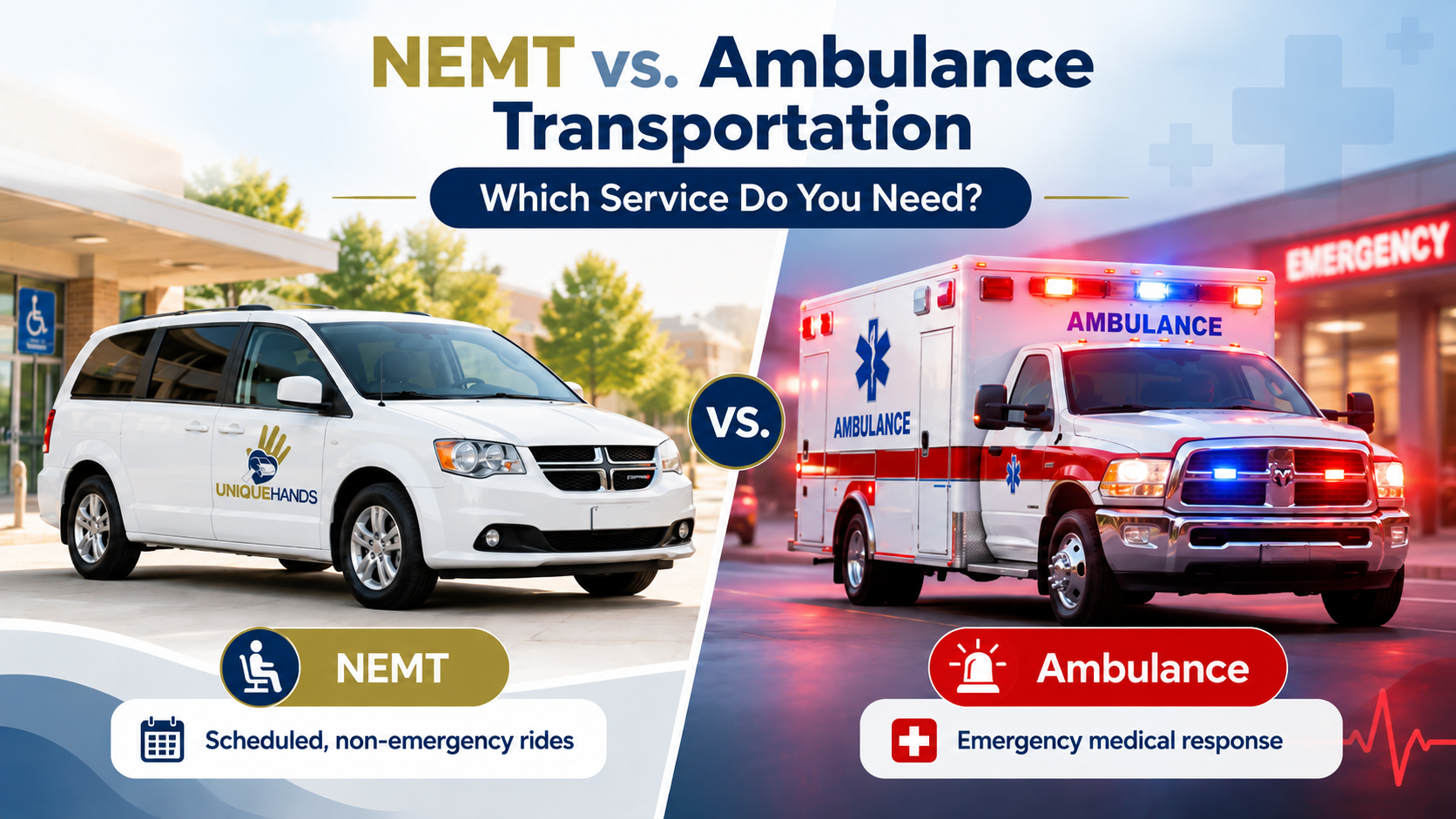
NEMT Is Not Emergency Transportation
Non-emergency medical transportation is intended for medically stable passengers whose trips can be planned in advance.
It is not a replacement for emergency ambulance transportation, emergency medical response, continuous clinical monitoring, or medical treatment during the trip.
If someone is experiencing a medical emergency, call 911.
Need Non-Emergency Medical Transportation in Northern Virginia?
UniqueHands provides pre-arranged private-pay medical transportation for individuals, families, caregivers, healthcare facilities, rehabilitation centers, senior communities, discharge planners, and care coordinators.
Transportation requests are reviewed according to passenger mobility, pickup conditions, destination, requested assistance, travel distance, and scheduling requirements.
Different Passengers Require Different Types of Transportation
One of the most important parts of arranging medical transportation is identifying the service that appropriately matches the passenger's mobility and trip requirements.
Non-Emergency Medical Transportation
Scheduled private-pay transportation for medically stable passengers traveling to healthcare appointments, facilities, treatments, hospital-related destinations, and other approved locations.
Explore NEMT services → 02Wheelchair Transportation
Accessible transportation for passengers who use wheelchairs and need appropriately equipped transportation for medical appointments, hospital discharges, rehabilitation, and other scheduled trips.
Wheelchair transportation → 03Stretcher Transportation
Private-pay non-emergency transportation for qualifying medically stable passengers whose trip requires an approved lying-down transportation arrangement.
Stretcher transportation → 04Ambulatory Transportation
Transportation for passengers who can walk independently or with limited assistance and may need help with medical appointments, outpatient procedures, escort arrangements, waiting, or return transportation.
Ambulatory transportation → 05Senior Transportation
Thoughtfully coordinated transportation for older adults traveling to doctor appointments, rehabilitation, hospitals, treatment centers, senior communities, family destinations, and other scheduled locations.
Senior transportation → 06Long-Distance Medical Transportation
Pre-arranged transportation for qualifying medically stable passengers traveling longer distances within Virginia or between states for healthcare, rehabilitation, relocation, or facility transfers.
Long-distance transportation →Where Can Non-Emergency Medical Transportation Take Passengers?
Transportation needs extend far beyond a single type of doctor appointment. Trips may involve ongoing care, rehabilitation, procedures, facility transitions, or longer-distance travel.
How Non-Emergency Medical Transportation Is Arranged
A transportation provider needs enough information to understand the passenger, route, mobility requirements, schedule, and accessibility conditions before confirming the trip.
Share the Trip Details
Provide the pickup address, destination, requested date, appointment time, and whether transportation is one-way or round-trip.
Explain Mobility Needs
Discuss whether the passenger walks, uses a wheelchair, needs stretcher transportation, or requires another form of transportation assistance.
Review Access Conditions
Stairs, elevators, narrow hallways, building entrances, facility procedures, and other access conditions may affect the transportation arrangement.
Confirm the Transportation
Once the trip is reviewed and accepted, the transportation provider can explain scheduling, availability, pricing, and other reservation requirements.
Private-Pay Non-Emergency Medical Transportation
UniqueHands specializes in private-pay transportation arranged directly with passengers, families, caregivers, healthcare facilities, senior communities, discharge planners, case managers, and other individuals coordinating transportation.
Private-pay transportation can be useful when a family wants to coordinate a particular pickup time, destination, mobility requirement, hospital discharge, procedure, recurring appointment, or long-distance transportation request directly with the transportation provider.
UniqueHands does not bill Medicaid, Medicare, or private health insurance.
Information to Have Ready When Requesting Transportation
Accurate information helps the transportation team determine whether a trip can be accommodated and what transportation arrangement may be appropriate.
Trip Information
- Pickup address and destination address
- Facility or healthcare provider name
- Requested transportation date
- Appointment or discharge time
- Requested pickup time
- One-way or round-trip request
- Waiting or return-trip requirements
- Receiving contact when applicable
Passenger & Accessibility Information
- Whether the passenger is ambulatory
- Wheelchair type when applicable
- Whether stretcher transportation is requested
- Level of assistance requested
- Stairs or steps at pickup or destination
- Elevator and hallway access
- Mobility equipment traveling with the passenger
- Whether a caregiver or companion plans to travel
What Families Should Consider Beyond the Price of the Ride
Medical transportation involves a passenger, mobility needs, healthcare schedules, building access, and coordination between multiple people. Price is only one part of the decision.
Transportation Type
Confirm that the provider can appropriately accommodate the passenger's ambulatory, wheelchair, stretcher, or other transportation requirements.
Scheduling & Communication
Clear communication becomes particularly important for medical appointments, facility pickups, discharges, and trips involving several family members or care teams.
Vehicle & Accessibility
The vehicle and transportation arrangement should be appropriate for the passenger's mobility equipment and accessibility requirements.
Pickup Conditions
Homes, apartments, hospitals, and care facilities can involve stairs, elevators, long hallways, loading areas, or special discharge procedures.
Trip Distance
Long-distance transportation requires additional planning for route length, passenger comfort, facility arrival requirements, and other transportation details.
Scope of Service
Families should understand what assistance is included and remember that non-emergency medical transportation is not an ambulance or clinical medical service.
Transportation To or From a Hospital
Not every hospital trip requires emergency transportation. Medically stable passengers may need scheduled transportation for planned admissions, appointments, procedures, rehabilitation transfers, or hospital discharge.
The passenger's condition, mobility requirements, discharge arrangements, pickup location, and destination should be reviewed before transportation is confirmed.
Read our hospital transportation guide →When the Medical Trip Extends Beyond Northern Virginia
Families sometimes need transportation to a rehabilitation facility, specialized healthcare provider, nursing facility, family residence, or other destination several hours away.
Long-distance trips require additional planning around travel time, accessibility, passenger mobility, pickup and receiving facilities, and route requirements.
Explore long-distance transportation →Helpful Guides for Patients, Families, and Caregivers
Explore more detailed articles about specific transportation situations, mobility requirements, hospital travel, and local medical transportation.
Learn how longer medical trips are planned for ambulatory, wheelchair and qualifying stretcher passengers.
Read the guide → Hospital Transportation Need Non-Emergency Transportation to the Hospital?Understand when scheduled transportation may be appropriate for a medically stable passenger traveling to or from a hospital.
Read the guide → Wheelchair Transportation Wheelchair Transportation for Individuals in Arlington, VirginiaLearn more about accessible medical transportation for wheelchair passengers and families coordinating local trips.
Read the article → Patient Transportation Medical Patient Transportation Options in Manassas, VirginiaCompare ambulatory, wheelchair, stretcher, senior and long-distance transportation options for medically stable passengers.
Read the article →Explore Local Non-Emergency Medical Transportation Guides
UniqueHands serves patients and families throughout Northern Virginia. Local transportation availability depends on the passenger, route, requested service, access conditions, schedule, and vehicle availability.
Information for Virginia Medicaid Members
Some Virginia Medicaid members may have transportation benefits through their Medicaid program. UniqueHands is a private-pay transportation provider and does not provide Medicaid-billed transportation. Individuals seeking Medicaid-covered transportation should contact their Medicaid plan or review transportation information from the Virginia Department of Medical Assistance Services.
Medical Transportation Requirements in Virginia
Medical transportation companies operating in Virginia may be subject to transportation, registration, vehicle, insurance, and operating requirements depending on the transportation service provided.
Families arranging transportation may want to ask providers about their transportation procedures, passenger assistance, vehicle accessibility, insurance, scheduling process, and how the provider evaluates passenger and trip requirements.
Virginia medical transportation carrier information is available through the Virginia Department of Motor Vehicles.
Reliable Transportation Helps Patients Stay Connected to Care
Transportation can become an important part of a healthcare plan when a person no longer drives, uses mobility equipment, is recovering from a procedure, or depends on family members for transportation.
A carefully arranged transportation option can help patients attend scheduled appointments, rehabilitation, recurring treatments, follow-up care, and other healthcare visits with fewer transportation barriers.
Medical Transportation Also Supports Families and Care Teams
Transportation arrangements are often coordinated by adult children, spouses, caregivers, social workers, case managers, discharge planners, rehabilitation facilities, nursing homes, and senior living communities.
Clear communication about the passenger, pickup location, mobility, destination, timing, and receiving arrangements can make the process easier for everyone involved.
Need Help Planning a Private-Pay Medical Transportation Trip?
Tell our team about the passenger's mobility needs, pickup location, destination, preferred date, and requested transportation type. We can review the request and discuss availability and transportation options.
UniqueHands provides scheduled non-emergency transportation and is not an ambulance or emergency medical service. Transportation is subject to passenger needs, route, scheduling, access conditions, transportation type, and availability. For a medical emergency, call 911.
UNIQUEHANDS RESOURCES
Medical Transportation Articles
Explore practical guides for families, caregivers, and facilities planning wheelchair, stretcher, ambulatory, hospital discharge, long-distance, and state-to-state non-emergency medical transportation.