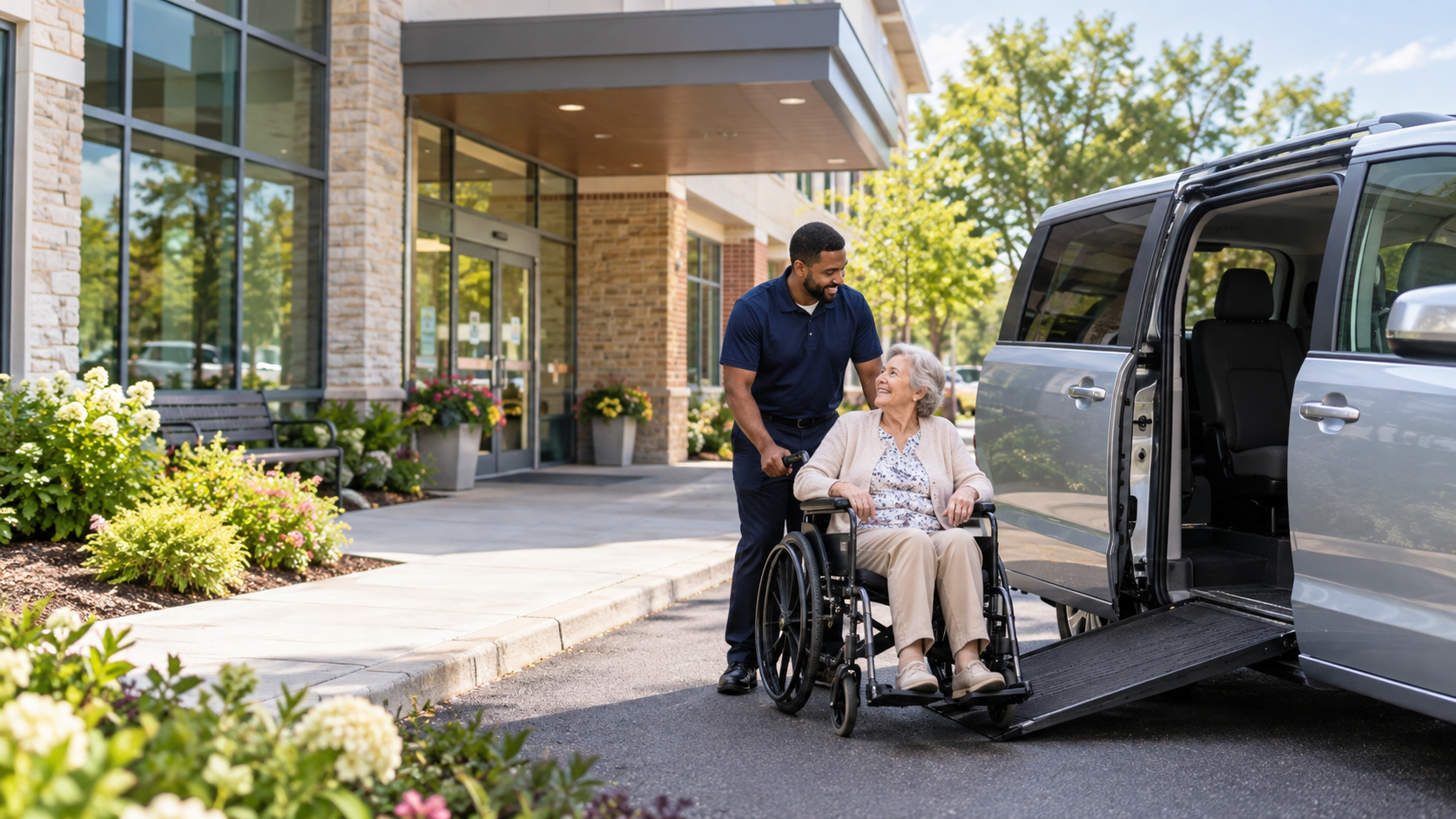
Medical Transportation for Elderly Seniors: Meeting Their Unique Needs
Medical Transportation for Elderly Seniors: Meeting Their Unique Transportation Needs
As people age, transportation to doctor appointments, rehabilitation, hospitals, therapy, senior communities, and other healthcare destinations can become more difficult. Medical transportation for elderly passengers provides an alternative when driving, public transportation, rideshare services, or a family vehicle no longer matches the senior’s mobility or transportation needs.

Tell us where the passenger is going, their mobility needs, requested transportation type, building access, appointment time, and whether a family member, caregiver or companion will be involved.
What is medical transportation for elderly passengers?
Elderly medical transportation is scheduled transportation designed around the mobility and travel needs of older adults. Depending on the passenger, this may include ambulatory transportation, wheelchair transportation, stretcher transportation, doctor appointment transportation, hospital or facility discharge transportation, adult companion or escort arrangements, and qualifying long-distance trips.
Why Transportation Often Becomes More Difficult With Age
Aging can affect transportation in many different ways. Some seniors stop driving. Others continue walking independently but have difficulty entering or exiting a conventional vehicle. A person who once traveled easily may later begin using a cane, walker, wheelchair, or stretcher because of changes in strength, balance, mobility, or recovery from illness or hospitalization.
Chronic medical conditions can also increase the number of appointments an older adult must attend. Primary care visits, specialists, physical therapy, rehabilitation, imaging, follow-up appointments, hospital care, and other services can create a significant transportation burden for the senior and family.
The goal of elderly transportation is therefore not simply to provide a vehicle. It is to match the transportation arrangement to the passenger’s actual mobility and trip requirements.
Limited Mobility and Elderly Transportation
Limited mobility is one of the most common reasons an elderly passenger may need specialized transportation. Older adults may have difficulty walking long distances, climbing stairs, transferring into vehicles, maintaining balance, or standing while waiting for transportation.
Transportation providers should know in advance whether the passenger walks independently, uses a cane or walker, travels in a wheelchair, or requires stretcher positioning.
- Tell the provider about stairs, elevators, ramps and narrow hallways.
- Explain whether the senior uses a wheelchair, walker, cane or stretcher.
- Discuss whether the passenger can transfer into a vehicle seat.
- Provide information about long walking distances between the vehicle and facility entrance.
- Explain whether family or caregiver assistance will be available at pickup or destination.
Which Transportation Type Is Appropriate for an Elderly Passenger?
Ambulatory Transportation
Appropriate for seniors who can travel seated and walk independently or with limited transportation-related assistance.
Ambulatory Transportation →Wheelchair Transportation
For passengers who need accessible transportation and may remain in a wheelchair during the trip.
Wheelchair Transportation →Stretcher Transportation
For qualifying medically stable seniors who cannot appropriately complete the transportation trip seated.
Stretcher Transportation →How Do Chronic Health Conditions Affect Transportation?
Many older adults live with chronic health conditions such as arthritis, diabetes, heart disease, respiratory conditions, weakness, or other conditions that affect mobility and endurance.
A transportation company should understand the transportation implications of these conditions. For example, the passenger may need additional boarding time, wheelchair transportation, stretcher positioning, shorter walking distances, a companion, or a carefully planned pickup location.
Passengers and families should clearly explain the senior’s transportation needs when booking. If a person requires continuous clinical monitoring, medication administration, advanced life support, or ambulance-level medical care while traveling, the appropriate clinical or emergency transportation provider should be used.
Can medical transportation take an elderly passenger to an emergency department?
An appropriate medically stable passenger may be transported to an emergency department when ambulance-level emergency response is not required.
If the passenger is experiencing a life-threatening emergency, rapid deterioration, severe symptoms, or requires immediate emergency treatment during transportation, call 911.
Transportation for Seniors With Memory or Cognitive Challenges
Some elderly passengers may experience confusion, memory loss, dementia-related symptoms, or difficulty communicating unfamiliar information. Transportation can feel more stressful when the passenger is traveling with people or through environments they do not recognize.
Families should provide important transportation instructions in advance, including who will be present at pickup, who will receive the passenger at the destination, whether a caregiver will travel with them, and any communication considerations that may make the trip more comfortable.
Calm communication, patience, clear instructions, and consistent coordination with the family or facility can make a significant difference for older passengers who become anxious or disoriented during transportation.
Doctor Appointment Transportation for Seniors
Medical appointments are one of the most common reasons elderly passengers use NEMT. A senior may need recurring transportation to primary care physicians, cardiologists, orthopedic specialists, physical therapy, rehabilitation, diagnostic imaging, outpatient procedures, or follow-up visits.
Reliable scheduling matters because missed medical appointments can interrupt treatment plans and create additional stress for both the passenger and family.
Learn more about transportation for doctor appointments.
Hospital Discharge Transportation for Elderly Patients
Older adults may be medically ready to leave a hospital but still unable to safely use ordinary transportation. They may need a wheelchair, stretcher, assistance navigating the building, or transportation to a rehabilitation center, skilled nursing facility, assisted living community, or private residence.
When arranging a discharge trip, provide the facility name, expected discharge time, passenger mobility, destination, stairs or elevators, transportation equipment required, and any facility instructions that affect pickup.
The passenger should be medically cleared for non-emergency transportation before leaving the facility.
Can a Family Member, Caregiver or Companion Travel With an Elderly Passenger?
Depending on the scheduled trip, vehicle capacity, and advance arrangements, a family member, caregiver, or companion may be able to accompany the passenger.
UniqueHands can also review adult escort or companion needs when this service is requested in advance. For example, an elderly passenger may need someone to accompany them through a medical appointment, remain nearby during a procedure, or travel home with them afterward.
Escort or extended waiting time should be discussed during scheduling so enough time can be reserved.
Can Elderly Passengers Travel Long Distance With Medical Transportation?
Yes. Some elderly passengers need transportation far beyond their local community. A long-distance trip may involve relocation closer to family, specialized treatment, rehabilitation, facility discharge, a move between senior communities, or another approved destination.
Longer trips require additional planning around travel time, passenger positioning, mobility equipment, comfort breaks, destination access, timing, and whether the passenger remains appropriate for non-emergency transportation.
Visit our long-distance medical transportation service.
You can also read our supporting guide about transporting elderly passengers long distance.
What Should Families Look for in Elderly Medical Transportation?
Why Communication With Families and Care Facilities Matters
Elderly transportation is frequently arranged by someone other than the passenger. An adult child, spouse, caregiver, assisted living community, hospital, rehabilitation center, or care coordinator may be involved.
Clear communication helps ensure everyone understands the pickup time, destination, transportation type, mobility needs, access conditions, accompanying passengers, and who will receive the senior at the destination.
When appropriate and authorized, transportation details may also be coordinated with a healthcare or care facility so arrival, discharge, or appointment timing is clearer.
Start with the passenger’s mobility, destination and level of assistance.
Tell UniqueHands whether the senior is ambulatory, uses a wheelchair, requires stretcher transportation, needs a companion, or is traveling a longer distance.
How Are Elderly Transportation Services Arranged?
UniqueHands operates as a private-pay non-emergency medical transportation provider. Passengers, families, caregivers, hospitals, rehabilitation facilities, senior communities and other organizations may contact UniqueHands directly to discuss transportation.
UniqueHands does not bill Medicaid or private health insurance directly. Anyone seeking transportation benefits or reimbursement through an insurance or assistance program should verify eligibility and coverage with that program.
What Information Should You Provide When Booking Elderly Transportation?
- Exact pickup address
- Destination and facility name
- Requested transportation date and time
- Appointment, discharge or admission time
- Whether the passenger is ambulatory, wheelchair or stretcher
- Wheelchair, walker, cane or other mobility information
- Stairs, elevators, ramps or building-access concerns
- Whether a caregiver or companion will travel with the senior
- Whether adult escort or waiting assistance is requested
- Whether the trip is one-way or round trip
- Whether the trip is local or long distance
- Who will receive the passenger at the destination
Elderly Medical Transportation FAQ
What is the best transportation for an elderly person who no longer drives?
The best option depends on mobility. A senior who walks may use ambulatory transportation, while a wheelchair user may need accessible wheelchair transportation. A qualifying passenger who cannot appropriately travel seated may require stretcher transportation.
Can elderly passengers use medical transportation for doctor appointments?
Yes. Scheduled NEMT may be used for physician appointments, specialists, therapy, rehabilitation, diagnostic testing, outpatient procedures and other healthcare destinations.
Can an elderly passenger remain in a wheelchair during transportation?
Qualifying wheelchair transportation allows passengers who need an accessible vehicle to travel while remaining in their wheelchair when the transportation arrangement is appropriate.
Can bedridden elderly passengers use stretcher transportation?
Qualifying medically stable passengers who cannot appropriately remain seated may be appropriate for non-emergency stretcher transportation.
Can a caregiver or family member ride with an elderly passenger?
Depending on the trip, vehicle capacity and prior arrangements, a family member, caregiver or companion may be able to accompany the passenger. Discuss this when scheduling.
Can UniqueHands stay with an elderly patient at an appointment?
Adult escort or waiting assistance can be reviewed when requested in advance. Tell UniqueHands how long assistance may be needed so sufficient time can be reserved.
Can elderly medical transportation be used after a hospital discharge?
Yes. Qualifying medically stable seniors may use scheduled transportation after a hospital or facility discharge once they are medically cleared and the transportation type matches their mobility needs.
Can elderly passengers travel long distance by medical transportation?
Yes. Qualifying long-distance trips may be reviewed for healthcare, rehabilitation, facility transfers, relocation closer to family and other approved destinations.
Can medical transportation take a senior to the emergency room?
An appropriate medically stable passenger may be transported to an emergency department when emergency ambulance response is not required. For life-threatening conditions or immediate emergency treatment needs, call 911.
How do I schedule elderly medical transportation with UniqueHands?
Contact UniqueHands with the pickup address, destination, schedule, passenger mobility needs, transportation type, access conditions and whether caregiver or escort assistance is needed.
Related Senior & Medical Transportation Resources
Continue to the service or guide that best matches the elderly passenger’s transportation needs.
Need reliable transportation for an elderly loved one?
Tell us about the passenger’s mobility, destination, schedule, wheelchair or stretcher needs, building access, companion requirements and whether the trip is local or long distance.
UNIQUEHANDS RESOURCES
Medical Transportation Articles
Explore practical guides for families, caregivers, and facilities planning wheelchair, stretcher, ambulatory, hospital discharge, long-distance, and state-to-state non-emergency medical transportation.