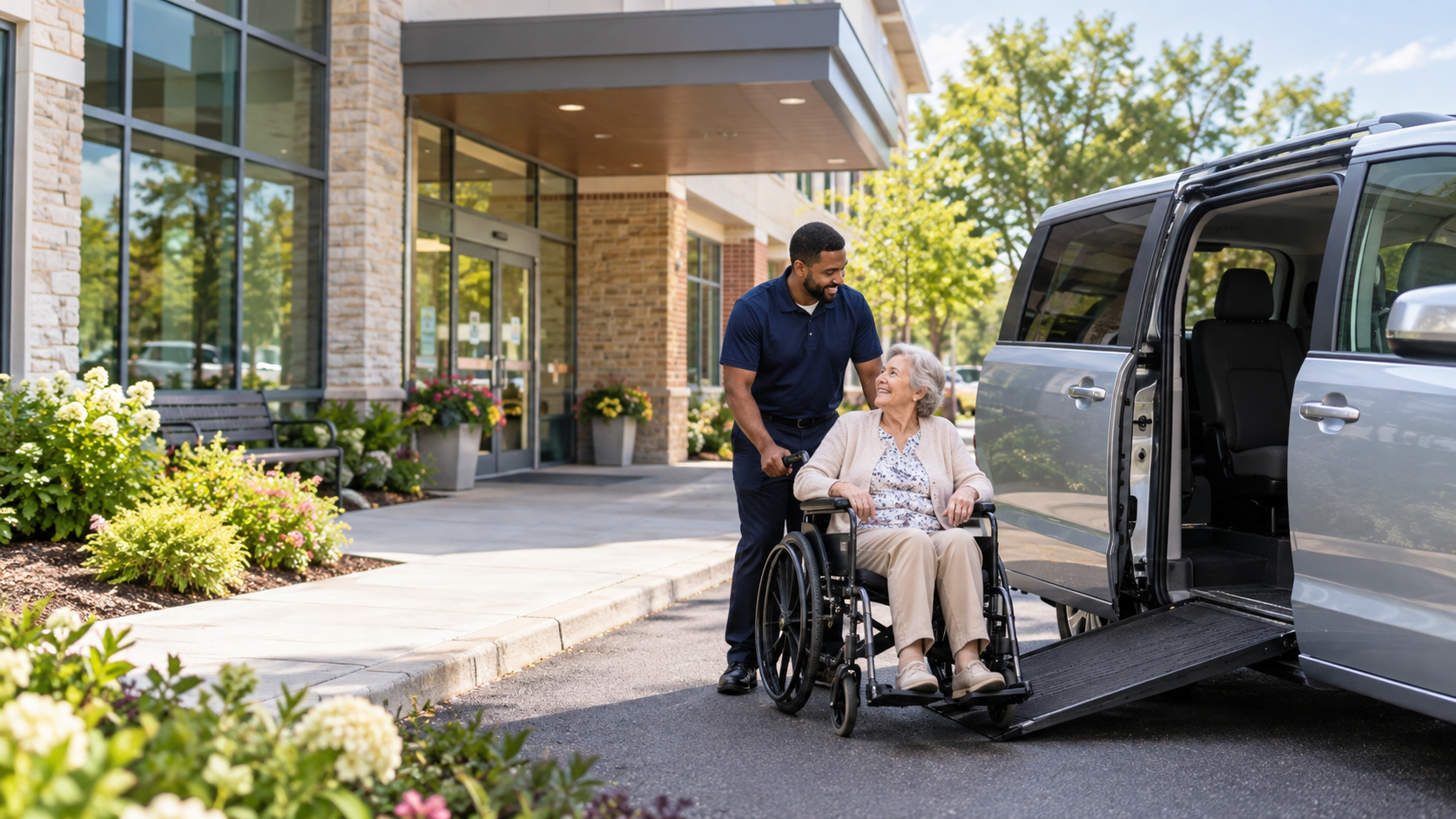
Medical Wheelchair Transportation: Pros and Cons

Wheelchair Transportation Guide
Advantages and Challenges of Medical Wheelchair Transportation
For people who rely on wheelchairs, transportation is about much more than getting from one place to another. The vehicle must be accessible, the wheelchair must be accommodated properly, and the passenger may need assistance throughout the trip.
Medical wheelchair transportation can make it easier for individuals with mobility challenges to reach doctor's appointments, hospitals, rehabilitation centers, therapy visits, and other healthcare destinations safely and comfortably.
UniqueHands Private-Pay Service Need Wheelchair Transportation in Virginia? UniqueHands provides private-pay wheelchair transportation for individuals, families, caregivers, senior communities, healthcare facilities, and organizations that need dependable accessible transportation. Explore Wheelchair Transportation Services
Understanding Medical Wheelchair Transportation
Medical wheelchair transportation is designed for passengers who use wheelchairs and need an accessible way to travel to scheduled healthcare appointments and other destinations.
Unlike a standard passenger vehicle, wheelchair-accessible transportation may use ramps or lifts and appropriate wheelchair securement systems to allow a passenger to remain safely positioned in the wheelchair during transportation.
Choosing an appropriate transportation option can help make travel more manageable for wheelchair users, their families, caregivers, and healthcare providers.
Benefits
Advantages of Medical Wheelchair Transportation
1. Improved Accessibility Medical wheelchair transportation provides an accessible option for people who may have difficulty entering a standard vehicle or using public transportation.
For some wheelchair users, the lack of accessible transportation can become a barrier to receiving healthcare. Vehicles designed for wheelchair passengers can make boarding and traveling significantly easier.
Accessible transportation can help individuals reach medical appointments, therapy visits, rehabilitation centers, hospitals, and other healthcare destinations with less physical strain.
2. Wheelchair-Accessible Equipment Accessible transportation vehicles may include ramps, lifts, wider entry areas, and wheelchair securement equipment designed for passengers who remain in their wheelchairs.
Ramps and lifts can reduce the difficulty of transferring into a vehicle, while appropriate wheelchair securement helps stabilize the wheelchair during transportation.
For passengers who regularly use mobility equipment, choosing a transportation provider with the appropriate vehicle can make the overall trip more comfortable and manageable.
3. Passenger Assistance Wheelchair transportation providers may offer assistance with boarding, exiting the vehicle, and wheelchair securement within the scope of their transportation service.
Passengers and caregivers should explain mobility requirements when scheduling so the transportation company can determine whether it can appropriately accommodate the passenger's needs.
4. Greater Convenience Accessible medical transportation can reduce the need to arrange transfers into private vehicles that may not accommodate a wheelchair easily.
This can be especially valuable for families and caregivers who otherwise need to coordinate transportation themselves.
Private wheelchair transportation may also provide greater flexibility for families arranging hospital discharges, recurring appointments, rehabilitation visits, and longer-distance transportation.
5. A More Comfortable Travel Experience Traveling with mobility limitations can involve additional planning and uncertainty. Using an appropriate accessible vehicle can remove some of those transportation concerns.
When transportation arrangements are confirmed in advance, passengers and caregivers can focus more on the healthcare appointment rather than how the passenger will enter and exit the vehicle.
6. Transportation Planned Around Appointments Scheduled medical transportation allows pickup times to be coordinated around healthcare appointments and facility schedules.
Advance scheduling is particularly useful for recurring medical appointments, physical therapy, rehabilitation, specialist appointments, hospital discharges, and other time-sensitive healthcare trips.
Looking for Accessible Transportation? Learn more about UniqueHands' wheelchair transportation services in Virginia for private-pay passengers, families, caregivers, healthcare facilities, and senior communities.
Important Considerations
Challenges of Medical Wheelchair Transportation
1. Availability Can Vary Wheelchair-accessible vehicles are more specialized than standard passenger vehicles, so availability may vary by location, date, and requested pickup time.
Rural locations, longer-distance trips, facility discharges, and high-demand appointment times may require additional planning.
2. Advance Scheduling May Be Necessary Because accessible transportation vehicles are limited, passengers may need to schedule transportation before the day of the appointment.
Last-minute requests may be difficult to accommodate, especially when a passenger requires a specific vehicle or additional assistance.
When possible, families and caregivers should arrange transportation as soon as an appointment or discharge date is known.
3. Traffic and Unexpected Delays Medical transportation can still be affected by traffic, road conditions, facility delays, weather, and other circumstances outside the transportation company's control.
Good communication between the transportation provider, passenger, caregiver, and facility can help make schedule changes easier to manage.
4. Not Every Passenger Has the Same Needs Wheelchair users have different mobility requirements, wheelchair sizes, transfer abilities, medical conditions, and assistance needs.
Providing accurate information before the trip helps the transportation company determine whether the vehicle and service are appropriate for the passenger.
5. Transportation Costs Can Vary The cost of wheelchair transportation can depend on distance, trip duration, pickup and destination locations, requested service, waiting time, and other transportation requirements.
Some individuals may have transportation benefits through an insurance or government program, while others arrange transportation directly with a private-pay provider.
UniqueHands provides private-pay wheelchair transportation and does not bill Medicaid or private health insurance.
6. Clear Communication Is Important Transportation companies need accurate information about the passenger's wheelchair, mobility needs, pickup environment, destination, and requested assistance.
Families and caregivers should communicate special transportation requirements during scheduling rather than waiting until the vehicle arrives.
Choosing Transportation
What to Look for in a Wheelchair Transportation Provider
Before scheduling wheelchair transportation, patients, families, and caregivers may want to ask about:
- Wheelchair-accessible vehicle availability
- Wheelchair ramp or lift accessibility
- Wheelchair securement procedures
- Passenger assistance
- Service areas
- Long-distance transportation availability
- Hospital discharge transportation
- Advance scheduling requirements
- Waiting-time policies
- Cancellation policies
- Whether companions or caregivers may travel with the passenger
Asking these questions before the trip helps families select transportation that better matches the passenger's individual needs.
UniqueHands
Private-Pay Wheelchair Transportation in Virginia
UniqueHands provides private-pay wheelchair transportation for passengers who need an accessible option for medical appointments, hospital discharges, rehabilitation visits, senior transportation, recurring trips, and other scheduled transportation needs.
Transportation can be arranged by individuals, family members, caregivers, senior communities, healthcare facilities, rehabilitation centers, and other organizations.
For complete information about our commercial wheelchair transportation service, visit our Wheelchair Transportation in Virginia service page.
Related Reading If you are researching transportation options in Northern Virginia, you can also read our guide to non-emergency medical transportation solutions in Manassas, Virginia.
Is Medical Wheelchair Transportation the Right Choice?
Medical wheelchair transportation offers important advantages for people who require accessible vehicles, including easier boarding, appropriate wheelchair accommodation, scheduled transportation, and reduced dependence on inaccessible transportation options.
There are also practical considerations such as availability, advance scheduling, transportation cost, travel distance, traffic, and the passenger's individual mobility requirements.
Understanding both the advantages and limitations can help patients, families, and caregivers make a more informed transportation decision.
Frequently Asked Questions
Medical Wheelchair Transportation FAQ
What are the benefits of medical wheelchair transportation? Wheelchair transportation provides an accessible travel option for passengers who may have difficulty using traditional vehicles. Depending on the provider, accessible vehicles may include ramps or lifts and wheelchair securement equipment.
How far in advance should wheelchair transportation be scheduled? Scheduling requirements vary by provider and availability. Advance scheduling is generally recommended, especially for recurring appointments, hospital discharges, long-distance transportation, and trips requiring a specific accessible vehicle.
Does UniqueHands accept insurance or Medicaid for wheelchair transportation? No. UniqueHands provides private-pay transportation and does not bill Medicaid or private health insurance.
What information should I provide when scheduling? Be prepared to provide the pickup and destination addresses, appointment time, wheelchair information, requested assistance, whether a companion will travel, and any accessibility details that may affect the trip.
UniqueHands Wheelchair Transportation Need Private-Pay Wheelchair Transportation? Learn about accessible transportation options for patients, seniors, families, caregivers, healthcare facilities, and senior communities. View Wheelchair Transportation Services
Ready to discuss a transportation need? Contact UniqueHands.
UNIQUEHANDS RESOURCES
Medical Transportation Articles
Explore practical guides for families, caregivers, and facilities planning wheelchair, stretcher, ambulatory, hospital discharge, long-distance, and state-to-state non-emergency medical transportation.