
Medical Transport Services for Long Distance: A Guide for Families
Traveling several hours for medical care, a hospital discharge, rehabilitation admission, facility transfer, or relocation can be difficult when a passenger uses a wheelchair, needs stretcher transportation, or requires assistance during the trip. Long-distance medical transportation provides a more appropriate option for medically stable passengers who cannot comfortably use a standard car, taxi, rideshare service, or public transportation.
What Is Long-Distance Medical Transportation?
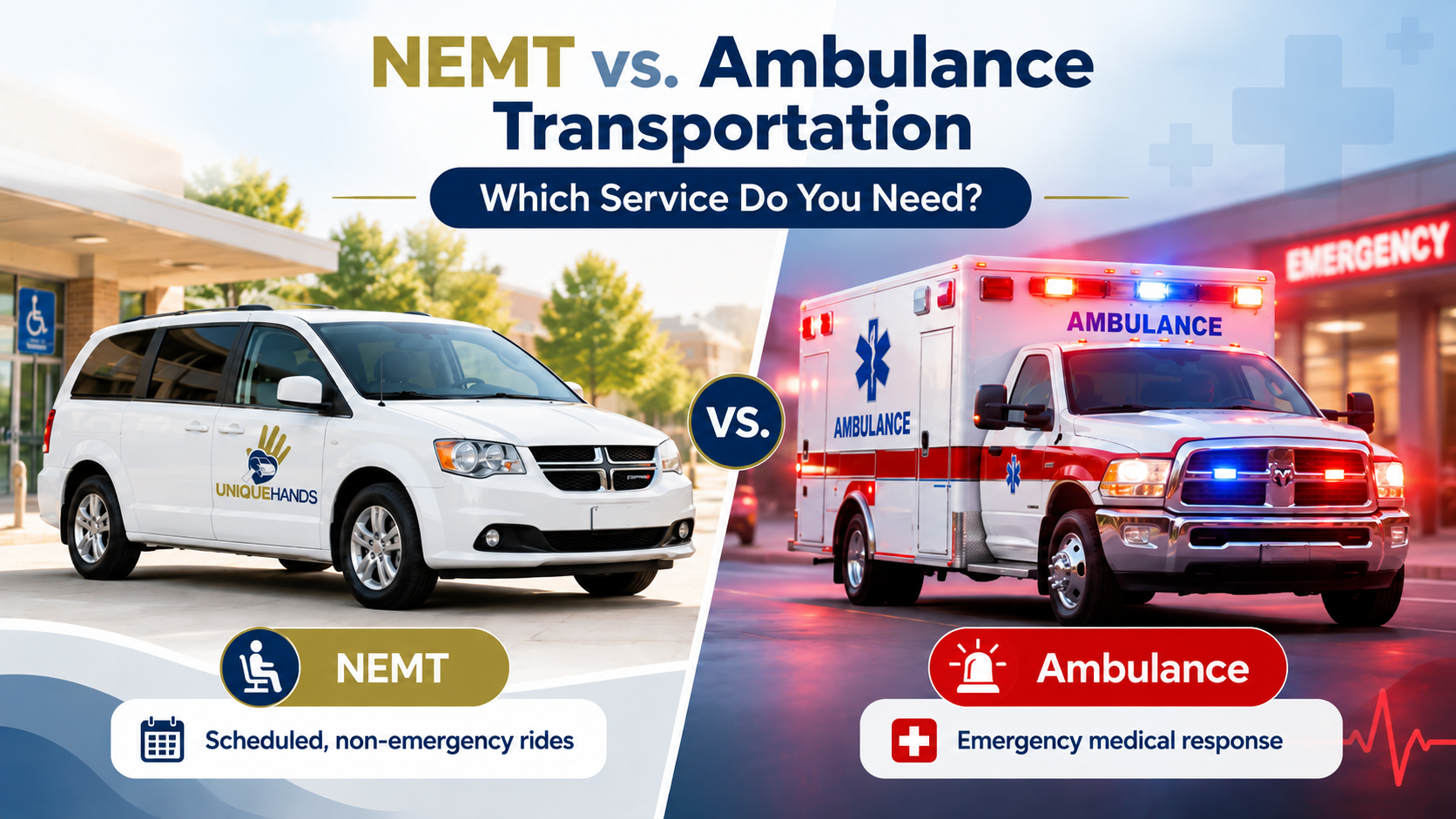
Long-distance medical transportation is a scheduled, non-emergency transportation service for medically stable passengers traveling beyond their immediate community. Depending on the passenger’s mobility needs, the trip may be arranged as wheelchair transportation, stretcher transportation, or ambulatory transportation.
When Is Long-Distance Medical Transportation Helpful?
A longer trip can become complicated when a passenger has limited mobility, cannot remain seated in a standard vehicle, is recovering from a procedure, or needs assistance entering and exiting the vehicle. Families may also need transportation when transferring a loved one between healthcare facilities or moving them closer to family.
UniqueHands coordinates long-distance non-emergency medical transportation based on the passenger’s mobility needs, pickup environment, destination, travel distance, and requested level of assistance. Every trip must be reviewed and confirmed before transportation is scheduled.
- Hospital discharge to a home or family residence
- Transportation to or from a rehabilitation center
- Admission or transfer to a skilled nursing facility
- Travel to a specialized medical appointment
- Transportation to an assisted living community
- Relocation to another city or state
- Transportation for a passenger with limited mobility
- Return transportation after treatment or recovery
TRANSPORTATION OPTIONS
Choosing the Right Type of Transportation
The appropriate transportation arrangement depends on the passenger’s ability to walk, sit upright, transfer, use a wheelchair, and tolerate a longer journey. Sharing accurate mobility information helps the transportation team review the request properly.
Wheelchair Transportation
Wheelchair transportation may be appropriate for passengers who use a manual or power wheelchair and need an accessible vehicle with wheelchair securement.
Explore wheelchair transportationStretcher Transportation
Stretcher transportation may be requested for medically stable passengers who cannot remain seated safely or comfortably for the duration of the trip.
Explore stretcher transportationAmbulatory Transportation
Ambulatory transportation is designed for passengers who can walk independently or with limited assistance but should not travel alone or drive themselves.
Explore ambulatory transportationState-to-State Transportation
Longer trips may include transportation across Virginia or to approved destinations outside the state, subject to availability and trip review.
Explore state-to-state transportationBEFORE YOU SCHEDULE
Information Needed to Plan the Trip
Long-distance transportation requires more preparation than a short local appointment. Providing complete information from the beginning allows the scheduling team to evaluate the trip, transportation type, travel time, accessibility concerns, and staffing requirements.
It is especially important to explain any stairs, narrow entrances, elevators, long hallways, facility discharge procedures, or other access conditions at both locations.
Read UniqueHands transportation FAQsHave These Details Ready
- 1
Pickup and destination
Include full addresses, facility names, unit numbers, and entrance instructions.
- 2
Passenger mobility needs
Explain whether the passenger walks, uses a wheelchair, or requires stretcher transportation.
- 3
Requested travel date
Include the preferred pickup time, appointment time, or facility discharge window.
- 4
Accessibility information
Report stairs, elevators, ramps, narrow spaces, and the distance from the residence to the vehicle.
- 5
Facility instructions
Share the contact person, department, admission process, or discharge requirements.
- 6
Companion information
Tell the team whether a family member or approved companion plans to travel with the passenger.
How to Make a Long Medical Transportation Trip More Comfortable
A long trip can be tiring even when it has been carefully planned. Families should discuss the passenger’s comfort, mobility limitations, and tolerance for extended travel before the transportation date.
Plan Early
Contact the transportation provider as soon as the travel date, destination, and passenger needs are known.
Confirm Facility Details
Ask the sending and receiving facilities about admission, discharge, entrance, and arrival procedures.
Prepare Personal Items
Organize identification, facility paperwork, mobility equipment, and other permitted personal belongings before pickup.
Discuss Breaks
For longer journeys, discuss the passenger’s comfort and whether planned stops may be appropriate.
FREQUENTLY ASKED QUESTIONS
Long-Distance Medical Transportation FAQ
Who can use long-distance medical transportation?
Long-distance non-emergency transportation may be appropriate for medically stable ambulatory, wheelchair, and stretcher passengers who need assistance traveling to an approved destination. Each request must be reviewed before service is confirmed.
Does UniqueHands provide ambulance transportation?
No. UniqueHands provides non-emergency medical transportation and is not an ambulance or emergency medical service. Anyone experiencing a medical emergency should call 911.
How far can UniqueHands transport a passenger?
Long-distance trips may be arranged within Virginia and to select out-of-state destinations. Availability depends on the pickup location, destination, passenger needs, requested date, staffing, and other trip requirements.
How much does long-distance transportation cost?
Pricing depends on factors such as mileage, transportation type, passenger mobility needs, pickup and destination access, staffing requirements, waiting time, and the requested travel schedule. Contact UniqueHands for a trip-specific quote.
How early should transportation be scheduled?
Advance scheduling is strongly recommended, especially for stretcher transportation, long-distance trips, facility transfers, and travel across state lines. A request is not confirmed until it has been reviewed and accepted by the scheduling team.
Can a family member travel with the passenger?
Companion arrangements should be discussed when requesting the trip. Available space and approval may depend on the vehicle, transportation type, passenger needs, and trip requirements.
Have another question? Visit the complete UniqueHands FAQ page.
PLAN YOUR TRANSPORTATION
Need Long-Distance Medical Transportation?
Share the pickup location, destination, requested travel date, passenger mobility needs, facility instructions, and level of assistance needed. The UniqueHands team will review the request and contact you regarding availability and pricing.
Email: info@uhtrans.com