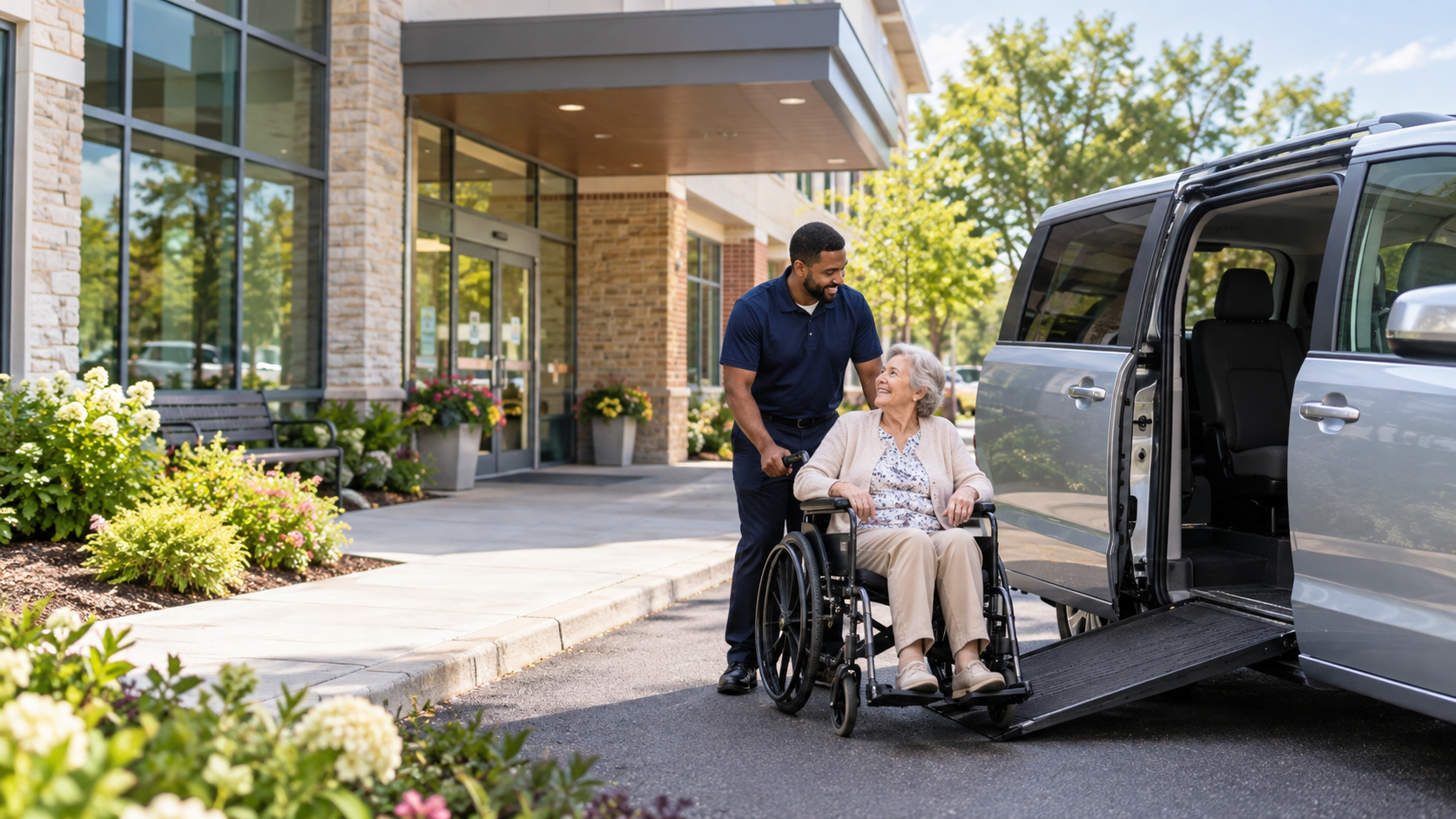

Wheelchair Transportation in Ashburn, VA: What Families Should Know

Ashburn Mobility Transportation Guide

When a Wheelchair Passenger in Ashburn Needs More Than an Ordinary Ride

The transportation decision often begins with a practical question: can the passenger safely get from the residence to the vehicle, remain positioned for the trip, and reach the medical destination?

Ashburn families have many transportation choices for an independent passenger. But the situation changes when someone uses a wheelchair, has difficulty transferring, is recovering from surgery, has become weaker after hospitalization, or needs additional mobility planning.

In those situations, choosing transportation is about more than finding a driver. Families should consider the passenger’s mobility, wheelchair, transfer ability, building access, destination, appointment timing and whether an ordinary passenger vehicle is appropriate.

Wheelchair and mobility transportation planning for Ashburn Virginia residents
For Ashburn families, the right transportation option should match the passenger’s mobility — not simply the destination.
LOOKING FOR TRANSPORTATION IN ASHBURN?

Visit Our Official Ashburn NEMT Service Page

This article helps families understand wheelchair and mobility transportation decisions. If you are ready to arrange a scheduled trip, visit our Non-Emergency Medical Transportation in Ashburn, VA page for local wheelchair, stretcher, ambulatory, hospital discharge, bed-to-bed and qualifying long-distance transportation information.

ASHBURN IS NOT ONE SIMPLE TRIP

A Medical Trip From Ashburn Can Look Very Different Depending on the Destination

Ashburn residents often travel across different parts of Loudoun County for healthcare. A short outpatient appointment near home presents a different transportation situation from a hospital discharge near Lansdowne or a specialty appointment outside Loudoun County.

ASHBURN / BRAMBLETON AREA

Outpatient and Medical Office Trips

Some Ashburn appointments are close to home, including healthcare destinations around Loudoun County Parkway and the Brambleton area. Even a short trip, however, can require accessible transportation when the passenger cannot comfortably transfer into an ordinary vehicle.
LANSDOWNE MEDICAL CORRIDOR

Hospital and Specialty-Care Trips

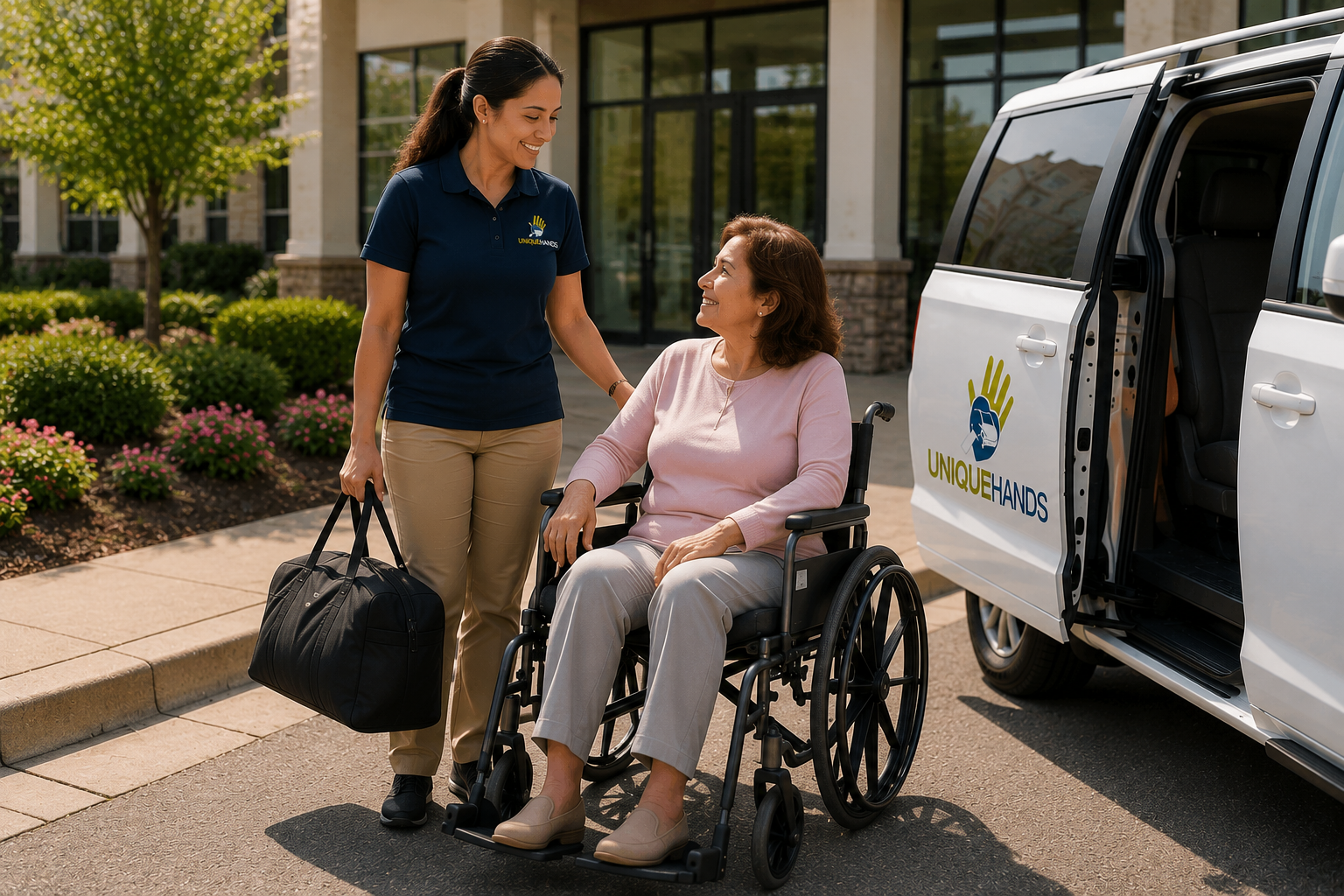
Ashburn residents may also travel toward the Inova Loudoun Hospital campus near Riverside Parkway and Lansdowne. Hospital visits and discharges can require more coordination because the correct building, entrance, pickup point and receiving destination matter.

ROUTE 7 CORRIDOR

Allow Time Beyond the Appointment

Medical transportation should not be planned around appointment time alone. Travel along Route 7 and surrounding Loudoun County corridors, facility check-in, parking-area access and passenger boarding can all affect how much time should be allowed.

ROUTE 28 / DULLES CORRIDOR

Trips Beyond Ashburn

Specialist care may take an Ashburn resident toward Sterling, Reston, Fairfax or other Northern Virginia destinations. Longer travel can make passenger positioning, transfer ability and return-trip planning more important.

MORE THAN HAVING A WHEELCHAIR

What Makes Wheelchair Transportation Different?

The fact that someone owns or uses a wheelchair is only one part of the transportation decision. Families should think through how the passenger gets from the starting location into the vehicle and what happens at the destination.

01

The Passenger Travels in the Wheelchair

An accessible transportation vehicle can accommodate a wheelchair passenger without requiring the same type of transfer into an ordinary passenger seat.

02

The Wheelchair Must Be Secured

Wheelchair transportation involves appropriate vehicle access and securement rather than simply placing a folded wheelchair in the trunk of a standard vehicle.

03

The Building Matters Too

Elevators, ramps, steps, long corridors, apartment entrances and distance to the vehicle can affect how practical a transportation arrangement is.

START AT THE FRONT DOOR

Ashburn Homes and Communities Can Present Very Different Access Needs

A passenger leaving a ground-floor accessible residence has a very different transportation setup from someone living in a multi-level townhouse, upper-floor apartment, senior living community or home with exterior steps.

This is why families should discuss access before the transportation date rather than waiting until the vehicle arrives.

A transportation company needs to understand where the passenger actually is, not simply the street address.

Before Scheduling, Check:

  • Is the passenger on the ground floor?
  • Are there porch or exterior steps?
  • Are interior stairs involved?
  • Is an elevator available?
  • Is the hallway wide enough for mobility equipment?
  • Is there gated or controlled building access?
  • How far is the passenger from vehicle access?
  • Will someone be available at the destination?
A COMMON FAMILY DECISION

Wheelchair Transportation or Stretcher Transportation?

Needing significant help does not automatically mean a passenger requires stretcher transportation.

Some passengers who spend much of the day in bed can still transfer to a wheelchair and safely remain seated for a scheduled trip. Others cannot tolerate an upright position or have positioning limitations that make wheelchair transportation inappropriate.

The transportation decision should be based on the passenger’s actual mobility and positioning needs rather than a general label such as “elderly,” “disabled” or “bedridden.”

Questions That Help Clarify the Need

  • Can the passenger sit upright for the trip?
  • Can the passenger transfer to a wheelchair?
  • Can the passenger bear weight?
  • Is significant pain present during sitting?
  • Are there positioning limitations?
  • How long is the transportation route?
WHEN MOBILITY CHANGES

Transportation Decisions Often Change Gradually for Older Ashburn Residents

Families do not always need specialized transportation because of one dramatic event. Sometimes the need develops gradually.

A

Driving Becomes Difficult

An older adult may still live independently but no longer feel comfortable driving to specialist visits, rehabilitation or medical procedures.

B

Transfers Become Harder

Getting into a family SUV or sedan may become the difficult part of the trip even when the passenger can otherwise participate in an appointment.

C

Family Cannot Always Accompany Them

Adult children may live outside Ashburn or work during appointment hours. Transportation planning can become part of helping an older relative continue accessing scheduled care.

COMING HOME AFTER HOSPITALIZATION

Hospital Discharge Can Be the Moment Families Realize a Regular Car Will Not Work

A passenger can be medically cleared to leave the hospital and still have temporary mobility limitations that make an ordinary car difficult or inappropriate.

A person who walked independently before hospitalization may now use a wheelchair, have weakness, have difficulty bending or transferring, or be unable to tolerate the same sitting position they used before.

The receiving location matters too. Coming home to an Ashburn residence with stairs is different from being discharged to a rehabilitation or skilled nursing facility.

Ask Before Discharge Day

  • How will the passenger leave the hospital?
  • Can the passenger transfer into a standard vehicle?
  • Can the passenger remain seated?
  • Is a wheelchair now being used?
  • What is the exact receiving destination?
  • Are steps present at home?
  • Will someone be there to receive the passenger?
ASHBURN & LOUDOUN MEDICAL TRIPS

The Exact Medical Destination Matters More Than Families Sometimes Expect

A hospital or medical campus may have several buildings, departments, entrances and parking areas. Providing only the hospital name can create unnecessary confusion on the day of transportation.

Facility Name Provide the full hospital, clinic or rehabilitation-facility name.
Building or Department Include the medical office building, department or suite when known.
Correct Entrance Hospital campuses may have different entrances for different services.
Appointment Time Transportation timing should allow for arrival and facility check-in.
Return Plan Clarify whether the appointment requires a scheduled return trip.
Receiving Contact Facility or family contact information can help when coordination is needed.
BETTER QUESTIONS TO ASK

How to Evaluate a Wheelchair Transportation Provider

Instead of choosing a provider based only on price or the phrase “wheelchair transportation,” families can ask practical questions about how the actual trip will work.

1

Describe the Wheelchair

Explain whether it is manual, powered, oversized or has other characteristics relevant to transportation.

2

Explain the Transfer Need

Be clear about whether the passenger can stand, pivot, bear weight or requires additional assistance.

3

Discuss Access

Tell the provider about stairs, elevators, narrow entrances and the distance from the passenger to the vehicle.

4

Confirm the Full Trip

Provide the destination, date, appointment time and whether a return ride will be needed.

UNDERSTANDING PRIVATE-PAY TRANSPORTATION

Why Prices Can Differ From One Ashburn Trip to Another

Private medical transportation is not priced like a standard rideshare. Two trips covering a similar number of miles may require different transportation arrangements.

Vehicle type, wheelchair or stretcher requirements, passenger mobility, access conditions, distance, requested timing and additional assistance can all affect the transportation request.

Families should provide the complete trip details when requesting pricing rather than comparing transportation based only on mileage.

Useful Information for a Quote

  • Passenger mobility
  • Wheelchair or stretcher requirement
  • Pickup address
  • Destination address
  • Travel date
  • Appointment or arrival time
  • Stairs or elevator information
  • Return-trip requirement
WHEN CARE IS OUTSIDE LOUDOUN

Longer Medical Trips From Ashburn Require Different Planning

Not every specialist, rehabilitation program or receiving facility is located close to Ashburn.

For longer trips, families should consider how the passenger tolerates extended travel, positioning needs, the receiving facility, expected arrival time and whether transportation is one-way or round-trip.

For qualifying longer-distance transportation, visit our main Long-Distance Medical Transportation page.

Longer Trips May Need More Preparation

  • Longer seated or positioned travel time
  • Earlier departure planning
  • Receiving-facility coordination
  • Passenger comfort considerations
  • One-way or return transportation
  • Mobility equipment requirements
UNIQUEHANDS ASHBURN SERVICES

Need Transportation Rather Than General Guidance?

This article is designed to help Ashburn families understand wheelchair and mobility transportation decisions.

For actual local service information, trip availability and transportation requests, continue to our official Non-Emergency Medical Transportation in Ashburn, VA page.

ASHBURN FAMILY QUESTIONS

Wheelchair & Mobility Transportation FAQs

When should an Ashburn family consider wheelchair transportation?

Wheelchair transportation may be appropriate when a passenger uses a wheelchair and cannot conveniently or appropriately transfer into an ordinary passenger vehicle. Mobility, access and trip requirements should be reviewed before transportation is arranged.

Can a wheelchair passenger travel to a medical appointment?

Yes. Wheelchair-accessible non-emergency transportation may be used for qualifying scheduled medical appointments, rehabilitation, hospital discharges and other appropriate trips.

Does someone who spends most of the day in bed always need a stretcher?

Not necessarily. Some passengers may still be able to transfer to a wheelchair and safely remain seated. Others may require stretcher transportation because they cannot safely tolerate an upright position.

Why does the transportation company need to know about stairs?

Steps, stairways, elevators, narrow hallways and room location can affect how the passenger reaches the transportation vehicle. Access conditions should be discussed before transportation is confirmed.

Can transportation be arranged after a hospital discharge?

Scheduled non-emergency transportation may be appropriate after a passenger has been medically cleared for discharge but cannot appropriately use standard transportation.

Where do I find UniqueHands' main Ashburn transportation page?

Visit Non-Emergency Medical Transportation in Ashburn, VA for local service information, transportation options and scheduling.

Is non-emergency transportation the same as an ambulance?

No. Non-emergency medical transportation is scheduled transportation and does not replace emergency ambulance care. For an emergency or immediate medical intervention, call 911.

ASHBURN PRIVATE-PAY TRANSPORTATION

Have an Ashburn Transportation Request?

Tell UniqueHands about the passenger’s mobility, wheelchair or stretcher requirements, pickup location, destination, requested date and time, stairs or elevators, and whether return transportation is needed.

For complete Ashburn service information, start with our official local service page.

Non-emergency transportation: UniqueHands provides scheduled private-pay transportation. Services do not replace emergency ambulance transportation or emergency medical care. For a medical emergency, call 911.

SHARE THIS RESOURCE

Know Someone Who May Find This Helpful?

Share this UniqueHands medical transportation resource with a family member, caregiver, healthcare professional, discharge planner, or facility coordinator.

UNIQUEHANDS RESOURCES

Medical Transportation Articles

Explore practical guides for families, caregivers, and facilities planning wheelchair, stretcher, ambulatory, hospital discharge, long-distance, and state-to-state non-emergency medical transportation.

September 11, 2026
Learn what to look for when choosing non-emergency medical transportation in Burke, VA, including mobility needs, wheelchair access, scheduling, safety and trip planning.
Burke Virginia resident using non-emergency medical transportation for scheduled healthcare and mobi
September 11, 2026
Learn when Burke residents may need private-pay NEMT for wheelchair trips, hospital discharge, recurring appointments, senior transportation and other medical travel.
Planning non-emergency medical transportation in Burke VA for appointments wheelchair trips hospital
September 11, 2026
A practical guide for Burke families planning private-pay NEMT for appointments, wheelchair trips, stretcher transport, hospital discharge and recurring care.
September 11, 2026
Learn how NEMT helps Burke, VA residents access medical care and how to choose the right ambulatory, wheelchair, stretcher or longer-distance transportation.
transportation options for disabled and mobility-limited residents in Herndon, VA
September 10, 2026
Learn about transportation options for disabled and mobility-limited residents in Herndon, VA, including wheelchair-accessible NEMT, medical appointments, rehabilitation and hospital trips.
Planning non-emergency medical transportation for patients in Woodbridge Virginia
September 10, 2026
Learn how to arrange non-emergency medical transportation in Woodbridge, VA, including wheelchair, stretcher, hospital discharge, appointment, access and return-trip planning.
View More Articles