Reliable State-to-State Medical Transportation: Planning a Safer, More Comfortable Journey
When medical care, recovery, or family circumstances require traveling beyond state lines, arranging suitable transportation becomes an important part of the journey.
From wheelchair-accessible travel to stretcher transportation, understanding your options can help you prepare for a well-organized, scheduled non-emergency medical trip.
What Is State-to-State Medical Transportation?
State-to-state medical transportation refers to travel between two or more states for healthcare-related or mobility-related needs. For many passengers, using an ordinary car may be difficult because of accessibility, transfer requirements, positioning, or the length of the journey.
People may need cross-country medical transportation for specialist appointments, second opinions, rehabilitation, medical facility transitions, or relocation closer to family members.
UniqueHands provides private-pay, pre-arranged long-distance medical transportation by ground. Transportation arrangements are evaluated according to the passenger's mobility needs, pickup and destination details, distance, and requested assistance.
Cross-Country Medical Transportation: When Distance Adds Complexity
Long-distance ground transportation may involve several hours of travel or a route across multiple states. Longer journeys require more preparation than a typical local medical appointment.
Families should consider passenger mobility, travel duration, vehicle access, rest planning where appropriate, and the practical requirements of the receiving destination.
Longer Travel Time
Extended road trips require thoughtful scheduling, realistic travel estimates, and attention to comfort throughout the journey.
Mobility Requirements
Wheelchair users, stretcher passengers, and individuals needing assistance may require specific transportation arrangements.
Destination Planning
Hospitals, rehabilitation centers, nursing facilities, and private residences may have different access and arrival requirements.
What Makes State-to-State Transportation Dependable?
When evaluating a transportation company, families should look beyond the destination and consider how the provider handles passenger information, vehicle suitability, loading and unloading, scheduling, and communication.
A clear understanding of the passenger's needs helps determine whether non-emergency ground transportation is appropriate and what preparations may be necessary.
Five Essential Elements of Reliable Interstate Medical Transportation
Experience and Planning
Experience with scheduled medical travel can help a provider anticipate the additional logistics involved in extended journeys, mobility assistance, and facility transitions.
Accessibility and Safety
Appropriate vehicle access, wheelchair securement, passenger positioning, and clear pickup instructions are especially important when arranging longer trips.
Comfort and Convenience
The passenger's mobility, ability to remain seated, transfer requirements, and travel duration should be discussed before scheduling.
Thoughtful Scheduling
Planning around appointment times, road conditions, distance, facility procedures, and loading requirements can reduce avoidable transportation complications.
Pickup and Arrival Assistance
Door-to-door or additional mobility assistance should be discussed in advance, particularly when stairs, hallways, building access, or facility procedures are involved.
Clear Communication
Families benefit when pickup arrangements, destination details, travel expectations, and requested escort support are clearly addressed before the trip.
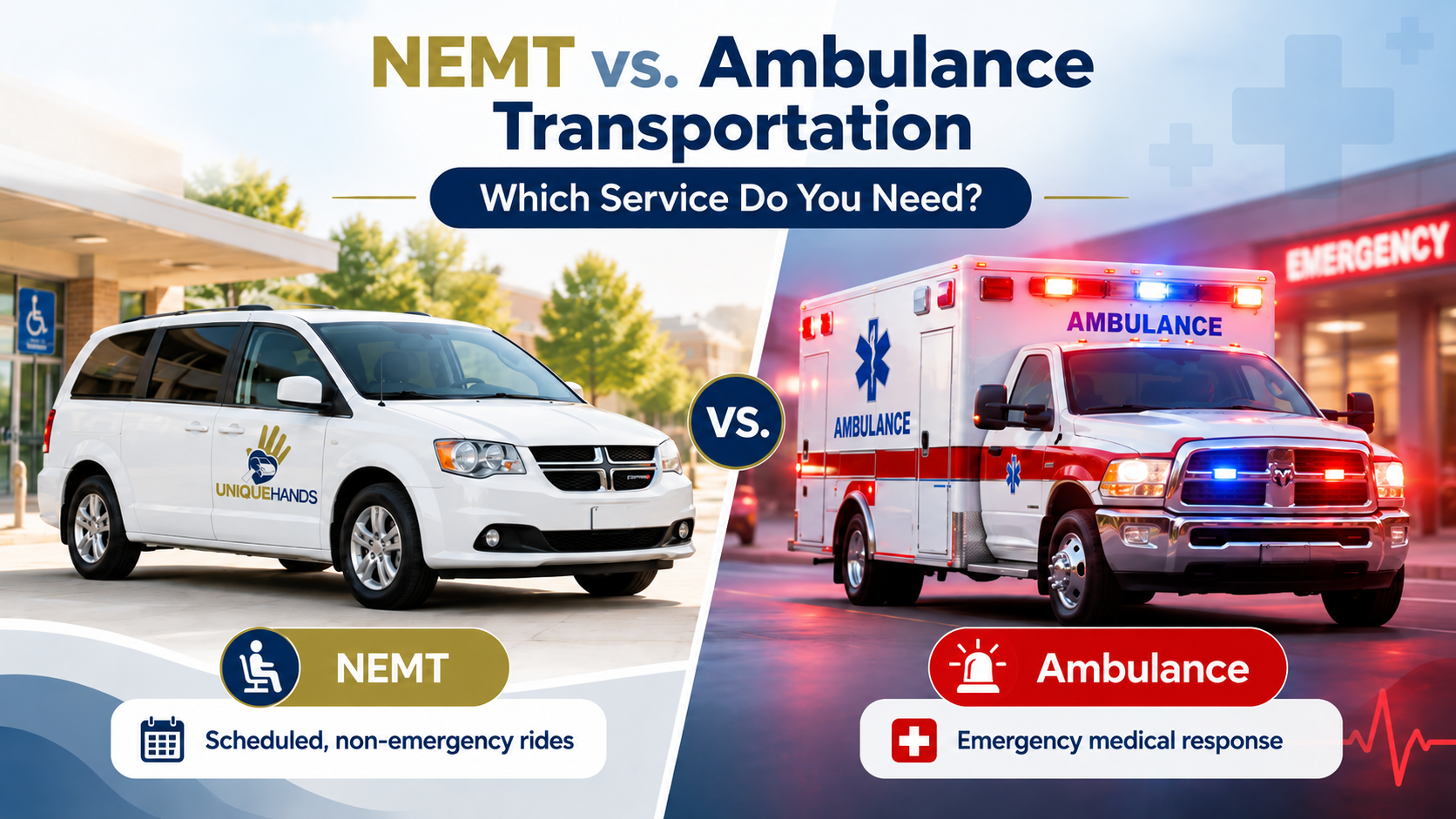
Non-Emergency Transportation vs. Ambulance Transport
Scheduled non-emergency medical transportation is intended for passengers who do not require emergency medical intervention during travel.
It may accommodate mobility limitations through wheelchair-accessible vehicles, stretcher arrangements, or assisted passenger transportation.
It is not the same as emergency ambulance transportation, critical-care transport, or medical evacuation.
How UniqueHands Transportation Is Arranged
UniqueHands operates on a private-pay, pre-arranged basis rather than as a Medicaid or Medicare transportation provider.
When requesting long-distance service, provide the starting location, destination, preferred travel date, mobility needs, and any additional assistance requested.
The trip can then be reviewed for suitability, logistics, and scheduling.
Important: UniqueHands is not an emergency ambulance service and does not provide emergency medical treatment during transportation. For a medical emergency, contact 911.
Matching the Transportation Type to the Passenger's Needs
The most suitable vehicle and assistance level depend on how the passenger moves, transfers, and travels comfortably.
Ambulatory Transportation
Appropriate for passengers who can walk and enter a vehicle but need scheduled transportation or assistance by arrangement.
Wheelchair Transportation
Accessible ground transportation for passengers traveling in wheelchairs, with appropriate vehicle entry and securement.
Stretcher Transportation
For qualifying non-emergency passengers who need to travel in a lying position rather than remaining seated upright.
How to Prepare for a State-to-State Medical Transportation Trip
Good preparation starts with clear information and an understanding of the passenger's transportation requirements.
Identify the Route
Provide the full pickup address, destination address, date, and any relevant appointment or facility arrival instructions.
Review Mobility Needs
Explain whether the passenger walks, uses a wheelchair, requires a stretcher, or needs other mobility assistance.
Discuss Property Access
Mention stairs, entryways, elevators, long corridors, access restrictions, and any transfer-related concerns.
Plan for Travel Duration
Consider the distance, possible traffic, passenger comfort, and appropriate travel arrangements for a longer journey.
Coordinate the Destination
Confirm appointment instructions, receiving facility procedures, or the availability of someone to receive the passenger.
Discuss Escort Assistance
If a companion will travel with the passenger or additional escort assistance is needed, discuss the arrangement before booking.
Medical Transportation Services That Support Longer Journeys
Interstate journeys may require the same accessibility services used for local transportation, with additional consideration for distance, positioning, and logistics.
Bed-to-Bed Transportation
Some passengers need additional help when transitioning between a bed, wheelchair, stretcher, vehicle, or destination.
Pickup and arrival conditions, transfer needs, and available assistance should be discussed before transportation.
Learn about bed-to-bed transportation →Long-Distance Ground Travel
Pre-arranged long-distance medical transportation may be suitable for certain interstate medical appointments, facility transfers, and other non-emergency journeys.
The route and passenger needs must be evaluated before confirming transportation arrangements.
Learn about long-distance transportation →Escort and Companion Arrangements for Long-Distance Travel
Some passengers prefer or require additional support when traveling longer distances. This may involve a family member, caregiver, companion, or escort assistance arranged in connection with the transportation service.
The appropriate arrangement depends on the passenger's circumstances, requested assistance, and transportation plan.
Companionship and mobility assistance are not substitutes for medical care. If a passenger requires nursing supervision, continuous clinical monitoring, or emergency medical intervention, a different level of transportation may be necessary.
Planning tip: Tell the transportation provider about companion travel, equipment, luggage, and requested escort assistance when arranging the trip rather than waiting until pickup day.
Find the Right UniqueHands Medical Transportation Service
These pages provide more detailed information about the transportation services available through UniqueHands.
Making Interstate Medical Travel More Manageable
State-to-state medical transportation is often an important part of planning healthcare access, rehabilitation, facility transitions, or relocation closer to family.
By considering the passenger's mobility, selecting an appropriate transportation type, communicating destination requirements, and allowing time for coordination, families can prepare more confidently for longer journeys.
UniqueHands focuses on pre-arranged, private-pay non-emergency ground transportation with wheelchair, stretcher, ambulatory, bed-to-bed, and long-distance options.
State-to-State Medical Transportation FAQs
Can UniqueHands provide medical transportation across state lines?
UniqueHands provides pre-arranged long-distance non-emergency ground transportation. Availability for a specific interstate route depends on the pickup and destination, distance, scheduling, and passenger needs.
Can wheelchair passengers travel between states?
Yes, wheelchair-accessible transportation can be arranged for qualifying non-emergency interstate trips. Wheelchair dimensions, securement, passenger mobility, and route requirements should be reviewed before booking.
Do you offer stretcher transportation for long-distance trips?
UniqueHands provides stretcher transportation for qualifying non-emergency passengers. Long-distance arrangements depend on the passenger's transportation needs and the details of the requested trip.
Can a companion travel with the passenger?
Companion travel and escort assistance should be discussed when arranging transportation, so space and requested assistance can be reviewed in advance.
Does UniqueHands accept Medicare or Medicaid?
UniqueHands operates as a private-pay transportation provider and does not bill Medicare or Medicaid for rides.
Is state-to-state NEMT the same as emergency ambulance transportation?
No. UniqueHands provides scheduled non-emergency transportation and does not replace an emergency ambulance or provide emergency medical treatment.
How should I request a long-distance trip?
Provide the pickup location, destination, proposed travel date, passenger mobility, and any requested transportation assistance. The trip can then be reviewed for appropriate arrangements and scheduling.
Planning State-to-State Medical Transportation?
Whether you are coordinating transportation for yourself, a parent, or another loved one, UniqueHands can discuss your requested long-distance non-emergency transportation, mobility requirements, and travel plans.
Pre-arranged, private-pay transportation. Not an emergency ambulance service.