Finding Long-Distance Medical Transportation in Pittsburgh, PA
Pittsburgh Long-Distance Medical Transportation Guide

Finding Long-Distance Non-Emergency Medical Transportation in Pittsburgh, PA
When a passenger needs to travel a significant distance to or from Pittsburgh for medical care, rehabilitation, a hospital discharge, relocation, or continued treatment, arranging transportation can become one of the most complicated parts of the trip.
Long-distance non-emergency medical transportation can provide an option for medically stable passengers who need more support than a traditional taxi, rideshare, bus, train, or ordinary passenger vehicle can provide.
This guide explains transportation options involving Pittsburgh, what families should consider before booking, and how wheelchair, stretcher, ambulatory, and long-distance transportation needs can affect the trip.
UniqueHands Private-Pay Transportation Planning a Long-Distance Trip Involving Pittsburgh? UniqueHands may provide private-pay long-distance non-emergency medical transportation for qualifying trips to or from Pittsburgh, depending on passenger needs, travel distance, scheduling, and vehicle availability. View Long-Distance Transportation Call (571) 970-1828
Understanding the Service
What Is Long-Distance Non-Emergency Medical Transportation?
Non-emergency medical transportation, commonly called NEMT, provides scheduled transportation for medically stable passengers who do not require emergency ambulance care but may need transportation that better accommodates their mobility or travel needs.
Long-distance NEMT applies the same concept to trips that extend beyond a typical local transportation area. A passenger may be traveling between cities, across Pennsylvania, or between Pittsburgh and another state.
Families researching Pennsylvania transportation options can also read our related guide to long-distance medical transportation in Pennsylvania.
Common Situations
Why Might Someone Need Medical Transportation to or from Pittsburgh?
Pittsburgh is home to hospitals, specialists, rehabilitation facilities, senior communities, and healthcare centers that may serve patients from outside the immediate area.
Long-distance transportation may be considered for situations such as:
- Travel to an out-of-area specialist or medical facility
- Hospital discharge to a residence in another city or state
- Transportation to rehabilitation or skilled nursing care
- Relocation of an older adult closer to family
- Facility-to-facility transportation
- Transportation for recurring or specialized treatment
- Wheelchair-accessible long-distance transportation
- Non-emergency stretcher transportation
The appropriate transportation option depends on the passenger's mobility, medical stability, travel distance, destination, and level of assistance required.
Transportation Options
Ambulatory, Wheelchair, and Stretcher Transportation
Ambulatory Transportation Ambulatory transportation may be appropriate for passengers who can walk independently or with limited assistance but need dependable transportation over a longer distance.
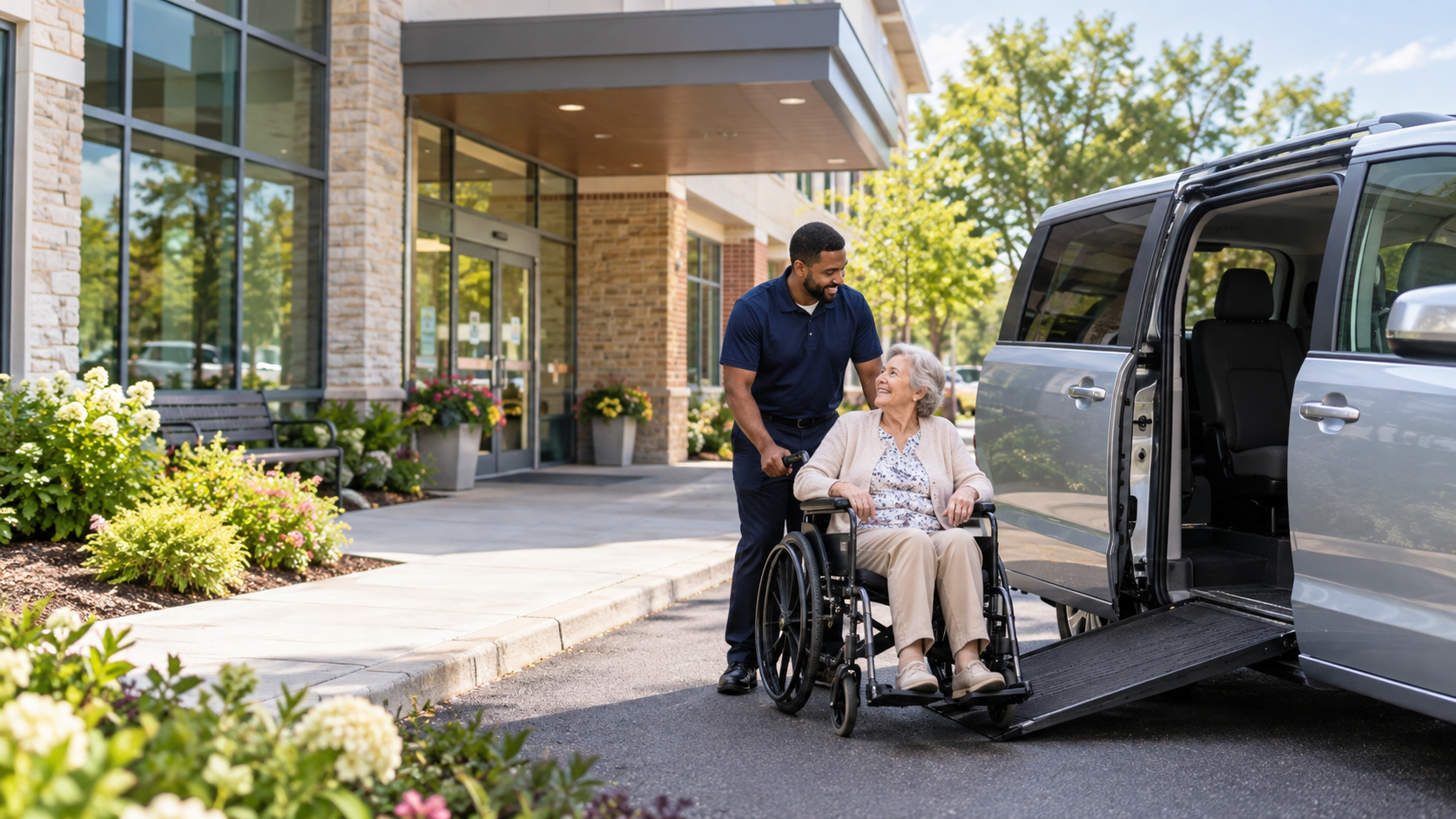
Wheelchair Transportation Passengers who remain in wheelchairs may require an accessible vehicle with appropriate boarding access and wheelchair securement equipment.
Families should provide information about the wheelchair, passenger mobility, whether a transfer is possible, and accessibility at both pickup and destination.
If wheelchair accessibility is part of the transportation plan, learn more about UniqueHands wheelchair transportation.
Non-Emergency Stretcher Transportation Certain medically stable passengers who cannot comfortably remain seated for a long journey may require stretcher transportation.
Stretcher NEMT is different from an ambulance. The passenger must be appropriate for planned non-emergency transportation, and the transportation provider must determine whether the requested trip falls within its service capabilities.
Learn more about non-emergency stretcher transportation available through UniqueHands.
Why Standard Transportation May Not Work for Every Passenger
Public transportation, taxis, rideshare services, and family vehicles are appropriate for many independent passengers. However, they may not meet the needs of someone who uses a wheelchair, cannot transfer into a standard vehicle, needs additional mobility assistance, or must remain lying down during transportation.
Long-distance travel also adds practical considerations such as trip duration, passenger comfort, accessibility, luggage or mobility equipment, rest stops when appropriate, and destination coordination.
Families should consider the entire travel experience rather than simply choosing the lowest-cost way to cover the distance.
Need More Than Long-Distance Transportation? Explore UniqueHands' non-emergency medical transportation services for additional private-pay transportation options.
Before the Trip
Information Families Should Have Before Scheduling
A transportation provider will usually need detailed trip information before determining availability or providing a quote.
- Complete pickup address
- Complete destination address
- Requested transportation date
- Appointment or required arrival time
- Passenger mobility level
- Wheelchair type and size when applicable
- Whether the passenger can transfer
- Whether stretcher transportation is requested
- Accessibility at the pickup location
- Accessibility at the destination
- Whether stairs, ramps, elevators, or other barriers are present
- Whether a family member or caregiver will travel
The more accurate this information is, the easier it is for the transportation provider to determine whether the trip can be safely and appropriately accommodated.
Have a Pittsburgh Transportation Request? Tell UniqueHands where the passenger is traveling from, the Pittsburgh-area pickup or destination, the requested date, and the passenger's mobility requirements. Request Transportation Call (571) 970-1828
Hospital Discharge and Facility Transportation
Some long-distance trips begin or end at a hospital, rehabilitation center, skilled nursing facility, assisted living community, or another healthcare setting.
These trips may require coordination with family members or facility staff to confirm discharge timing, destination details, passenger mobility, belongings, and who will receive the passenger at the destination.
Hospital discharge times can change, so families should communicate schedule changes to the transportation provider as soon as possible.
Cost Considerations
What Affects Long-Distance Medical Transportation Pricing?
Long-distance medical transportation does not have one universal price. Each trip must be evaluated based on its specific requirements.
Factors that may affect pricing include:
- Total travel distance and estimated travel time
- Pickup and destination locations
- Ambulatory, wheelchair, or stretcher transportation
- Passenger assistance requirements
- Vehicle requirements
- Scheduling and requested travel date
- Waiting time when applicable
- Tolls, parking, or route-related expenses when applicable
- Other trip-specific transportation requirements
Families comparing transportation companies should ask what is included in a quote rather than comparing only an advertised starting price.
UniqueHands provides private-pay transportation and does not bill Medicaid or private health insurance. Individuals seeking transportation through an insurance plan, Medicaid, Medicare-related benefit, public assistance program, or another funding source should contact that program directly to determine eligibility.
Choosing a Provider
Questions to Ask Before Booking Long-Distance NEMT
- Do you provide transportation to or from the Pittsburgh area?
- Can the vehicle accommodate the passenger's wheelchair or mobility device?
- Is non-emergency stretcher transportation available when appropriate?
- What passenger assistance is included?
- How much advance notice is recommended?
- What information is required about stairs, ramps, or elevators?
- Can a family member or caregiver travel with the passenger?
- How is long-distance travel time estimated?
- What is included in the transportation quote?
- How are schedule changes or delays handled?
When NEMT Is Not the Right Transportation
Non-emergency medical transportation is intended for planned trips involving medically stable passengers. It is not an ambulance or emergency response service.
If a person is experiencing a medical emergency, severe symptoms, or a potentially life-threatening condition, call 911 or seek appropriate emergency medical care rather than scheduling NEMT.
UniqueHands
Private-Pay Long-Distance Transportation for Trips Involving Pittsburgh
UniqueHands is based in Northern Virginia and provides private-pay non-emergency medical transportation. Long-distance trips involving Pittsburgh may be available depending on the pickup location, destination, passenger mobility needs, travel distance, scheduling, and vehicle availability.
Transportation options may include ambulatory transportation, wheelchair transportation, non-emergency stretcher transportation, senior transportation, hospital discharge transportation, medical appointment transportation, and longer interstate trips.
Learn more about long-distance medical transportation or review our broader non-emergency medical transportation services.
Learn More About UniqueHands Families researching a transportation provider can also read reviews and testimonials from UniqueHands customers.
UniqueHands Long-Distance Transportation Need Transportation To or From Pittsburgh? Provide the pickup location, destination, requested date, and passenger mobility requirements so our team can review the trip. Request Transportation Call (571) 970-1828
Frequently Asked Questions
Pittsburgh Long-Distance Medical Transportation FAQ
Can a patient be transported long distance to or from Pittsburgh? Yes, depending on the transportation provider, passenger needs, pickup location, destination, distance, requested date, and vehicle availability.
Can wheelchair users travel long distance? Wheelchair users may be able to travel in an appropriately equipped wheelchair-accessible vehicle. The provider should receive wheelchair and mobility information before confirming the trip.
Is non-emergency stretcher transportation available for long trips? Certain medically stable passengers may be appropriate for non-emergency stretcher transportation. The provider must review the passenger's needs and trip requirements before confirming service.
What affects the price of a Pittsburgh long-distance medical trip? Pricing can depend on distance, travel time, vehicle requirements, wheelchair or stretcher needs, assistance requirements, scheduling, tolls, waiting time, and other trip-specific details.
Does UniqueHands bill Medicaid or insurance? No. UniqueHands provides private-pay transportation and does not bill Medicaid or private health insurance.
Is UniqueHands located in Pittsburgh? UniqueHands is based in Northern Virginia. Long-distance transportation involving Pittsburgh may be available depending on the details of the requested trip.
Finding the Right Medical Transportation for a Pittsburgh Trip
Long-distance transportation involving Pittsburgh requires careful planning, especially when the passenger uses a wheelchair, needs stretcher transportation, has limited mobility, or is traveling from a healthcare facility.
Families should compare transportation options based on the passenger's actual needs, accessibility, travel distance, assistance requirements, destination, and overall trip logistics.
If private non-emergency transportation is appropriate, UniqueHands can review the details of the proposed trip and determine whether long-distance service is available.
UNIQUEHANDS RESOURCES
Medical Transportation Articles
Explore practical guides for families, caregivers, and facilities planning wheelchair, stretcher, ambulatory, hospital discharge, long-distance, and state-to-state non-emergency medical transportation.