
How to Choose a Non-Emergency Medical Transportation Provider in Fairfax, VA

Fairfax NEMT Provider Selection Guide

Choosing Medical Transportation Starts With the Passenger — Not the Vehicle

Before asking which transportation company to use, first determine exactly what the passenger needs from the time they leave the pickup location until they reach the destination.

A Fairfax resident who can walk to a medical appointment has very different transportation needs from someone who uses a wheelchair, cannot safely remain seated, is leaving a hospital, or needs assistance getting from a room to the transportation vehicle.

A good provider-selection conversation should therefore begin with mobility, access, destination and trip requirements — not simply “How much does the ride cost?”
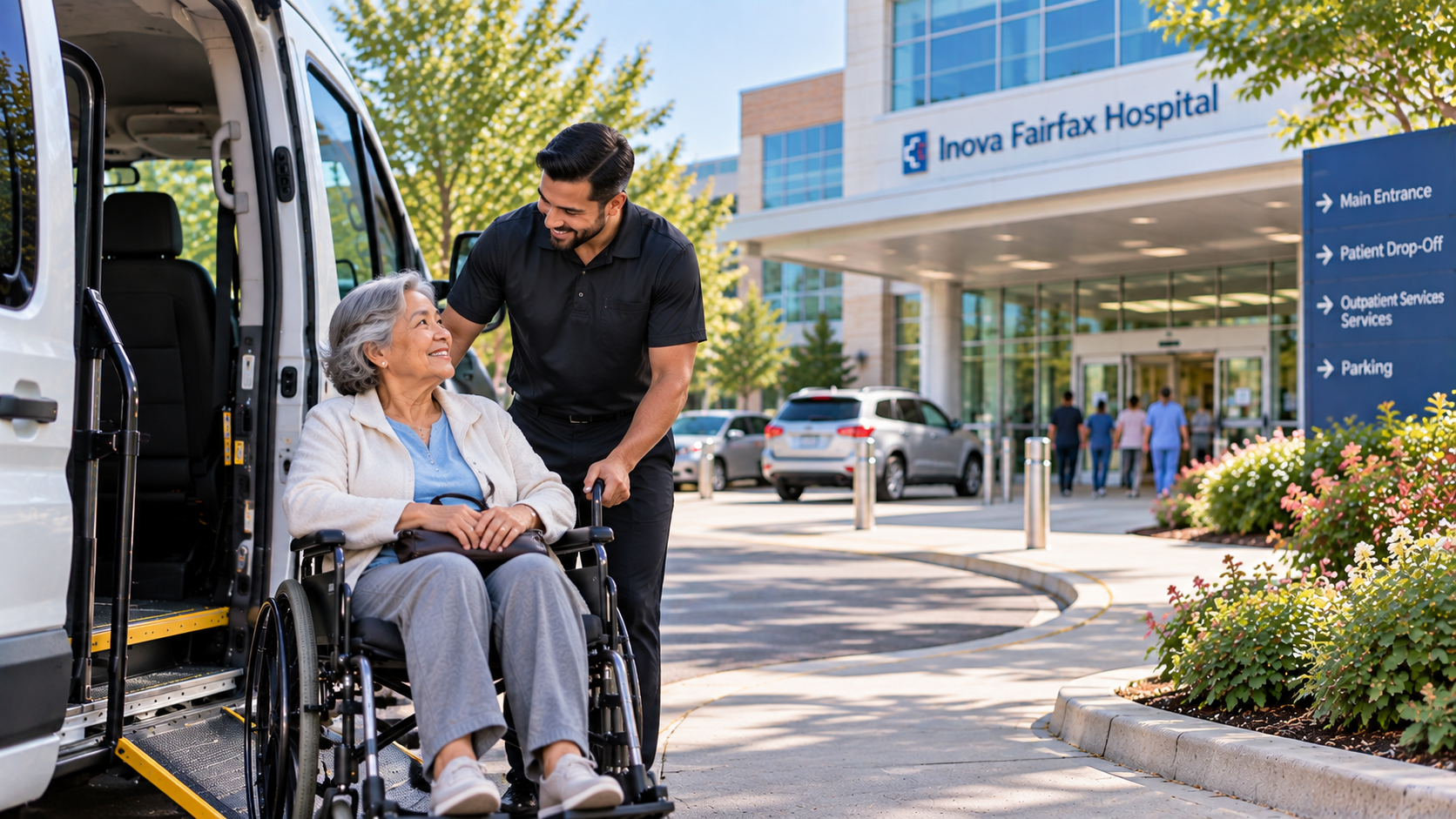
Choosing a non-emergency medical transportation provider for patients and families in Fairfax Virginia
The right provider should ask enough questions to understand the passenger, pickup environment, destination and complete trip.
READY TO ARRANGE TRANSPORTATION?

Start With Our Main Fairfax NEMT Page

This article is an educational guide for comparing transportation providers. For actual local service information, transportation options and trip requests, visit our Non-Emergency Medical Transportation in Fairfax page.

STEP ONE

Describe What the Passenger Can and Cannot Do

You should not have to diagnose the passenger or know transportation terminology. You should, however, be able to describe their actual mobility so the provider can understand the request.

01

Can the Passenger Walk?

Explain whether the passenger walks independently, uses a cane or walker, or needs limited assistance reaching the vehicle.

02

Do They Use a Wheelchair?

Tell the provider whether the wheelchair is manual or powered and whether the passenger must remain in it during transportation.

03

Can They Transfer?

A passenger who cannot stand, pivot or transfer into a standard seat may require a different transportation arrangement.

04

Can They Remain Seated?

A passenger who cannot safely or comfortably tolerate an upright position may need to discuss stretcher transportation.

05

Are Stairs Involved?

The path between the passenger and the vehicle may be just as important as the ride itself.

06

Is This a Hospital Discharge?

Mobility may be different after illness, surgery or hospitalization, so the transportation plan should reflect the passenger’s condition at discharge.

STEP TWO

Ask Whether the Provider Actually Offers the Transportation Type You Need

“Medical transportation” is a broad term. Not every provider offers every type of trip.

A company may provide ambulatory and wheelchair transportation but not stretcher service. Another provider may specialize in longer-distance trips but have different local-service capabilities.

Understanding this before booking prevents a situation where the vehicle arrives but does not match the passenger’s needs.

Ask About the Exact Service

  • Ambulatory transportation
  • Wheelchair transportation
  • Stretcher transportation
  • Bed-to-bed transportation
  • Hospital discharge transportation
  • Long-distance medical transportation
  • Waiting or return-trip arrangements
A GOOD PROVIDER SHOULD ASK QUESTIONS TOO

What Information Should a NEMT Provider Ask Before Confirming the Trip?

A transportation company cannot properly understand a mobility-limited trip from the addresses alone.

01 What is the passenger’s mobility?

Walking ability, wheelchair use, transfer ability and positioning needs can determine the transportation type.

02 What equipment is involved?

The provider may need to know whether the passenger uses a manual wheelchair, powered wheelchair or requires stretcher transportation.

03 What is the pickup environment?

A ground-floor residence is different from a townhouse bedroom, apartment building or hospital room.

04 Are there stairs or elevators?

Access barriers should be discussed before transportation day rather than discovered at pickup.

05 Where exactly is the passenger going?

Large hospitals may require a specific building, department, suite or entrance rather than only the hospital name.

06 What happens after the appointment?

The company should understand whether the trip is one-way, round-trip, waiting service or a later scheduled pickup.

STEP THREE

Ask Where the Transportation Service Actually Begins and Ends

Families often use phrases such as “door-to-door” or “bed-to-bed” without realizing that transportation companies may define assistance differently.

Before booking, ask exactly what assistance is included at pickup and at the destination.

This is especially important for older adults, wheelchair users, recently discharged patients and passengers who have difficulty navigating long hallways or large medical campuses.

Clarify These Details

  • Does pickup begin at the curb or inside the residence?
  • Will assistance be provided through the entrance?
  • Can the provider manage the requested stairs?
  • Where does assistance end at the destination?
  • Can the passenger be taken to a designated receiving area?
  • Can a caregiver accompany the passenger?
  • Is waiting service available?
FAIRFAX-SPECIFIC QUESTIONS

Local Knowledge Can Matter on Transportation Day

Fairfax transportation is not simply a matter of entering two addresses into GPS. The pickup environment, hospital campus and major travel corridors can affect the plan.

INOVA FAIRFAX / GALLOWS ROAD

Ask for the Exact Building

The Inova Fairfax Medical Campus includes multiple hospitals, specialty facilities, buildings and entrances. “Inova Fairfax” alone may not be enough destination information.

FAIR OAKS / JOSEPH SIEWICK DRIVE

Hospital or Medical Office?

The Fair Oaks medical area includes hospital and outpatient locations. Confirm the exact address, office, suite and pickup instructions.

ROUTE 50 / FAIRFAX BOULEVARD

Appointment Timing Should Include More Than Mileage

Boarding, traffic, unloading and medical-office check-in can add time even when the destination appears close on a map.

ROUTE 29 / I-66 / FAIRFAX COUNTY PARKWAY

Regional Trips Need More Planning

Fairfax residents may travel across the county or elsewhere in Northern Virginia for specialists, rehabilitation and hospital care. Departure and return timing should be discussed in advance.

DO NOT FORGET THE HOME

The Hardest Part of the Trip May Happen Before the Vehicle Moves

Fairfax County includes single-family homes, condominiums, apartments, senior communities and multi-level townhomes.

A wheelchair-accessible vehicle does not automatically solve a passenger’s access problem if the passenger cannot reach the vehicle.

Tell the provider what the path from the passenger to the vehicle actually looks like.

Describe the Pickup Route

  • Ground floor or upper floor
  • Exterior steps
  • Interior stairs
  • Elevator availability
  • Narrow hallways
  • Long distance from room to entrance
  • Building or gate access
  • Vehicle loading area
STEP FOUR

Ask How the Vehicle and Equipment Match the Passenger

The goal is not to find the biggest or most complicated vehicle. It is to match the vehicle and transportation equipment to the passenger’s actual needs.

A

Ambulatory Passenger

A walking passenger may not need a wheelchair-accessible vehicle at all. Ask what type of ordinary seated transportation is used.

W

Wheelchair Passenger

Confirm that the vehicle can accommodate the passenger’s actual wheelchair and that the trip has been planned as wheelchair transport.

S

Stretcher Passenger

If the passenger cannot remain seated, confirm that the provider actually offers scheduled non-emergency stretcher transportation.

STEP FIVE

Compare the Entire Transportation Request — Not Just the Mileage Rate

Two providers may quote different prices because they are not quoting the same transportation arrangement.

One quote may include a wheelchair trip while another assumes the passenger can walk. One may include a return trip while another is one-way only.

The best comparison is based on the same passenger, same mobility needs, same pickup conditions and same destination requirements.

Pricing Questions to Ask

  • Is this quote one-way or round-trip?
  • What transportation type is included?
  • Is waiting charged separately?
  • Does stair assistance affect the quote?
  • Does the trip require additional staffing?
  • Are longer-distance charges included?
  • Are there cancellation or rescheduling terms?
DO NOT BOOK ONLY HALF THE TRIP

Ask What Happens When the Appointment Is Over

Getting the passenger to the appointment is only half the transportation problem when they also need to get home.

Routine medical appointments may have predictable end times, while imaging, rehabilitation, procedures and hospital discharges can run later than expected.

Ask the provider how waiting, later pickup and return transportation are handled before the first trip begins.

Return-Trip Questions

  • Will the vehicle wait?
  • Is waiting charged?
  • Can a later pickup be scheduled?
  • Who calls when the passenger is ready?
  • What happens if the appointment runs late?
  • Can the destination facility coordinate pickup?
QUESTIONS SHOULD COME BEFORE CONFIRMATION

Provider-Selection Red Flags Worth Paying Attention To

No single question proves whether a transportation provider is right or wrong for a trip. But some situations should make a family stop and ask for more information before confirming.

No questions about mobility The provider confirms a wheelchair, stretcher or complex transport request without understanding what the passenger can actually do.
No questions about stairs The trip involves a mobility-limited passenger but nobody asks how the passenger reaches the vehicle.
Unclear service boundaries You cannot determine whether the service is curb-to-curb, door-to-door or includes assistance beyond the vehicle.
Vague return-trip plan The passenger needs transportation home but there is no clear arrangement for waiting or later pickup.
Quote does not match the trip A price is given without understanding wheelchair, stretcher, distance, stairs or other relevant trip conditions.
Emergency-care promises from an NEMT service Scheduled NEMT should not be presented as a substitute for emergency ambulance response or clinical medical care.
UNDERSTAND THE SERVICE LIMITS

Non-Emergency Medical Transportation Is Not Ambulance Care

NEMT is scheduled transportation for passengers who do not require emergency medical response during the requested trip.

It should not be confused with ambulance transportation, emergency treatment, nursing care or continuous clinical monitoring.

If a person is experiencing a medical emergency or requires immediate emergency intervention, call 911.

Typical Non-Emergency Trips Can Include:

  • Doctor appointments
  • Hospital discharges
  • Rehabilitation appointments
  • Diagnostic visits
  • Scheduled outpatient procedures
  • Facility transfers
  • Long-distance medical trips
SAVE TIME WHEN REQUESTING A QUOTE

Information to Have Ready Before Calling a Fairfax NEMT Provider

1 Pickup Address

Include residence, apartment, hospital or facility details.

2 Destination

Include exact hospital, office, building, suite or department when known.

3 Date and Required Arrival Time

Appointment time and required check-in time may be different.

4 Passenger Mobility

Walking, wheelchair use, transfer ability and ability to remain seated.

5 Access Conditions

Mention stairs, elevators, hallways, gates or difficult entrances.

6 Return Transportation

Explain whether the trip is one-way, round-trip or requires later pickup.

WHEN YOU CONTACT UNIQUEHANDS

We Review the Transportation Request Before the Trip

UniqueHands provides scheduled private-pay non-emergency medical transportation in Fairfax and throughout Northern Virginia.

Before transportation is confirmed, trip planning may include the passenger’s mobility, wheelchair or stretcher needs, pickup accessibility, stairs, destination information, trip distance and return-transportation requirements.

For Fairfax-specific service information, visit our main Fairfax NEMT page.

FAIRFAX NEMT PROVIDER FAQ

Questions to Ask Before Booking Medical Transportation

What should I ask a medical transportation provider before booking?

Ask what transportation types they offer, what assistance is included, how they handle wheelchair or stretcher needs, whether stairs can be accommodated, how return trips work and what information they need before confirming the trip.

Should a provider ask about the passenger’s mobility?

Yes. Walking ability, wheelchair use, transfer ability and whether the passenger can remain seated can affect which transportation type is appropriate.

Why should I tell the provider about stairs?

Stairs and other access barriers can affect whether a passenger can safely reach the vehicle and what equipment or staffing may be needed for the requested transportation.

Should I choose the cheapest NEMT provider?

Price is one factor, but make sure you are comparing the same transportation type, assistance level, trip distance and return-trip arrangement before comparing quotes.

What if my family member uses a wheelchair?

Tell the provider the wheelchair type, whether the passenger must remain in it during travel, transfer ability and any access barriers at pickup or destination.

What if the passenger cannot remain seated?

Wheelchair or ambulatory transportation may not be appropriate when the passenger cannot safely tolerate an upright seated position. Stretcher transportation may need to be considered.

Is NEMT the same as an ambulance?

No. Non-emergency medical transportation is scheduled transportation and does not replace emergency ambulance response, emergency medical treatment or continuous clinical monitoring. Call 911 for a medical emergency.

Where can I find UniqueHands Fairfax transportation services?

Visit Non-Emergency Medical Transportation in Fairfax for local service information and transportation requests.

FAIRFAX PRIVATE-PAY MEDICAL TRANSPORTATION

Already Know What Transportation the Passenger Needs?

Have the passenger’s mobility information, pickup address, destination, requested date and time, wheelchair or stretcher need, stairs or elevators and return-trip details ready.

Important: UniqueHands provides scheduled private-pay non-emergency medical transportation. Transportation availability depends on the requested trip, passenger needs, accessibility, vehicle, equipment and staffing. For a medical emergency, call 911.

SHARE THIS RESOURCE

Know Someone Who May Find This Helpful?

Share this UniqueHands medical transportation resource with a family member, caregiver, healthcare professional, discharge planner, or facility coordinator.

UNIQUEHANDS RESOURCES

Medical Transportation Articles

Explore practical guides for families, caregivers, and facilities planning wheelchair, stretcher, ambulatory, hospital discharge, long-distance, and state-to-state non-emergency medical transportation.


Wheelchair stretcher and ambulatory medical transportation options for Manassas Virginia residents
September 10, 2026
Compare wheelchair, stretcher and ambulatory transportation in Manassas, VA and learn which option may fit appointments, discharge, therapy and medical trips.
Comparing non-emergency medical transportation companies for patients and families in Manassas VA
September 10, 2026
Compare NEMT companies in Manassas, VA by transportation type, wheelchair or stretcher needs, hospital access, pricing, scheduling, trip scope and service limits.
Non-emergency medical transportation for patients and families in Manassas Virginia
September 10, 2026
Learn how NEMT can help Manassas residents with wheelchair access, hospital discharge, medical appointments, rehabilitation, caregiver needs and longer trips.
Choosing a non-emergency medical transportation provider in Fairfax County for wheelchair, stretcher
September 10, 2026
Learn how to compare NEMT providers in Fairfax County for wheelchair, stretcher, senior, hospital and appointment trips, including pricing and scheduling.
Non-emergency medical transportation in Fairfax County for seniors, wheelchair users and stretcher
September 9, 2026
Learn when non-emergency medical transportation may be appropriate in Fairfax County for seniors, wheelchair users, procedures, discharges and recurring care.
Ambulatory transportation after outpatient procedures for patients in Fairfax County Virginia
September 9, 2026
Learn how to plan ambulatory transportation after outpatient procedures in Fairfax County, including discharge rules, local hospitals, escorts and return trips.
View More Articles