Medical Transport Across States Can Be Stressful—But Not With Reliable Transportation
Careful planning and reliable transportation can make an interstate trip less stressful.
Medical Transport Across States Can Be Stressful—But Not With Reliable Transportation
Medical transport across states can feel overwhelming for passengers and their families. A long-distance trip requires more planning than ordinary local transportation, especially when the passenger uses a wheelchair, needs stretcher transportation, has limited mobility, or is traveling between healthcare facilities.
With a reliable non-emergency medical transportation provider, the process can become more organized and manageable. UniqueHands helps families coordinate pre-arranged, private-pay transportation for ambulatory, wheelchair, and stretcher passengers traveling across state lines.
The Challenges of Medical Transport Across States
Interstate medical transportation involves several details that must be considered before the trip begins. Understanding these challenges can help passengers, families, discharge planners, and facility staff prepare more effectively.
Logistical Complications
Coordinating transportation across different states can involve scheduling, pickup and destination access, travel time, rest stops, passenger positioning, mobility equipment, and communication between multiple people or facilities.
A trip may begin at a hospital, rehabilitation center, skilled nursing facility, assisted living community, or private residence. The destination may also have specific arrival procedures, entrances, elevators, stairs, or other access requirements that must be discussed before departure.
Selecting the Appropriate Vehicle
The transportation vehicle should match the passenger’s mobility needs. A passenger who can walk with limited assistance may require ambulatory transportation, while another passenger may need a wheelchair-accessible vehicle or stretcher transportation.
Choosing the appropriate vehicle before the trip helps reduce unnecessary transfers, delays, and discomfort. Families should explain the passenger’s mobility level clearly when requesting transportation.
Planning for Wheelchairs and Mobility Equipment
Wheelchairs, walkers, personal belongings, and other mobility items require adequate space. UniqueHands should be informed about the type and approximate size of the passenger’s wheelchair, whether it is manual or powered, and whether additional mobility equipment will travel with the passenger.
Providing these details in advance helps the transportation team prepare the vehicle and determine whether any additional arrangements are needed.
Coordinating the Pickup and Destination
Long-distance transportation often involves communication with staff or family members at both ends of the trip. The pickup facility may need to complete discharge paperwork, prepare the passenger, and confirm the correct entrance.
Someone at the destination may also need to be available when the passenger arrives. Confirming the destination address, entrance instructions, contact person, and telephone number can help prevent avoidable delays.
Understanding the Cost
The cost of medical transport across states may depend on the mileage, transportation type, travel time, pickup conditions, destination access, tolls, waiting time, and whether additional assistance is required.
UniqueHands provides private-pay transportation and does not bill Medicare, Medicaid, or private insurance. Passengers and families should request pricing information before confirming the trip so they understand the expected cost.
Passenger Comfort During a Long Trip
Passenger comfort becomes increasingly important during long-distance transportation. The trip should be planned around the passenger’s mobility level, ability to sit upright, positioning needs, and expected travel time.
Families should discuss any non-clinical transportation needs before departure. UniqueHands is a non-emergency medical transportation provider and does not replace an ambulance or provide emergency medical treatment during the trip.
How UniqueHands Helps Reduce the Stress
Reliable transportation is not simply about driving from one address to another. A successful interstate trip requires communication, preparation, an appropriate vehicle, and a clear plan from pickup through arrival.
1. Transportation Based on the Passenger’s Needs
UniqueHands provides ambulatory, wheelchair, and stretcher transportation. During scheduling, the team collects information about the passenger’s mobility, pickup location, destination, travel distance, and access conditions.
This information helps determine the transportation option that is appropriate for the requested trip.
2. Long-Distance Trip Planning
Coordinating medical transport across states requires careful attention to distance, travel time, pickup readiness, destination availability, and vehicle accessibility.
Planning these details before departure helps passengers and families understand what to expect and reduces last-minute confusion.
3. Communication With Families and Facilities
UniqueHands can coordinate transportation details with the passenger, responsible family member, hospital discharge planner, rehabilitation facility, assisted living community, or other designated contact.
Clear communication helps ensure that the passenger is prepared at pickup and that someone is ready to receive the passenger at the destination.
4. Clear Private-Pay Pricing
Long-distance transportation can involve several cost factors. UniqueHands discusses the available trip details and provides private-pay pricing before the transportation is confirmed.
Sharing accurate pickup, destination, mileage, mobility, and access information helps the team prepare a more accurate transportation quote.
5. Wheelchair and Stretcher Transportation Options
A standard vehicle may not be appropriate for a passenger who uses a wheelchair or cannot sit upright safely. UniqueHands offers transportation options designed for passengers who require more assistance than a taxi, rideshare, or family vehicle can provide.
Wheelchairs and stretchers are positioned and secured for transportation before the vehicle begins the trip.
6. Assistance From Pickup to Arrival
The transportation team assists with the planned pickup, boarding, transportation, exiting the vehicle, and reaching the arranged destination entrance.
Stairs, narrow hallways, elevators, long walkways, or other access challenges should be explained during scheduling so the trip can be evaluated and planned properly.
Information to Provide Before an Interstate Trip
When requesting medical transport across states, be prepared to provide:
- The passenger’s full name and telephone number
- The complete pickup address and destination address
- The requested transportation date and pickup time
- Whether ambulatory, wheelchair, or stretcher transportation is required
- The passenger’s approximate height and weight when relevant
- Information about wheelchairs, walkers, or other mobility equipment
- Details about stairs, elevators, entrances, hallways, or access concerns
- The pickup and destination contact names and telephone numbers
- Whether a family member or caregiver plans to travel with the passenger
Medical Transport Across States From Northern Virginia
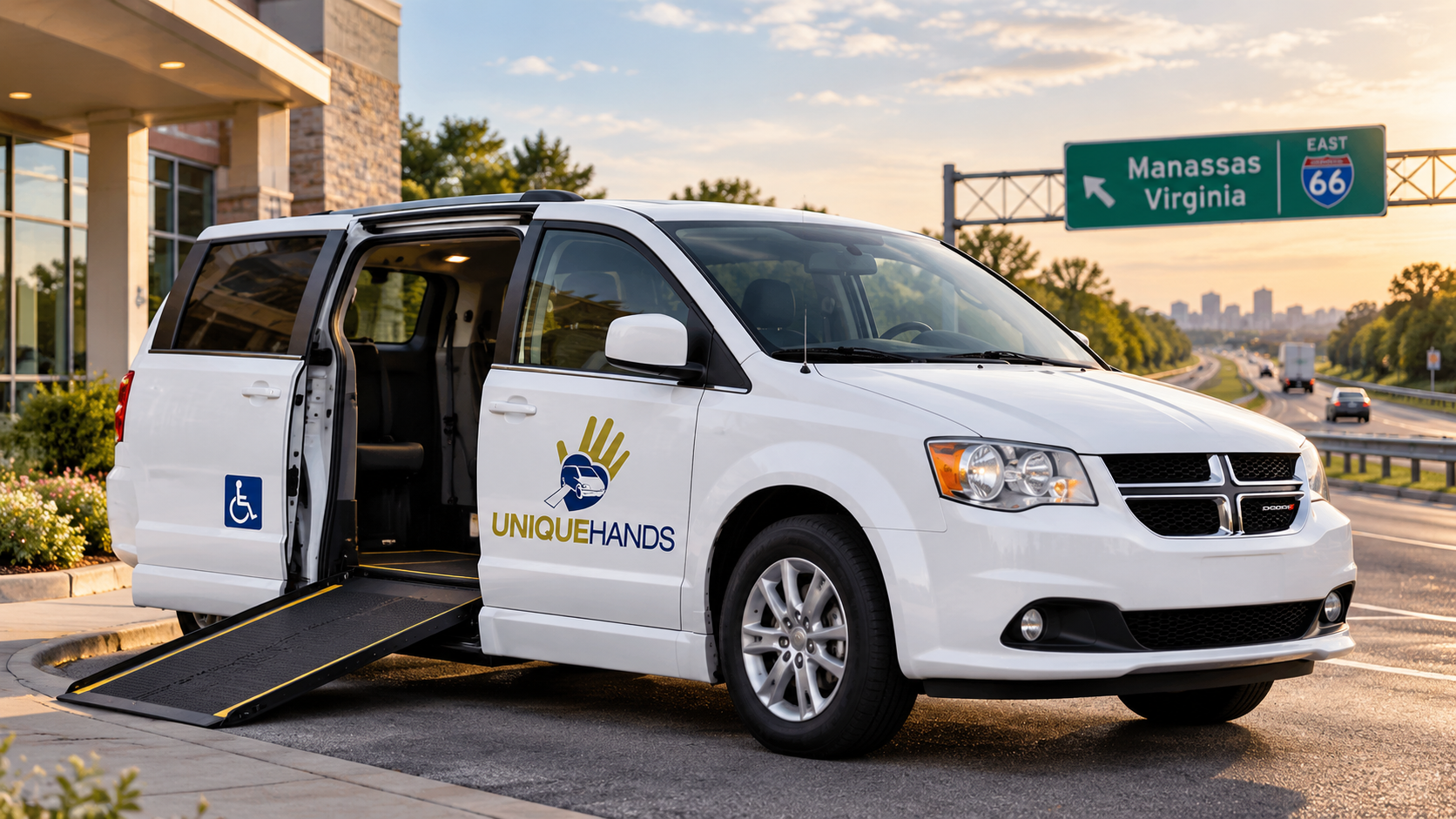
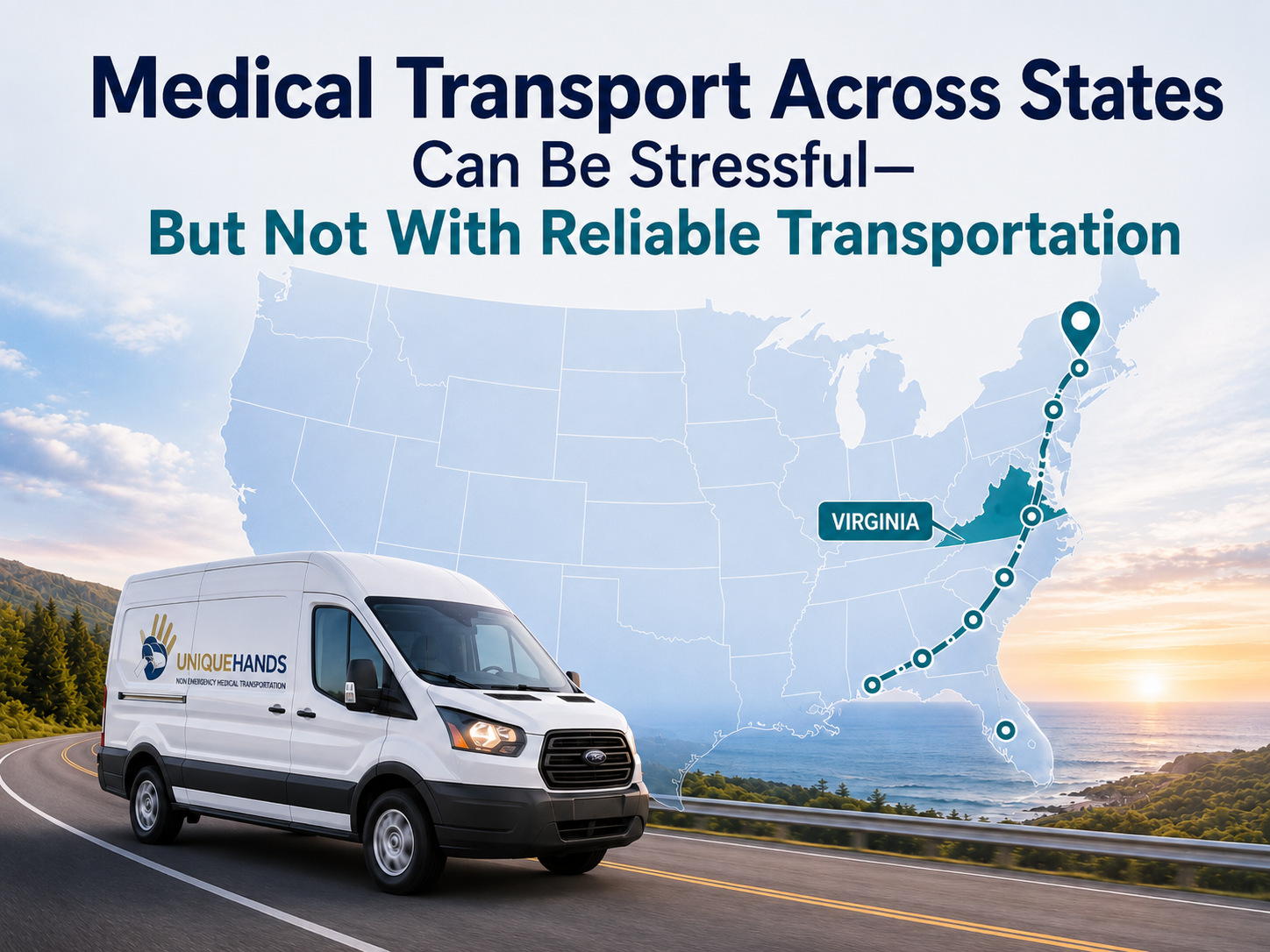
UniqueHands is based in Northern Virginia and provides pre-arranged long-distance medical transportation to destinations in Virginia and across state lines.
Pickup service may be available from Fairfax County, Prince William County, Loudoun County, Arlington, Alexandria, Falls Church, Fairfax City, Manassas, Manassas Park, and surrounding Northern Virginia communities.
Conclusion
Medical transport across states can be stressful, but careful planning and reliable transportation can make the experience easier for passengers and their families.
By confirming the passenger’s mobility needs, selecting an appropriate vehicle, coordinating both locations, and discussing pricing before the trip, families can avoid many common transportation problems.
UniqueHands provides private-pay ambulatory, wheelchair, and stretcher transportation for pre-arranged long-distance and state-to-state trips.
Frequently Asked Questions
What challenges are involved in medical transport across states?
Common challenges include selecting the appropriate vehicle, coordinating pickup and destination contacts, planning for mobility equipment, estimating travel time, and confirming access conditions at both locations.
Does UniqueHands provide wheelchair transportation across states?
UniqueHands may provide pre-arranged long-distance wheelchair transportation based on the trip details, passenger needs, scheduling availability, and pickup and destination locations.
Is stretcher transportation available for interstate trips?
Stretcher transportation may be available for passengers who cannot sit upright safely. The trip must be discussed in advance so UniqueHands can review the passenger’s transportation needs and travel details.
Does UniqueHands bill insurance for interstate transportation?
No. UniqueHands provides private-pay transportation and does not bill Medicare, Medicaid, or private insurance.
Is interstate medical transportation an emergency service?
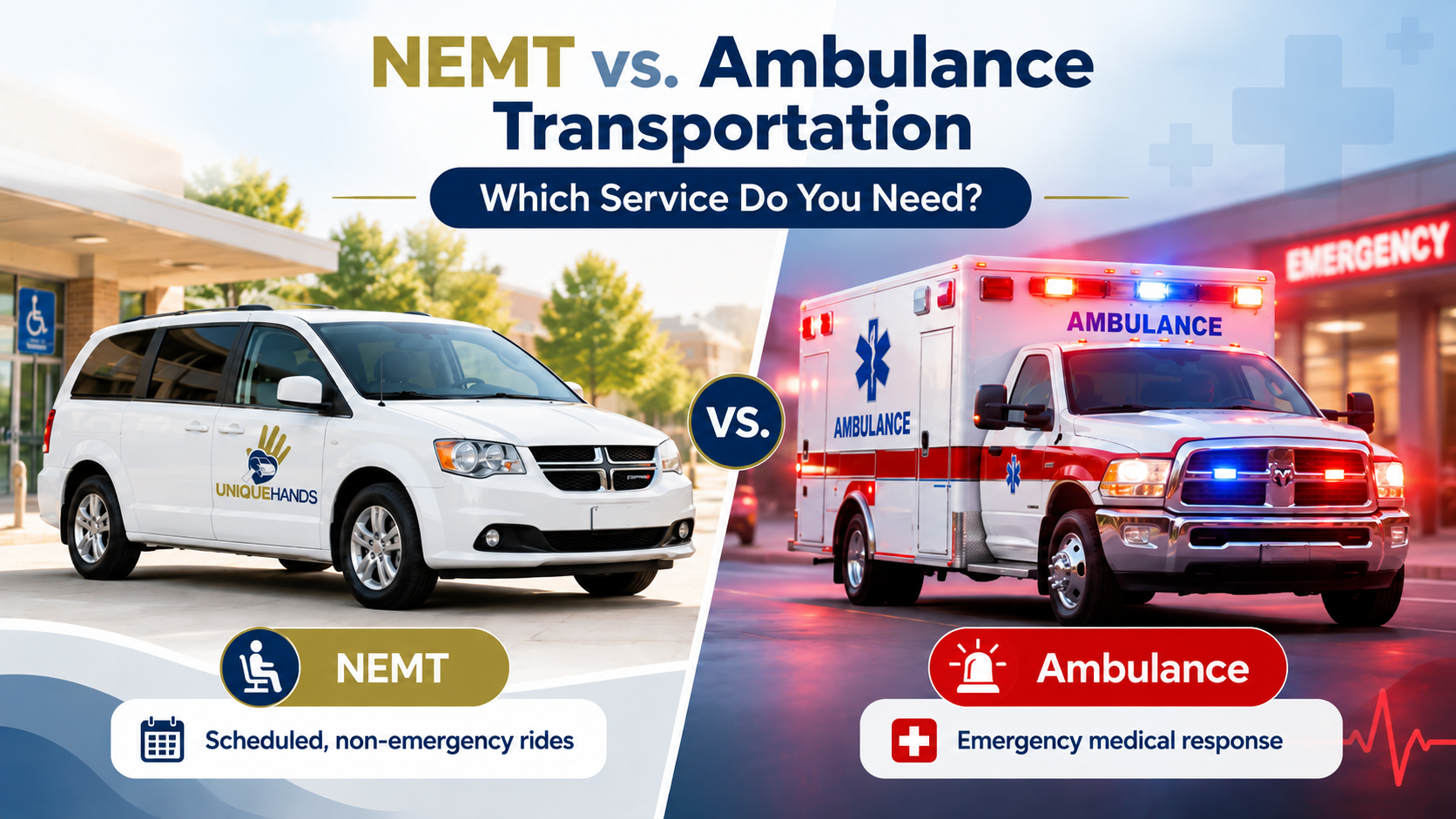
No. UniqueHands provides non-emergency medical transportation. Anyone experiencing a medical emergency should call 911.
How far in advance should transportation be scheduled?
Long-distance transportation should be requested as early as possible. Advance notice allows time to review the route, transportation type, passenger needs, vehicle availability, pricing, and pickup and destination requirements.
Request Long-Distance Medical Transportation
Contact UniqueHands Non-Emergency Medical Transportation at (571) 970-1828 to discuss a private-pay ambulatory, wheelchair, or stretcher trip across state lines.
UNIQUEHANDS RESOURCES
Medical Transportation Articles
Explore practical guides for families, caregivers, and facilities planning wheelchair, stretcher, ambulatory, hospital discharge, long-distance, and state-to-state non-emergency medical transportation.