Optimizing Long-Distance Medical Transportation: Comfort, Safety & Better Travel Planning
A longer medical journey involves more than the distance between two addresses. Passenger comfort, mobility requirements, accessible transportation, scheduling, and destination coordination all deserve careful attention.
Learn how thoughtful planning helps families prepare for non-emergency medical transportation between cities, regions, and states.
Why Long-Distance Transportation Requires Additional Planning
For seniors, wheelchair passengers, individuals recovering from surgery, and people with other mobility limitations, a several-hour trip can present challenges that ordinary passenger transportation may not adequately address.
Travel requirements can include accessible vehicle entry, proper wheelchair securement, suitable positioning, transfer assistance, destination access, and enough time for a carefully arranged journey.
Long-distance medical transportation offers a scheduled ground transportation option for passengers whose mobility requirements make standard transportation difficult.
UniqueHands provides private-pay, pre-arranged non-emergency medical transportation, including wheelchair, stretcher, ambulatory, and bed-to-bed options, depending on the requested trip and passenger needs.

Improving Comfort During Long-Distance Medical Transportation
Passenger comfort depends on choosing a transportation arrangement that matches the individual's mobility and positioning needs. That is especially important on extended trips.
Appropriate Positioning
Some passengers can travel seated, while others need wheelchair or stretcher arrangements. The suitable option should be discussed before scheduling.
Accessible Vehicle Entry
Passengers using wheelchairs need appropriate vehicle access and wheelchair securement for the journey.
Travel Duration
Longer trips require consideration of travel time, the passenger's tolerance for an extended journey, and any appropriate breaks or other arrangements.
The Importance of Safety in Long-Distance Ground Transportation
In non-emergency medical transportation, safety planning begins before the vehicle departs. Passenger mobility, loading requirements, equipment, route details, and pickup conditions must be understood so appropriate transportation arrangements can be considered.
Vehicle and Equipment Considerations
Accessible transportation may involve wheelchair entry systems, securement equipment, or suitable stretcher arrangements based on the passenger's needs.
- Wheelchair accessibility
- Appropriate securement procedures
- Passenger transfer considerations
- Suitable seating or stretcher arrangement
- Pickup and destination access
Clear Passenger Information
Before arranging transportation, families should explain whether a passenger can walk, needs a wheelchair, requires a stretcher, or has additional mobility requirements.
Information about stairs, elevators, building access, and requested escort assistance can also affect planning.
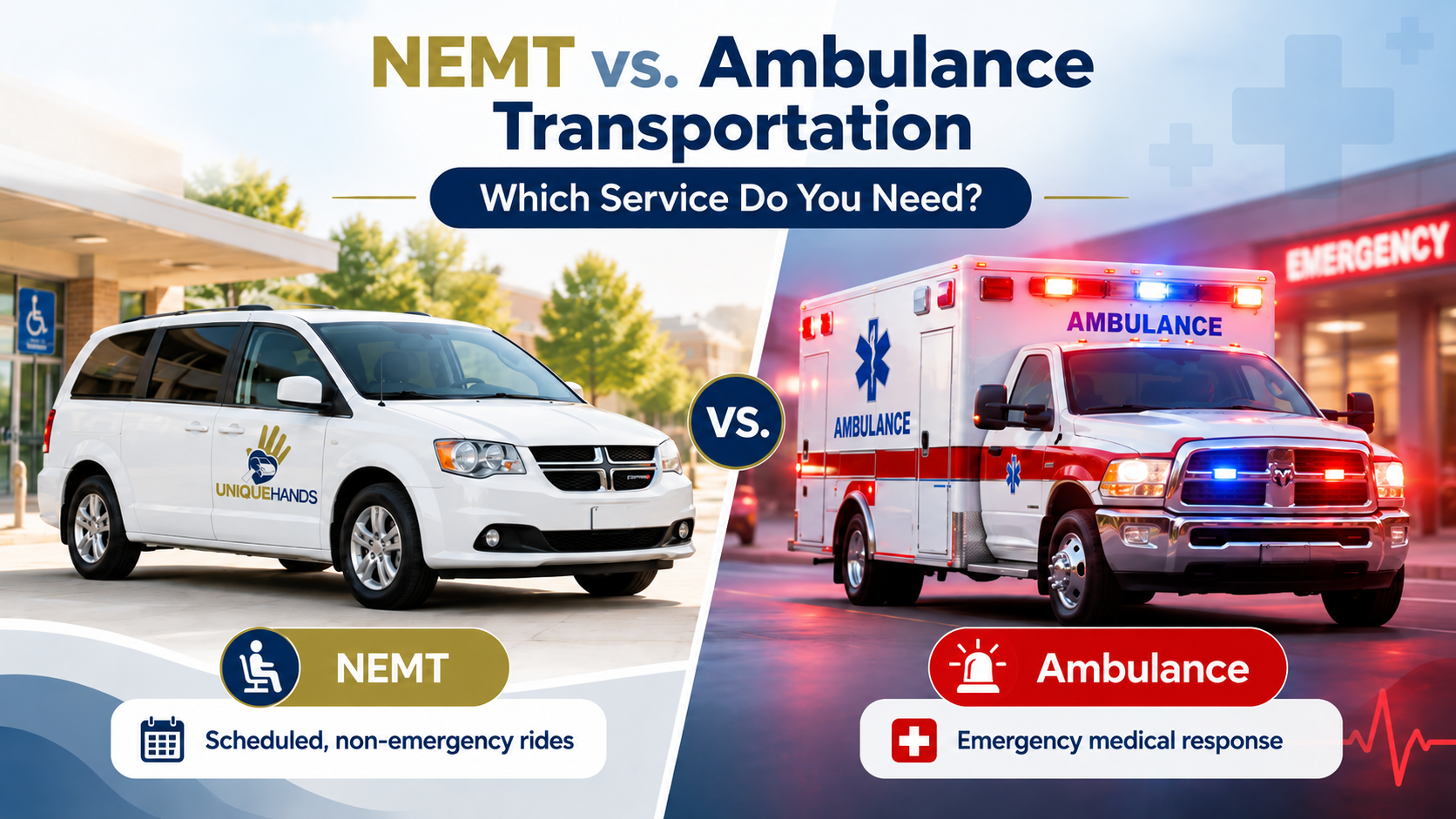
Important: UniqueHands provides scheduled non-emergency transportation. It does not provide emergency ambulance services, continuous clinical monitoring, or emergency medical treatment. In an emergency, call 911.
How Better Scheduling Improves Long-Distance Medical Travel
Transportation efficiency is not simply about reaching a destination quickly. It also involves planning for passenger assistance, realistic travel time, appointment schedules, and arrival procedures.
Accurate Pickup Information
Full addresses, building access details, facility requirements, and passenger mobility information help establish appropriate pickup arrangements.
Realistic Travel Time
Trip planning should account for distance, traffic, weather considerations, passenger loading, and appropriate travel stops where necessary.
Destination Coordination
Hospital arrivals, rehabilitation facility admissions, appointments, and residential destinations may each involve different procedures.
Clear Communication
Passengers and families benefit when trip arrangements, assistance requests, and transportation expectations are discussed in advance.
Technology and Practical Coordination in Medical Transportation
Modern transportation providers may use route-planning tools, scheduling platforms, electronic communication, and other operational systems to organize trips.
These technologies can help teams review travel requirements and manage logistical information, but they do not eliminate traffic, unforeseen road conditions, or the importance of experienced judgment.
Effective transportation planning combines appropriate information, clear communication, a suitable vehicle, and attention to the passenger's circumstances.
What Affects the Cost of Long-Distance Medical Transportation?
Long-distance transportation costs vary according to the requested route, passenger mobility needs, vehicle configuration, and services required.
Travel Distance
Longer routes may require more driving time, operating resources, and trip coordination.
Transportation Type
Ambulatory, wheelchair, stretcher, and bed-to-bed transportation may involve different requirements.
Additional Assistance
Escorts, building access, transfers, waiting arrangements, and other requested services may affect planning.
Requesting a quote: Provide the pickup location, destination, preferred date, passenger mobility needs, and requested assistance. UniqueHands can review the details of your trip. Transportation is private-pay.
Transportation Options for Different Mobility Needs
The same long-distance route may require a different transportation arrangement depending on the passenger's ability to walk, sit, transfer, or travel using mobility equipment.
Ambulatory Travel
Scheduled transportation for passengers who can walk but benefit from arranged travel and assistance by request.
Wheelchair Travel
Accessible transportation for passengers who use wheelchairs and need appropriate vehicle entry and securement.
Stretcher Travel
Scheduled non-emergency transportation for qualifying passengers who need a suitable lying-position arrangement.
Long-Distance Medical Transportation Preparation Checklist
Information to Share
- Pickup address and destination
- Preferred travel date and time
- Passenger mobility requirements
- Wheelchair or stretcher needs
- Stairs, elevators, or entry challenges
- Companion or escort arrangements
Details to Confirm
- Appointment or arrival instructions
- Receiving facility requirements
- Travel duration and route details
- Passenger comfort considerations
- Items or mobility equipment traveling
- Booking and payment arrangements
Better Planning Creates a More Organized Medical Transportation Experience
Optimizing long-distance medical transportation begins with understanding the passenger's individual needs and arranging an appropriate ground transportation service.
Accessible vehicle entry, suitable positioning, thoughtful scheduling, route planning, and communication can all contribute to a more manageable journey.
UniqueHands provides scheduled private-pay medical transportation throughout Northern Virginia and qualifying long-distance routes, with wheelchair, stretcher, ambulatory, and bed-to-bed transportation services.
For complete service information, visit our long-distance medical transportation page.
Long-Distance Medical Transportation FAQs
How much does long-distance medical transportation cost?
Pricing depends on the route, trip distance, transportation type, passenger mobility needs, and any additional requested assistance. Contact UniqueHands for a personalized quote.
Can family members or companions travel with the passenger?
Companion travel should be discussed when arranging the trip so available space and transportation requirements can be reviewed in advance.
Does UniqueHands provide air ambulance transportation?
No. UniqueHands provides scheduled non-emergency ground transportation, not air ambulance services.
Can passengers request stops during a long-distance journey?
Travel stops and passenger comfort arrangements should be discussed during scheduling. Appropriate arrangements depend on the route, timing, and passenger needs.
What happens if a medical emergency occurs during travel?
UniqueHands does not provide emergency medical treatment. If a medical emergency occurs, emergency services should be contacted immediately, including 911 in the United States.
Does UniqueHands accept Medicare or Medicaid?
No. UniqueHands provides private-pay, pre-arranged non-emergency transportation and does not bill Medicare or Medicaid for rides.
How early should I arrange long-distance transportation?
Advance scheduling is recommended. Longer trips involve additional route planning, vehicle coordination, and mobility considerations. Contact UniqueHands as early as practical with your travel details.
Planning a Long-Distance Medical Journey?
Whether transportation is needed for a wheelchair passenger, a stretcher passenger, a medical appointment, or a facility transition, UniqueHands can review your trip and discuss suitable pre-arranged transportation.
Serving Northern Virginia with private-pay medical transportation and qualifying long-distance journeys.
Scheduled non-emergency transportation only. No emergency ambulance or clinical services.