What Makes a Reliable Non-Emergency Medical Transportation Company in Virginia?
What Makes a Reliable Non-Emergency Medical Transportation Company in Virginia?
Choosing a non-emergency medical transportation company involves more than finding a ride. Passengers and families should consider mobility needs, transportation type, communication, vehicle accessibility, scheduling, trip distance, and whether the provider clearly understands the difference between NEMT and ambulance-level medical care.

This article explains what families should look for in a reliable NEMT company. Our main service page covers scheduling, transportation options, mobility services, and transportation requests.
What is a reliable non-emergency medical transportation company?
A reliable NEMT company provides scheduled transportation for medically stable passengers who need a transportation option better suited to their mobility or healthcare-related trip. A dependable provider should communicate clearly, understand different mobility levels, use transportation equipment appropriate for the requested service, review access conditions, coordinate scheduling carefully, and clearly distinguish non-emergency transportation from ambulance care.
Understanding Non-Emergency Medical Transportation in Virginia
Non-emergency medical transportation plays an important role for individuals who do not require emergency ambulance care but still face transportation challenges when trying to reach healthcare or care-related destinations.
A passenger may no longer drive. A wheelchair user may need an accessible vehicle. An older adult may have difficulty entering a standard sedan. Another passenger may be medically stable but unable to remain seated and require non-emergency stretcher transportation.
NEMT helps address these differences by providing transportation options based on the passenger’s mobility needs rather than assuming that a taxi, rideshare, public bus, or family car will work for everyone.
Who May Need Non-Emergency Medical Transportation?
NEMT can serve a wide range of medically stable passengers whose transportation circumstances make conventional transportation difficult.
Elderly Passengers
Older adults who no longer drive or need transportation better suited to their mobility needs.
People With Disabilities
Passengers whose disability makes standard transportation inaccessible or difficult.
Wheelchair Users
Individuals who need an accessible vehicle and transportation that accommodates a wheelchair.
Passengers With Significant Mobility Limitations
Qualifying medically stable individuals who may require non-emergency stretcher transportation rather than seated travel.
What Are the Advantages of Dedicated NEMT?
The benefit of NEMT is not simply transportation from Point A to Point B. Its value comes from coordinating a trip around passenger needs that may not fit ordinary transportation.
- Accessibility: transportation can be matched to ambulatory, wheelchair, or stretcher needs.
- Trip planning: pickup, appointment times, destination, building access, and return transportation can be discussed in advance.
- Mobility accommodation: passengers can provide information about wheelchairs, walkers, limited mobility, or stretcher requirements.
- Caregiver support: family members do not necessarily have to provide every medical ride themselves.
- Healthcare access: NEMT provides another option for reaching doctors, rehabilitation, therapy, diagnostic appointments, hospitals, and other scheduled destinations.
- Longer-distance travel: some providers can coordinate qualifying transportation beyond a passenger’s local community.
What Does “Reliable” Mean in Medical Transportation?
In healthcare transportation, reliability involves much more than promising that a vehicle will arrive “on time every time.”
Appointment times change. Hospitals may not know the exact discharge time until the patient is ready. Traffic conditions vary. Outpatient procedures may take longer than expected. A reliable transportation company should communicate clearly and plan realistically rather than make absolute guarantees.
Good scheduling means reviewing the requested pickup time, destination, appointment or discharge schedule, expected trip length, transportation type, mobility requirements, and relevant access conditions before the trip.
What Should Families Know About Safety in NEMT?
Safety in non-emergency transportation starts with selecting the correct type of transportation for the passenger.
A passenger who can walk may need ambulatory transportation. Someone who uses a wheelchair may need wheelchair-accessible transportation. A medically stable passenger who cannot appropriately remain seated may require non-emergency stretcher transportation.
Safety also depends on accurate information. Passengers and families should disclose mobility limitations, wheelchair or stretcher needs, stairs, elevators, narrow entrances, facility instructions, and other details that could affect the trip.
Should an NEMT driver be expected to handle a medical emergency?
Non-emergency medical transportation should not be treated as a substitute for ambulance care. A passenger who requires emergency medical treatment, continuous clinical monitoring, medication administration, advanced life support, emergency respiratory support, or other ambulance-level intervention should use the appropriate emergency or clinical medical transportation provider. For a medical emergency, call 911.
What Should You Look for in NEMT Vehicles and Equipment?
The vehicle should be appropriate for the transportation service being requested. That does not mean every NEMT vehicle is a mobile medical unit or carries clinical supplies.
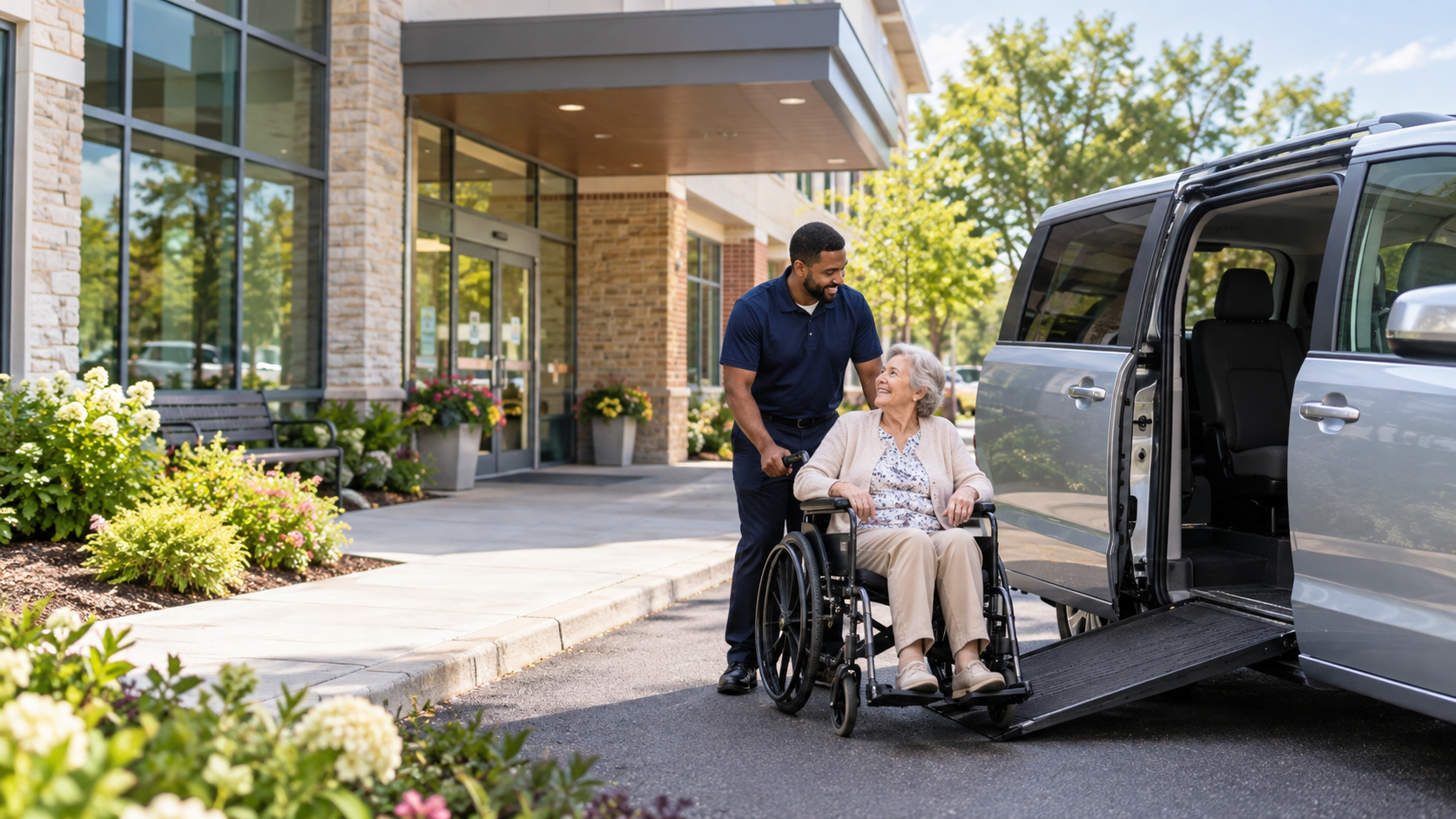
A wheelchair transportation vehicle may need accessible entry and appropriate wheelchair securement. A stretcher transportation vehicle requires an arrangement suitable for non-emergency stretcher travel. Ambulatory passengers may require a different vehicle configuration.
Families should focus on whether the transportation provider can appropriately accommodate the passenger’s actual mobility needs instead of assuming that more “medical equipment” automatically means better NEMT.
What Types of Transportation Does UniqueHands Provide?
UniqueHands coordinates several types of scheduled non-emergency transportation based on the passenger’s reported mobility needs.
Ambulatory Transportation
For passengers who can travel seated and can walk independently or with limited transportation-related assistance.
Ambulatory Transportation →Wheelchair Transportation
Accessible transportation for passengers who need to remain in a wheelchair during the trip.
Wheelchair Transportation →Stretcher Transportation
Scheduled non-emergency stretcher service for qualifying medically stable passengers who cannot appropriately travel seated.
Stretcher Transportation →Long-Distance Transportation
Qualifying longer trips may be reviewed for healthcare, rehabilitation, discharge, relocation, and other approved non-emergency destinations.
Long-Distance Transportation →Can NEMT Be Used for Medical Appointments?
Yes. Medical appointments are one of the most common reasons passengers use NEMT.
Trips may include primary care appointments, specialist visits, physical therapy, rehabilitation, diagnostic imaging, follow-up appointments, outpatient procedures, and other scheduled healthcare destinations.
Passengers should provide their appointment time and discuss whether return transportation will also be required when requesting service.
Can NEMT Be Used for Hospitals, Rehabilitation Centers or Nursing Facilities?
Qualifying NEMT can be used for many scheduled facility-related trips. Examples include transportation to or from hospitals, rehabilitation centers, skilled nursing facilities, assisted living communities, outpatient facilities, and private residences.
Hospital discharge transportation is another common need. When a medically stable passenger is ready to leave but cannot use ordinary transportation, an appropriate NEMT option may help complete the discharge plan.
The passenger should be medically cleared for discharge before non-emergency transportation is used.
What Builds Trust Between a Family and an NEMT Company?
Families are often arranging transportation for someone who cannot travel independently. That makes communication especially important.
A dependable company should ask questions about the passenger, transportation type, pickup and destination, mobility requirements, stairs or elevators, appointment timing, and any conditions that might affect access.
Trust also comes from being clear about service limitations. A professional NEMT company should not imply that transportation staff are providing ambulance-level medical treatment when they are not.
Why Is Transportation Staff Training Important?
NEMT passengers may have mobility limitations, use wheelchairs, require stretchers, or need more time and communication during boarding and arrival.
Transportation personnel should understand the procedures relevant to the services they provide, including passenger assistance, mobility equipment, vehicle securement, communication, and safe transportation practices.
This is different from saying that NEMT drivers are clinicians or should manage medical emergencies. Their role is transportation-focused.
Why Should You Discuss Stairs, Elevators and Building Access?
The transportation challenge may begin before the passenger ever reaches the vehicle.
Narrow hallways, stairs, elevators, ramps, long distances between entrances and parking areas, facility access rules, wheelchair dimensions, and stretcher requirements can all affect transportation planning.
Providing these details in advance gives the transportation company a better opportunity to review whether the requested trip can be performed appropriately.
Can a Virginia NEMT Company Provide Long-Distance Transportation?
Some providers offer qualifying long-distance transportation for passengers traveling beyond their local community.
A longer trip may be needed for specialized healthcare, rehabilitation, relocation closer to family, hospital discharge, facility transfer, or another approved destination.
Long-distance transportation requires additional planning around route length, passenger mobility, positioning, travel time, destination timing, and service availability.
Learn more about long-distance medical transportation or state-to-state medical transportation from Virginia.
Explore UniqueHands’ primary transportation services.
Review ambulatory, wheelchair, stretcher, long-distance and other scheduled non-emergency transportation options.
How Does UniqueHands Arrange Transportation?
UniqueHands operates as a private-pay non-emergency medical transportation provider. Passengers, families, caregivers, healthcare facilities, senior communities, and other organizations can contact UniqueHands directly to discuss transportation.
UniqueHands does not bill Medicaid or private health insurance directly. Anyone seeking transportation benefits or reimbursement through an insurance plan or assistance program should verify eligibility and coverage directly with that program.
Reliable NEMT Company FAQ
What is non-emergency medical transportation?
Non-emergency medical transportation provides scheduled transportation for medically stable passengers who need help reaching healthcare or care-related destinations but do not require emergency ambulance transportation.
What makes an NEMT company reliable?
Reliability includes clear communication, appropriate scheduling, transportation matched to mobility needs, suitable vehicle access, realistic trip planning, and a clear understanding of what the company can and cannot safely provide.
Does UniqueHands provide NEMT in Virginia?
UniqueHands provides qualifying scheduled non-emergency transportation in Northern Virginia and can review certain longer-distance transportation requests.
Does NEMT include wheelchair transportation?
Yes. Wheelchair-accessible transportation is one common NEMT option for passengers who need to remain in a wheelchair during travel.
Can an NEMT company provide stretcher transportation?
Some NEMT companies provide non-emergency stretcher transportation for qualifying medically stable passengers who cannot appropriately complete the trip seated.
Should NEMT drivers provide emergency medical treatment?
No. NEMT is not a substitute for ambulance care. Passengers requiring emergency medical treatment or continuous clinical care should use the appropriate emergency or clinical transportation service.
Can NEMT be used for hospital discharge?
Yes. Qualifying non-emergency transportation may be arranged after a hospital or facility discharge once the passenger has been medically cleared and the transportation needs fall within the provider’s service scope.
Can NEMT travel long distance?
Some providers offer qualifying long-distance transportation. Availability depends on the route, passenger needs, transportation type, travel time, destination, and scheduling.
How should I choose between ambulatory, wheelchair and stretcher transportation?
The transportation type should match how the passenger can safely and appropriately travel. Ambulatory passengers travel seated and can walk; wheelchair passengers require accessible wheelchair transportation; qualifying stretcher passengers cannot appropriately remain seated for the trip.
Where can I request transportation from UniqueHands?
Visit the primary UniqueHands NEMT service page or contact UniqueHands directly with the passenger’s pickup, destination, schedule, mobility needs, and requested transportation type.
Related Medical Transportation Resources
Continue to the service or supporting guide that best matches the passenger’s transportation needs.
Need scheduled medical transportation in Northern Virginia?
Contact UniqueHands with the passenger’s pickup, destination, requested schedule, mobility needs, transportation type, and relevant access details.
UNIQUEHANDS RESOURCES
Medical Transportation Articles
Explore practical guides for families, caregivers, and facilities planning wheelchair, stretcher, ambulatory, hospital discharge, long-distance, and state-to-state non-emergency medical transportation.