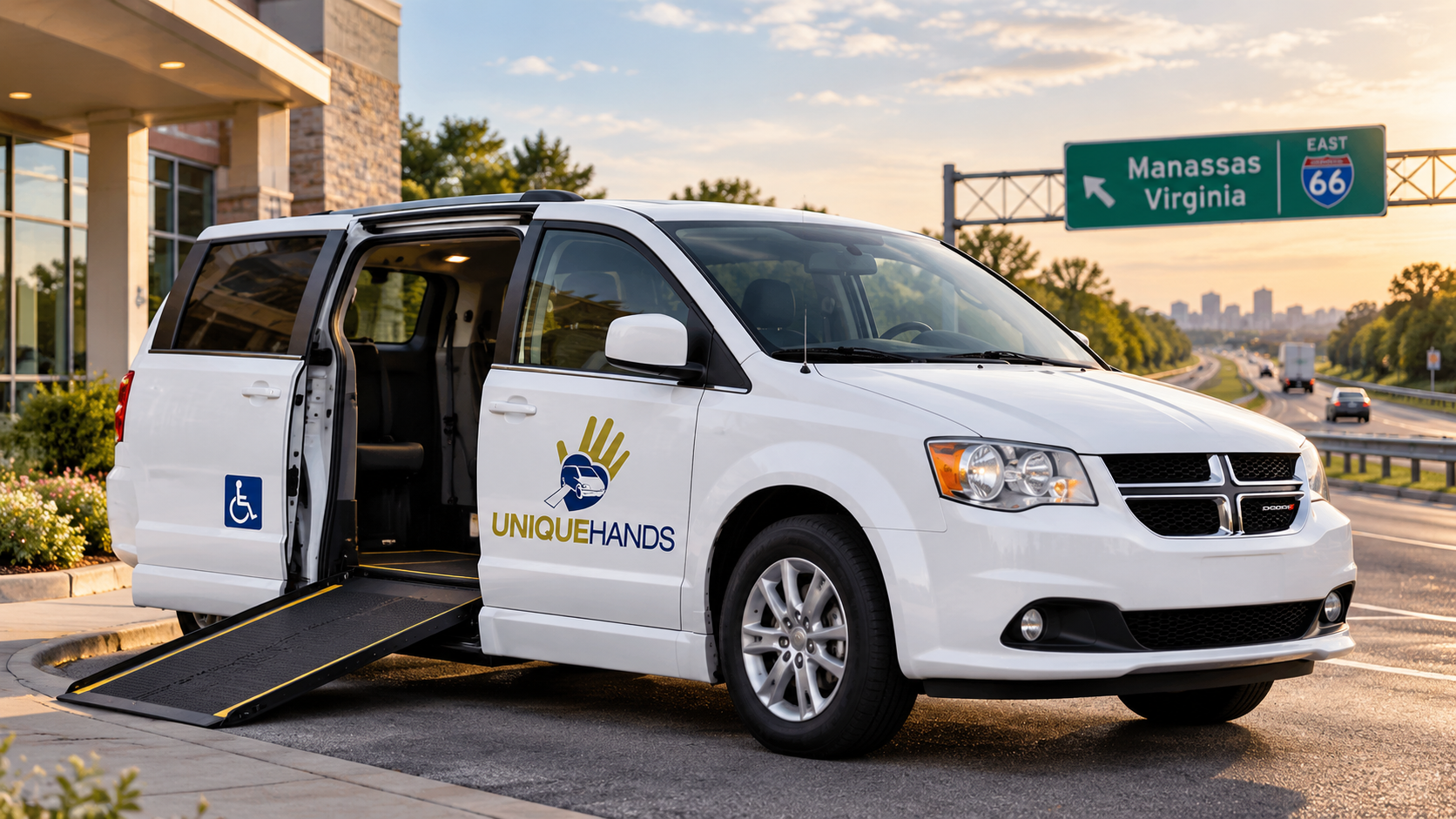
Long-distance medical transportation can help patients and families coordinate travel between Pennsylvania, Northern Virginia, and other communities when appointments, hospital discharges, or changes in living arrangements require a journey beyond the local area.
Pennsylvania is home to major metropolitan healthcare destinations as well as smaller communities where patients may need to travel substantial distances for certain specialists, procedures, or rehabilitation services. The challenge becomes greater when a passenger uses a wheelchair, requires stretcher transportation, or cannot comfortably use an ordinary passenger vehicle.
This guide explains the transportation options families may encounter, why advance planning matters, how to prepare for a longer ground journey, and what to consider when arranging private-pay non-emergency medical transportation.
Why Long-Distance Medical Transportation Is Important in Pennsylvania
Medical appointments and treatment plans do not always take place close to home. Some individuals need to travel to a specialist in another city, transfer between care facilities, or return to family after an extended hospital stay.
For passengers with mobility challenges, the transportation itself can become a significant part of the planning process. An ordinary car may not offer the space or accessibility needed for a compatible wheelchair or stretcher.
Supporting Continuity of Care
Continuity of care depends on more than medical appointments alone. Patients and their families also need practical arrangements for reaching the location where the appointment or treatment is scheduled.
Coordinating transportation in advance may help patients avoid preventable scheduling complications, especially when traveling to a facility several hours away.
Overcoming Geographic Barriers
Traveling from a smaller Pennsylvania community to a larger medical center may involve substantial highway travel. Accessibility requirements can make the journey more difficult when standard transportation services are unsuitable.
A suitable non-emergency medical transportation provider can help arrange the appropriate vehicle and pickup plan for passengers whose needs can be met without clinical care during travel.
Preparing for Time-Sensitive Appointments
Specialty appointments, outpatient procedures, and scheduled admissions may require arrival at a particular time. Longer-distance journeys should account for realistic driving times, traffic, passenger needs, and facility check-in requirements.
No transportation provider can eliminate every possible delay. However, early planning allows more time to discuss the route, scheduling expectations, and available options.
Common Challenges When Arranging Long-Distance Medical Transportation
Longer medical journeys require coordination across several different parts of a patient's day. Even when the destination is known, additional details may affect whether transportation can be arranged appropriately.
Coordinating Appointment and Pickup Times
Families may need to communicate with hospitals, medical offices, rehabilitation facilities, and transportation coordinators to establish a realistic departure and arrival schedule.
Hospital discharge times can be especially unpredictable. When departure depends on clinical clearance, families should discuss flexible scheduling requirements before confirming transportation.
Vehicle Compatibility
Passengers may have different mobility needs. Some can walk short distances with assistance, while others use a wheelchair throughout their journey or require a stretcher position.
Confirming the correct vehicle type is essential. For power wheelchairs, dimensions, weight, and securement compatibility may need to be reviewed.
Pickup and Destination Accessibility
Access conditions at a private residence may differ significantly from those at a hospital or rehabilitation facility. Stairs, narrow entrances, long walkways, and transfer requirements should be discussed before travel.
Financial Planning
Extended transportation can involve significant travel time, specialized vehicle requirements, and additional coordination. Families should obtain a quote based on the complete itinerary, not simply an estimate of mileage.
Understanding Pennsylvania Medical Transportation Options
Pennsylvania patients may encounter several types of transportation providers. These services serve different purposes, and the correct option depends on the passenger's condition and required level of support.
Non-Emergency Medical Transportation
Pre-arranged transportation for passengers who need assistance or accessibility but do not require emergency medical interventions during travel.
Wheelchair Transportation
Accessible transportation for passengers traveling in a compatible wheelchair with appropriate vehicle access and securement.
Stretcher Transportation
Transportation for passengers who need a lying-down travel position and whose needs can be appropriately accommodated without ambulance-level care.
Ambulance and Air Medical Transport
Separate medical transportation services for patients whose condition requires professional clinical monitoring, urgent intervention, or specialized medical equipment during transit.
Non-Emergency Transportation Versus Ambulance Care
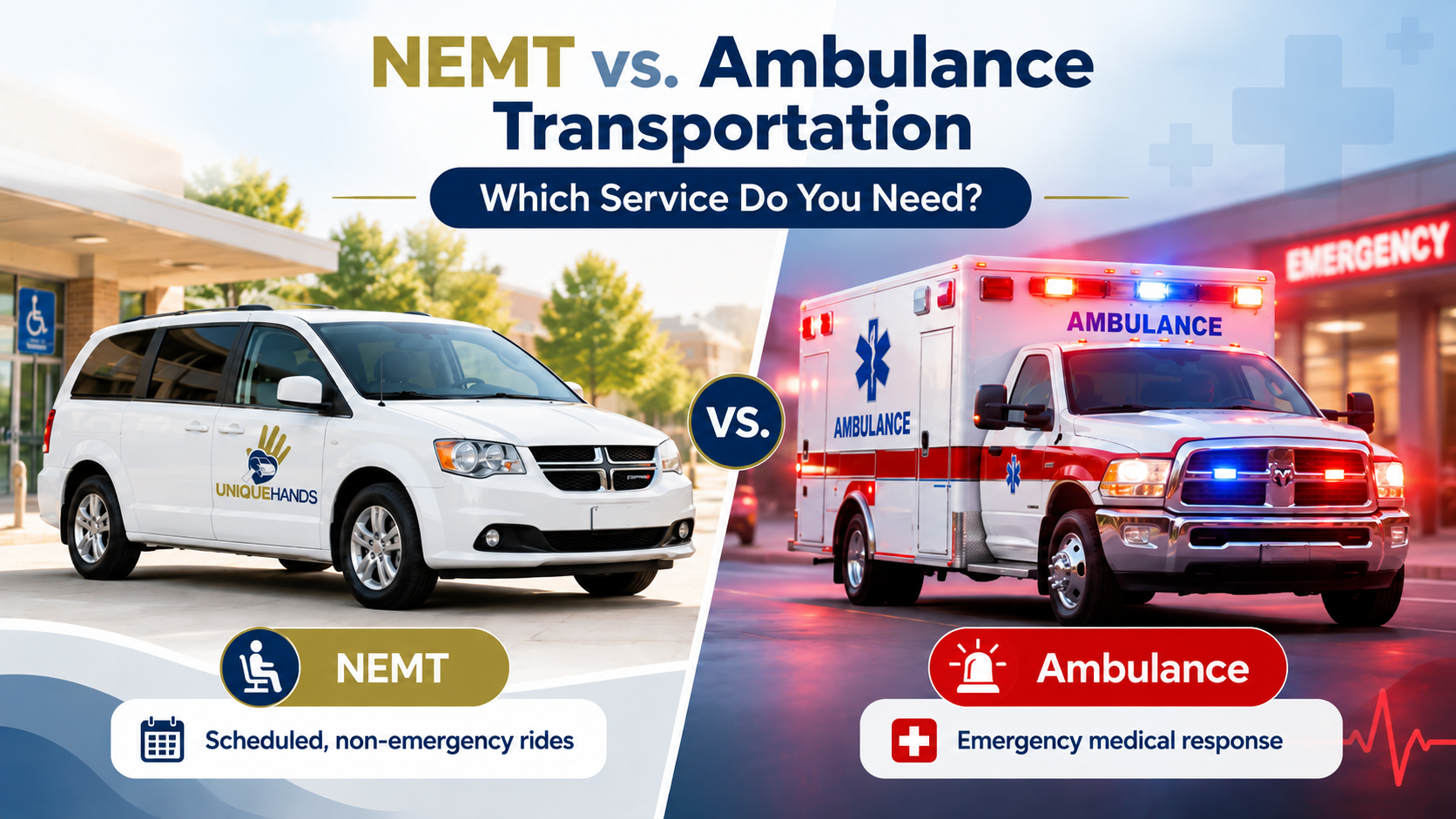
It is important not to confuse an accessible medical transportation van with an ambulance. Non-emergency transportation focuses on moving passengers whose needs can be accommodated without clinical treatment during the trip.
Ambulance and air medical services provide a different level of care and equipment. A healthcare professional should help determine the appropriate type of transport when medical supervision or emergency intervention may be required.
UniqueHands service distinction: UniqueHands provides private-pay, non-emergency ground transportation. We do not provide air ambulance services, advanced life support, nursing care, medication administration, or continuous clinical monitoring.
Benefits of Planning Long-Distance Transportation in Advance
Preparing for transportation ahead of time can reduce uncertainty for passengers, caregivers, and the facilities involved in the trip.
Clearer Vehicle Arrangements
The transportation company can review whether the passenger needs ambulatory, wheelchair, or stretcher transportation. Advance notice provides more opportunity to discuss equipment compatibility and assistance needs.
Better Communication With Receiving Facilities
A patient traveling between a hospital, rehabilitation center, and home may need assistance coordinating pickup and arrival. Facility names, contact information, access instructions, and discharge status are useful details.
More Realistic Travel Expectations
A journey between Pennsylvania and Northern Virginia may involve multiple hours on the road. Families should account for traffic, the passenger's tolerance for travel, planned stops, and any limitations involving the requested arrival window.
Improved Family Coordination
When family members live in different states, advance planning helps clarify who will meet the passenger, whether a caregiver will ride along, and what assistance is needed upon arrival.
Major Pennsylvania Healthcare Destinations Families May Travel To
Pennsylvania includes several important healthcare regions. Passengers traveling from Virginia or neighboring states may need to reach facilities in or around these communities.
Philadelphia and Southeastern Pennsylvania
Philadelphia is home to major hospital and specialty-care networks, including Penn Medicine, Jefferson Health, and Temple Health. The wider region also includes suburban healthcare destinations across Montgomery, Delaware, Bucks, and Chester counties.
Long-distance transportation to this region may involve scheduled outpatient visits, rehabilitation, discharge travel, or family-supported relocation.
Harrisburg, Hershey, and Central Pennsylvania
Central Pennsylvania includes medical destinations such as Penn State Health Milton S. Hershey Medical Center and healthcare facilities in the Harrisburg area.
Families traveling to or from Central Pennsylvania should allow appropriate time for the full journey, including passenger pickup, facility check-in, and potential rest stops.
Allentown, Bethlehem, and the Lehigh Valley
The Lehigh Valley is another healthcare destination, with hospitals, medical practices, rehabilitation services, and residential care communities.
Patients may need scheduled ground transportation between this region and other parts of Pennsylvania, Maryland, or Virginia.
Scranton, Wilkes-Barre, and Northeastern Pennsylvania
Northeastern Pennsylvania includes communities where families may arrange medical transportation for specialty visits, discharges, or relocation between care settings.
Pittsburgh and Western Pennsylvania
Pittsburgh has major medical systems including UPMC and Allegheny Health Network. Trips involving western Pennsylvania may require substantially longer travel planning when originating from Northern Virginia.
Planning note: These locations are examples of healthcare destinations in Pennsylvania, not a guarantee that every route or facility is available through UniqueHands. Transportation must be reviewed and confirmed for the specific passenger and itinerary. Mentioning a facility does not imply affiliation or endorsement.
Planning Medical Transportation Between Pennsylvania and Virginia
Travelers sometimes need transportation between Pennsylvania and Northern Virginia for specialist appointments, recovery arrangements, rehabilitation, or relocation closer to family.
Northern Virginia to Philadelphia
This route may be relevant for passengers traveling to healthcare facilities in Philadelphia or surrounding southeastern Pennsylvania. Depending on the itinerary, the trip may involve travel through Maryland and Delaware.
Northern Virginia to Central Pennsylvania
Trips involving Harrisburg, Hershey, York, Lancaster, or nearby communities require attention to the exact destination, facility access, and requested arrival time.
Northern Virginia to Northeastern Pennsylvania
Longer journeys toward the Lehigh Valley, Scranton, Wilkes-Barre, or nearby communities should include a discussion of the passenger's mobility needs, trip duration, and any expected stops.
Travel to Western Pennsylvania
Pennsylvania is geographically large, and travel toward Pittsburgh or other western communities can differ significantly from a trip to Philadelphia.
The complete route and passenger requirements should be evaluated before any reservation is confirmed.
Hospital-to-Home and Facility-to-Facility Trips
Some journeys involve transportation after a hospital stay, between rehabilitation facilities, or from a Pennsylvania care setting to a family residence elsewhere.
Hospital or facility staff may need to help establish whether the passenger is appropriate for non-emergency transportation. UniqueHands does not make clinical discharge decisions.
For details about longer journeys, visit our Long-Distance Medical Transportation service page.
Safety, Accessibility, and Choosing the Right Transportation Vehicle
Choosing a transportation provider requires matching the vehicle and assistance arrangements to the passenger's actual requirements.
Wheelchair Vehicle Access and Securement
A passenger who remains seated in a wheelchair during travel needs a vehicle with appropriate accessible entry and a compatible securement system.
The type, approximate weight, and dimensions of a power wheelchair may be important when confirming vehicle suitability.
Stretcher Transportation
Some passengers need to remain in a lying-down position. Stretcher transportation may be suitable when the individual is medically stable and does not require clinical interventions during travel.
Transfer needs and building accessibility should be discussed before booking.
Mobility Assistance at Pickup and Drop-Off
Passengers may need help reaching the vehicle or navigating entrances. The level of assistance should be agreed upon during scheduling, particularly when a property includes steps or other obstacles.
Understanding the Limits of Non-Emergency Travel
If a passenger requires medical monitoring, treatment, or interventions during the journey, a transportation service with the appropriate clinical capabilities may be necessary.
Safety comes first. If the passenger's condition raises questions about fitness for a long road journey, consult the treating healthcare team before arranging non-emergency transportation. In a medical emergency, call 911.
Passenger Comfort During a Pennsylvania Long-Distance Trip
Comfort and practical planning are especially important when a passenger will spend several hours in a vehicle.
Travel Duration and Rest Stops
Longer routes may need to account for restroom needs, meals, fatigue, traffic delays, and scheduled breaks. These needs should be raised before the trip.
Caregivers and Family Companions
Family members or caregivers may be able to accompany the passenger when vehicle seating and arrangements allow. Confirm this when booking.
Personal Belongings and Mobility Equipment
Passengers should prepare necessary personal items, appointment paperwork, mobility accessories, and luggage. The transportation company should know about larger equipment ahead of time.
Medication and Personal Care Needs
Medication administration and medical supervision are not included in UniqueHands non-emergency transportation. If assistance with these needs is required, an appropriate caregiver or clinical transportation provider may need to be involved.
Long-Distance Medical Transportation Planning Checklist
Before contacting a transportation provider, gather the essential trip information so the scheduling team can better assess your request.
What to Prepare Before Booking
- Pickup address: Include the complete street address, pickup entrance, and facility name, when applicable.
- Destination address: Provide the building name, city, state, and any special arrival instructions.
- Travel date: Include the preferred pickup time and required arrival window.
- Mobility requirements: Explain whether the passenger walks, uses a wheelchair, or needs stretcher transportation.
- Wheelchair information: Share type, dimensions, and approximate weight when relevant.
- Accessibility information: Describe stairs, elevators, ramps, narrow entrances, or transfer considerations.
- Companion arrangements: State whether a family member, caregiver, or other passenger plans to travel.
- Trip structure: Clarify whether the reservation is one-way, round-trip, or requires waiting.
- Destination contact: Provide an appropriate family or facility contact when needed for coordination.
- Payment and confirmation: Review the quote, payment arrangements, and confirmed transportation details.
Have Your Trip Details Ready?
Contact UniqueHands to discuss a proposed Pennsylvania-related journey and transportation requirements.
How Much Does Long-Distance Medical Transportation Cost?
The cost depends on the route and the particular transportation requirements. A trip from Northern Virginia to Philadelphia may differ substantially from a journey to western Pennsylvania.
Pricing considerations may include:
- Total driving distance and estimated travel time
- Wheelchair, stretcher, or ambulatory vehicle needs
- Required passenger assistance
- One-way versus round-trip arrangements
- Waiting time or additional stops
- Pickup accessibility and transfer requirements
- Requested departure time and availability
- Additional passengers or special arrangements
Does Medicare, Medicaid, or Insurance Cover the Trip?
Insurance-related transportation benefits vary by plan, eligibility, and circumstances. Customers should confirm any applicable reimbursement directly with their insurer.
UniqueHands is a private-pay non-emergency medical transportation provider. We do not directly bill Medicare, Medicaid, or private insurance.
Customers may request a transportation receipt or invoice for their records, but reimbursement is not guaranteed.
Why a Personalized Quote Matters
A personalized quote allows the provider to review the actual itinerary rather than making assumptions about distance, equipment, or passenger needs.
Tip: When requesting Pennsylvania long-distance medical transportation, provide the exact pickup and destination locations, intended travel date, and mobility assistance requirements.
How UniqueHands Helps Families Plan Pennsylvania Medical Transportation
UniqueHands Non-Emergency Medical Transportation is based in Northern Virginia and provides private-pay, pre-arranged transportation services.
We can review longer-distance transportation requests involving Pennsylvania and neighboring states, subject to passenger suitability, scheduling, vehicle availability, and the specific route.
Transportation Services Available Through UniqueHands
Long-Distance Medical Transportation
Pre-arranged interstate and extended-distance journeys for eligible passengers. View long-distance service.
Wheelchair Transportation
Accessible transportation for passengers who travel in compatible wheelchairs. View wheelchair service.
Stretcher Transportation
Non-emergency transportation for passengers who need stretcher accommodations. View stretcher service.
Ambulatory and Senior Transportation
Scheduled trips for passengers who can walk with or without assistance and older adults who benefit from advance planning. View senior service.
When contacting our team, please describe the travel date, destination, mobility requirements, and any assistance or companion arrangements.
We can review the details and discuss available non-emergency transportation options.
Frequently Asked Questions About Pennsylvania Long-Distance Medical Transportation
Can UniqueHands arrange medical transportation between Virginia and Pennsylvania?
UniqueHands reviews pre-arranged long-distance transportation requests involving Pennsylvania and Northern Virginia. Availability depends on the route, passenger requirements, appropriate vehicle availability, and scheduling.
What types of medical transportation are available for a Pennsylvania trip?
Depending on passenger needs and availability, non-emergency options may include wheelchair, stretcher, ambulatory, or senior transportation. Ambulance and air medical transportation are separate services for patients who require clinical care.
Why might a patient need long-distance transportation?
Reasons may include specialty appointments, hospital discharge, rehabilitation, facility transfers, or relocation closer to family. The appropriate transportation option depends on the passenger's condition and mobility needs.
Can someone travel in their own wheelchair?
A passenger may be able to remain in a compatible manual or power wheelchair during vehicle travel. Wheelchair dimensions, weight, and securement compatibility should be confirmed when booking.
Do long-distance medical transportation vehicles have nurses or paramedics?
Not necessarily. Non-emergency transportation is different from ambulance-level care. UniqueHands does not provide nurses, paramedics, or continuous clinical monitoring as part of its transportation service. Patients requiring those services should consult the appropriate licensed medical transport provider.
Can a caregiver accompany the passenger?
A caregiver or family member may be able to ride along when seating is available. Additional passengers should be disclosed before confirming the trip.
How far in advance should I request Pennsylvania transportation?
As early as practical. Longer trips require additional planning for vehicle selection, route, travel time, accessibility, and passenger requirements. Contact our team to review your proposed date.
How much does Pennsylvania medical transportation cost?
Cost depends on the complete travel route, mobility needs, trip duration, assistance requirements, waiting time, and other requested arrangements. Request a personalized private-pay quote.
Does UniqueHands accept Medicare or Medicaid?
No. UniqueHands operates on a private-pay basis. We do not bill Medicare, Medicaid, or private insurance directly. Customers should verify any possible reimbursement with their own insurance provider.
Planning a Comfortable and Well-Coordinated Pennsylvania Medical Trip
Pennsylvania long-distance medical transportation can be an important consideration for patients who need to reach healthcare facilities, return home after treatment, or move between care settings across state lines.
A successful transportation plan depends on understanding the passenger's mobility requirements, selecting an appropriate vehicle, reviewing the route, confirming accessibility, and communicating with the relevant family members or receiving facilities.
Families should also understand the difference between non-emergency transportation and services requiring licensed clinical personnel or ambulance-level care.
For appropriate non-emergency journeys involving Northern Virginia and Pennsylvania, visit the UniqueHands Long-Distance Medical Transportation service page or contact our scheduling team to discuss your planned trip.