Navigating Everyday Challenges: Wheelchair Transportation for Individuals in Northern Virginia and Prince William County
Everyday Transportation Challenges for Wheelchair Users
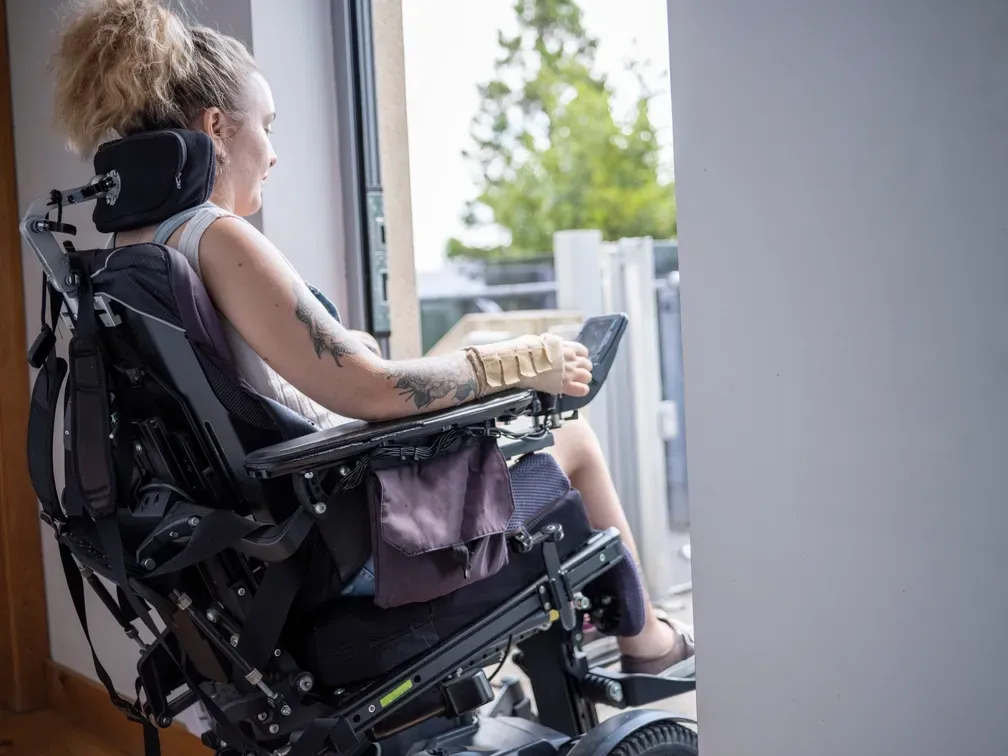
For a wheelchair user, getting from home to a medical appointment, rehabilitation visit, hospital, family residence, or other destination can involve much more planning than an ordinary car ride. Doorway width, stairs, ramps, elevators, vehicle access, wheelchair securement, pickup location, and destination accessibility can all affect whether a trip goes smoothly.
What makes wheelchair transportation different from an ordinary ride?
Wheelchair transportation is planned around both the passenger and the mobility equipment. The provider must understand how the passenger will reach the vehicle, what type of wheelchair is being used, whether accessible boarding is required, what the destination access looks like, and whether a caregiver or companion will travel.
Transportation Challenges Can Begin Before the Passenger Leaves Home
Accessibility concerns often begin at the pickup location. A wheelchair user may need to navigate narrow hallways, tight doorways, steps, uneven surfaces, apartment entrances, elevators, ramps, gated communities, or limited parking areas before reaching the vehicle.
These details matter because a transportation provider cannot properly plan the trip using only the pickup address. The provider should know whether there are stairs, whether a ramp is available, whether the wheelchair fits through the entrance, and whether the passenger needs additional assistance reaching the vehicle.
Wheelchair Transportation to Medical Appointments
Medical appointments are one of the most common reasons wheelchair users need pre-arranged transportation. The passenger may be traveling to a primary-care physician, specialist, rehabilitation center, diagnostic appointment, therapy visit, outpatient procedure, or follow-up appointment.
When scheduling, families should provide the appointment time, pickup location, destination, wheelchair information, access conditions, and whether anyone will accompany the passenger.
For broader service information, visit our wheelchair transportation service page.
Why Should You Tell the Provider What Type of Wheelchair Is Being Used?
Wheelchairs are not all the same. Manual wheelchairs, powered wheelchairs, wider chairs, and other mobility devices can have different dimensions, weights, and transportation requirements.
Sharing this information before pickup helps the transportation provider determine whether the planned vehicle and boarding arrangement are appropriate for the passenger and equipment.
Wheelchair Transportation After Hospital Discharge
Hospital discharge can create additional transportation challenges. A passenger may be leaving the hospital in a wheelchair, returning to a private residence, transferring to a rehabilitation facility, moving to assisted living, or returning to a nursing facility.
Families should provide the expected discharge time, passenger mobility information, destination, access conditions, and information about who will receive the passenger at the destination.
Residents in Prince William County may also find our Prince William County outpatient and discharge transportation guide helpful.
Wheelchair Transportation for Older Adults
Many older adults begin using wheelchairs after an illness, injury, surgery, decline in mobility, or transition into assisted living or nursing care. Even when the person feels well enough to attend appointments or family activities, an ordinary passenger vehicle may no longer be practical.
Accessible transportation can help families coordinate appointments and other qualifying trips without repeatedly transferring the passenger in and out of an unsuitable vehicle.
Learn more in our medical transportation guide for elderly passengers.
Can a Caregiver or Family Member Ride With a Wheelchair Passenger?
Depending on the trip, vehicle capacity, mobility equipment, and advance arrangements, a caregiver or family member may be able to travel with the passenger.
If someone will accompany the passenger, tell UniqueHands during scheduling so the transportation arrangement can account for everyone who needs to travel.
Wheelchair Transportation After Surgery or an Outpatient Procedure
A wheelchair user may also need transportation after surgery, sedation, or another outpatient procedure. In these situations, passengers should confirm the facility’s discharge requirements before booking transportation.
Patients should not assume that an unaccompanied Uber or Lyft will meet post-anesthesia discharge requirements. Many facilities require a responsible adult or approved escort, although exact policies vary.
UniqueHands can arrange adult escort or waiting services for qualifying trips when those requirements are discussed in advance.
Can Wheelchair Transportation Be Arranged for Long-Distance Trips?
Yes. Some wheelchair passengers need transportation beyond Northern Virginia for specialized treatment, rehabilitation, hospital discharge, relocation closer to family, or other qualifying medical-related travel.
Long-distance trips should be discussed well in advance because travel time, wheelchair type, passenger comfort, destination access, caregiver travel, luggage, and facility arrangements may all affect the transportation plan.
Visit our long-distance medical transportation page for additional information.
Wheelchair Transportation Across Northern Virginia and Prince William County
UniqueHands serves qualifying passengers throughout Northern Virginia and surrounding communities. Local transportation needs may differ depending on the passenger’s location, destination, mobility, and access conditions.
What Information Should You Provide for a Wheelchair Transportation Request?
- Passenger name and contact information
- Pickup address
- Destination address
- Requested travel date and time
- Appointment or discharge time
- Type of wheelchair or mobility device
- Whether the wheelchair is manual or powered
- Stairs, ramps, elevators, narrow entrances, or other access concerns
- Whether a caregiver or family member will travel
- Whether the trip is one-way or round-trip
- Any facility instructions that affect pickup or drop-off
Why Might a Wheelchair Passenger Need Dedicated Medical Transportation?
Ordinary passenger transportation is not designed around every wheelchair user’s needs. Vehicle accessibility, safe wheelchair transport, pickup conditions, destination access, and mobility assistance may require advance planning.
For a broader comparison, read Non-Emergency Medical Transportation Company vs. Taxi or Uber.
When Is Wheelchair NEMT Appropriate Instead of an Ambulance?
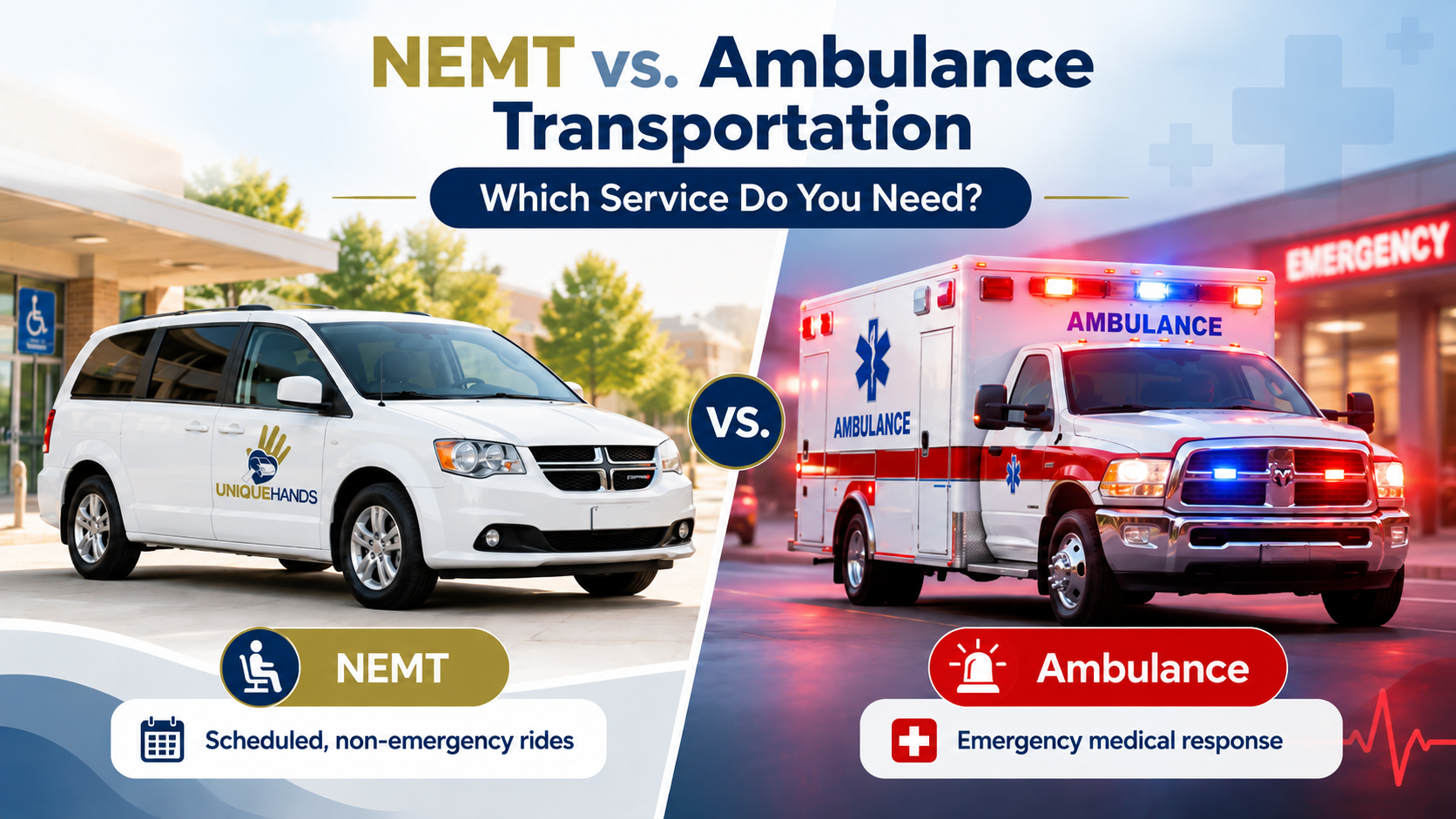
Wheelchair NEMT is intended for medically stable passengers who are appropriate for scheduled non-emergency ground transportation.
UniqueHands may transport an appropriate passenger to an emergency department when the situation does not require a 911 ambulance response.
If the passenger is experiencing a life-threatening emergency, severe breathing difficulty, loss of consciousness, uncontrolled bleeding, or another condition requiring immediate emergency medical treatment, call 911.
Request Wheelchair Transportation With UniqueHands
Tell us the pickup location, destination, travel date, wheelchair type, access conditions, appointment or discharge time, and whether a caregiver or companion will travel.
Wheelchair Transportation in Northern Virginia: Common Questions
Does UniqueHands provide wheelchair transportation in Northern Virginia?
Yes. UniqueHands provides pre-arranged wheelchair transportation for qualifying passengers throughout Northern Virginia and surrounding areas.
Can a passenger stay in their wheelchair during transportation?
Depending on the passenger, wheelchair, vehicle, and transportation arrangement, wheelchair-accessible transportation can allow a qualifying passenger to travel using an appropriately secured wheelchair. Exact needs should be discussed during scheduling.
Can wheelchair transportation be used for hospital discharge?
Yes. Qualifying wheelchair passengers may use non-emergency transportation after hospital discharge when they are appropriate for the service and the trip is scheduled in advance.
Can a caregiver travel with the passenger?
Depending on the trip, vehicle capacity, wheelchair equipment, and advance arrangements, a family member or caregiver may be able to travel with the passenger.
Is wheelchair transportation available for long-distance trips?
UniqueHands can review qualifying long-distance wheelchair transportation requests depending on the route, passenger needs, travel time, scheduling, and availability.
How do I request wheelchair transportation?
Call UniqueHands at 571-970-1828 or use the transportation request form.
Learn More About Accessible Medical Transportation
UNIQUEHANDS RESOURCES
Medical Transportation Articles
Explore practical guides for families, caregivers, and facilities planning wheelchair, stretcher, ambulatory, hospital discharge, long-distance, and state-to-state non-emergency medical transportation.