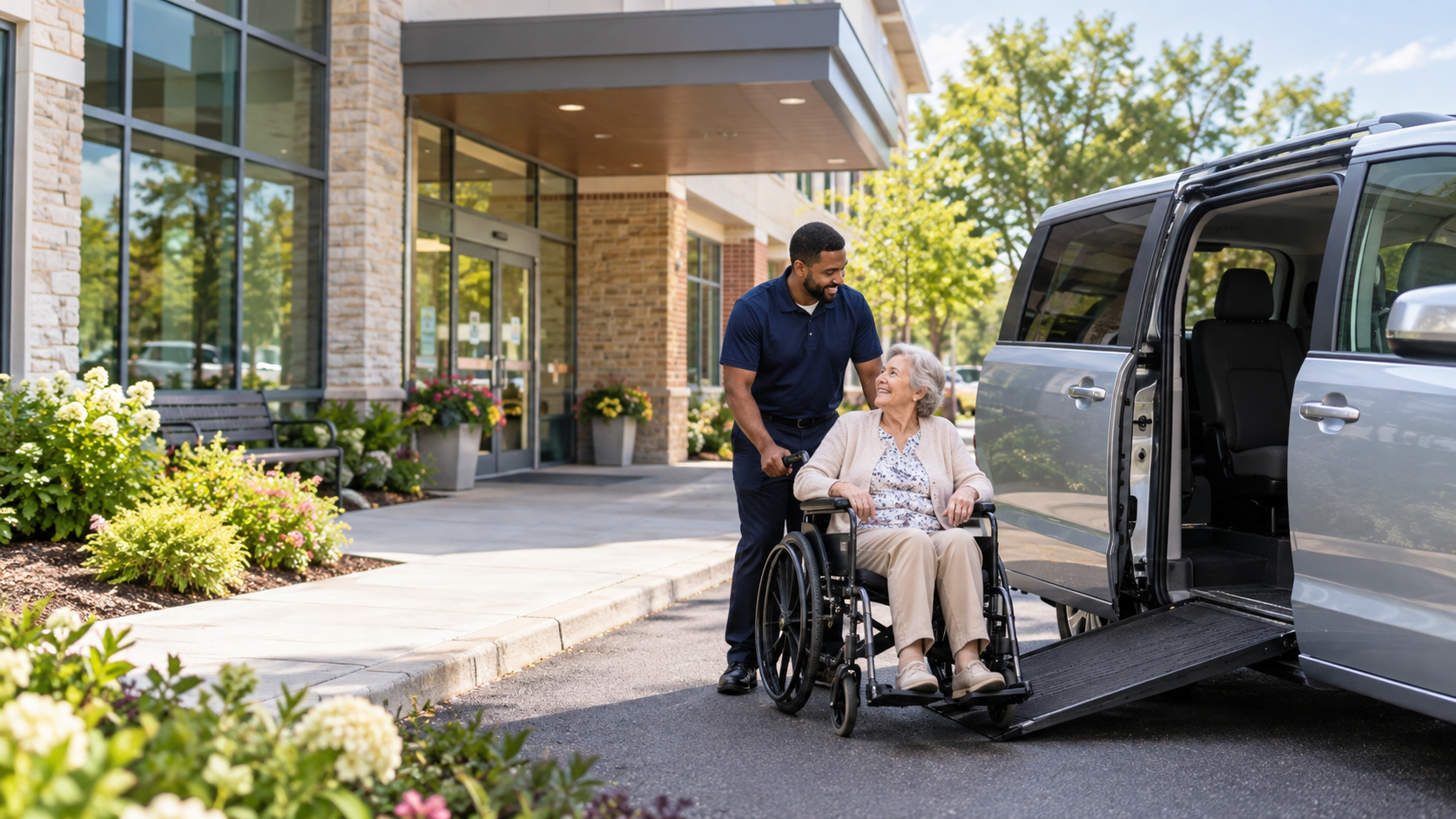
Why Long-Distance NEMT Matters for Non-Urgent Patient Transport
Why Long-Distance NEMT Matters for Non-Urgent Patient Transport
Long-distance non-emergency medical transportation can help individuals and families coordinate safe, scheduled travel when a passenger cannot comfortably manage a long trip alone, needs mobility accommodation, is transferring between facilities, or must travel a significant distance for medical care or family support.

Share the pickup location, destination, trip distance, passenger mobility needs, and requested travel date so our team can review the transportation request.
What Is Long-Distance Non-Emergency Medical Transportation?
Long-distance non-emergency medical transportation, often referred to as long-distance NEMT, is scheduled transportation for passengers who need to travel farther than a typical local medical trip but do not require emergency ambulance services.
These trips may involve transportation between cities or states, travel to a specialist or medical facility, movement closer to family, facility-to-facility transfers, rehabilitation-related trips, or other non-urgent transportation needs that require more planning than an ordinary car ride.
One of the main advantages of long-distance non-emergency medical transportation is that it can reduce the burden of asking a patient to drive a significant distance alone or relying entirely on friends or family members to complete a demanding medical trip.
Who May Benefit From Long-Distance NEMT?
Long-distance transportation can be particularly useful for passengers who have mobility limitations, are older adults, cannot comfortably tolerate an extended car trip without appropriate accommodations, or need help coordinating transportation between healthcare facilities and residences.
Why Long-Distance Medical Transportation Requires More Planning
A long-distance medical trip is different from a short ride across town. Distance, travel time, passenger positioning, mobility equipment, restroom or comfort considerations, pickup and destination access, and the timing of facility admissions or discharges can all affect the trip.
Families and care coordinators should provide accurate trip details in advance so the transportation provider can determine whether the requested trip is appropriate and which type of transportation service is needed.
- Pickup address and destination
- Estimated travel distance
- Requested travel date and time
- Passenger mobility needs
- Wheelchair or stretcher requirements
- Stairs, elevators, entrances, or other access concerns
- Facility admission or discharge timing
- Whether a family member or caregiver will accompany the passenger
When Long-Distance Stretcher Transportation May Be Appropriate
Some passengers cannot remain seated comfortably or safely for the duration of a long trip and may require stretcher transportation. In those situations, the transportation request should be reviewed carefully to determine whether non-emergency stretcher transportation is appropriate.
Stretcher transportation is different from ambulance transportation. It is intended for qualifying non-emergency trips where the passenger needs stretcher positioning but does not require emergency response or continuous clinical monitoring during transportation.
If the passenger specifically needs stretcher transportation, visit our stretcher transportation service page for more information about that service.
UniqueHands provides non-emergency transportation services. If a passenger requires emergency treatment, continuous clinical monitoring, emergency medications, or ambulance-level care during the trip, the appropriate emergency or medical transport resource should be used.
Our team can review the route, passenger mobility needs, requested transportation type, pickup and destination access, and trip timing.
Long-Distance Transportation for Elderly and Disabled Passengers
Long-distance transportation can be especially important for older adults and individuals with disabilities who may have difficulty managing extended travel in a standard passenger vehicle.
A carefully coordinated trip can reduce uncertainty for families by clarifying pickup arrangements, destination access, mobility equipment, expected travel time, and communication throughout the transportation process.
For some families, long-distance transportation may be needed to move an older adult closer to relatives, transfer a passenger to a rehabilitation or senior living facility, or help a patient reach specialized care that is not available close to home.
What to Look for in a Long-Distance Transportation Provider
When comparing transportation providers, families should consider more than distance and price alone. A long trip requires clear coordination and a realistic understanding of the passenger’s needs.
The Role of NEMT in Long-Distance Non-Urgent Transportation
Long-distance NEMT can provide an important transportation option for passengers who need to travel significant distances for healthcare, facility transfers, family relocation, or other non-urgent reasons but cannot comfortably complete the trip without additional transportation planning or mobility accommodation.
If you are researching a specific long-distance trip, visit our long-distance medical transportation service page for service details and transportation request options. If the passenger specifically requires stretcher positioning, review our stretcher transportation service as well.
Long-Distance NEMT FAQ
What is considered long-distance medical transportation?
Long-distance medical transportation generally refers to a scheduled non-emergency trip that extends beyond a typical local service area and may involve travel between cities or states.
Can long-distance NEMT cross state lines?
Qualifying long-distance transportation may include interstate travel. The requested route, passenger needs, trip timing, and service availability should be reviewed before transportation is confirmed.
When is stretcher transportation used for a long-distance trip?
Stretcher transportation may be appropriate for qualifying non-emergency passengers who cannot remain seated comfortably or safely for the trip and do not require ambulance-level care during transport.
How far in advance should long-distance transportation be arranged?
Advance planning is strongly recommended because long-distance trips require more coordination than local transportation. Availability, route length, passenger mobility needs, and facility timing should all be reviewed before the trip.
Contact UniqueHands with the pickup, destination, travel date, passenger mobility needs, and requested transportation type.
UNIQUEHANDS RESOURCES
Medical Transportation Articles
Explore practical guides for families, caregivers, and facilities planning wheelchair, stretcher, ambulatory, hospital discharge, long-distance, and state-to-state non-emergency medical transportation.