Enhancing Transportation Management: The Important Role of Field Supervisors in Non-Emergency Medical Transportation
Behind a well-organized medical transportation service is a network of planning, communication, safety procedures, driver coordination, and operational oversight. Field supervision is one important part of that system.
Understanding how transportation oversight works can help patients, families, healthcare facilities, and caregivers recognize the importance of choosing a dependable non-emergency medical transportation provider.
Why Transportation Oversight Matters in NEMT
Non-emergency medical transportation is more than taking a passenger from one location to another. It requires attention to accessibility, scheduling, vehicle suitability, communication, and the passenger's individual mobility needs.
For seniors, individuals using wheelchairs, people requiring stretcher transportation, and passengers recovering from medical procedures, transportation arrangements can involve additional considerations that do not arise with ordinary passenger travel.
Field supervisors, transportation coordinators, dispatch personnel, and operations managers may share responsibility for overseeing different parts of the transportation process. The exact structure depends on the provider.
At UniqueHands, the importance of organized, respectful, and carefully planned transportation is central to how we describe our private-pay non-emergency medical transportation services.
What Does a Field Supervisor Do in Medical Transportation?
In transportation organizations that use dedicated field supervisors, the position generally focuses on helping daily operations remain organized, safe, and responsive. Responsibilities vary by company and organizational structure.
Safety Procedures
Supporting appropriate vehicle procedures, accessibility practices, passenger assistance protocols, and the identification of transportation-related safety concerns.
Driver Coordination
Helping drivers understand transportation assignments, special pickup instructions, route considerations, and operational expectations.
Scheduling Efficiency
Reviewing transportation logistics to reduce avoidable delays and improve coordination between passengers, drivers, and destinations.
Vehicle Readiness
Supporting procedures related to vehicle condition, cleanliness, accessibility, and appropriate transportation equipment.
Problem Resolution
Helping transportation teams respond appropriately when pickup instructions, accessibility requirements, schedules, or other arrangements need attention.
Quality Improvement
Reviewing operational feedback and identifying opportunities to improve driver support, communication, transportation planning, and service.
Safety and Accessibility Begin Before the Passenger Enters the Vehicle
One of the most important principles in transportation management is that safe travel begins with preparation.
Passengers requiring additional mobility assistance may have needs related to vehicle access, wheelchair securement, transfer arrangements, positioning, or the environment at pickup and drop-off.
Preparing for Different Mobility Needs
Transportation coordinators must understand the passenger's requirements before selecting an appropriate transportation arrangement.
- Whether the passenger can walk independently or requires assistance
- Whether an accessible wheelchair vehicle is needed
- Whether the passenger needs stretcher transportation
- Whether stairs, ramps, elevators, or narrow entrances affect pickup
- Whether additional escort assistance is requested
- Whether destination-specific procedures need to be considered
Learn more about wheelchair transportation and bed-to-bed transportation arrangements.

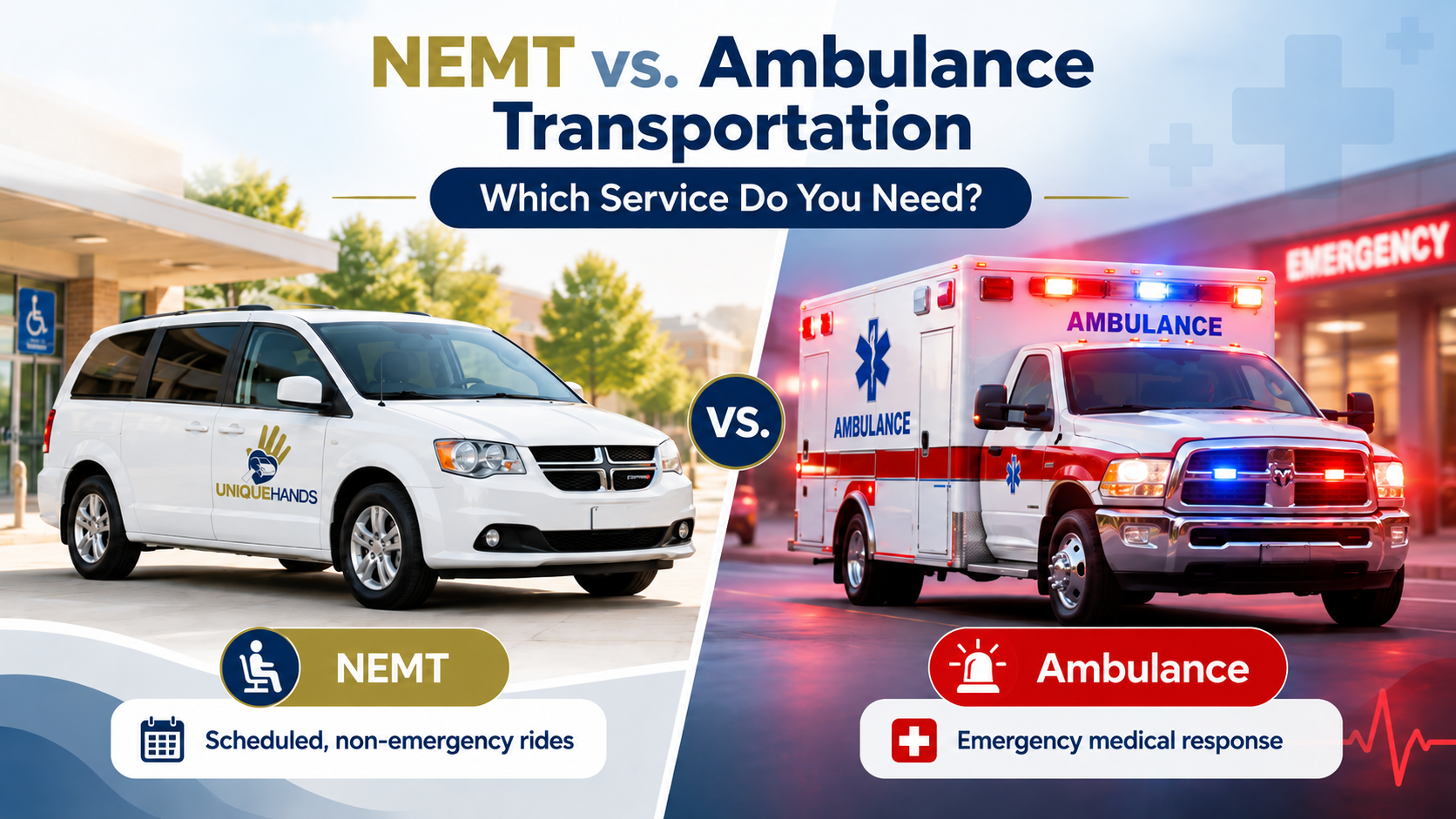
Important distinction: Non-emergency medical transportation focuses on scheduled transportation rather than emergency medical treatment. UniqueHands is not an emergency ambulance provider. Passengers requiring emergency medical assistance should contact 911 or the appropriate emergency service.
How Effective Transportation Management Supports More Reliable Service
Efficient transportation management means balancing trip schedules, passenger needs, vehicle availability, travel distances, traffic conditions, and destination requirements.
For medical transportation passengers, delays can have significant practical consequences, particularly when a trip involves scheduled healthcare appointments, facility admission, or transportation following an outpatient procedure.
Trip Information
Accurate pickup addresses, destinations, appointment times, mobility requirements, and special instructions help establish a suitable transportation plan.
Vehicle Suitability
The vehicle configuration should be appropriate for the passenger's transportation needs, including wheelchair or stretcher requirements.
Route and Timing
Travel distance, anticipated traffic, passenger loading, destination access, and other practical conditions should be considered when arranging trips.
Clear Expectations
Families, passengers, and transportation personnel benefit when expectations and necessary trip instructions are communicated clearly.
The Role of Technology in Modern Medical Transportation Management
Transportation management can involve scheduling platforms, electronic trip information, route-planning tools, vehicle documentation, communication systems, and operational reporting.
Depending on the provider, GPS-based fleet information and other technologies may also assist with route awareness and dispatch coordination. However, technology itself does not eliminate traffic, weather delays, unexpected road conditions, or the need for human judgment.
Good transportation management combines practical experience, accurate information, effective communication, and appropriate operational tools.
Why this matters to patients: The goal of good transportation coordination is not simply to move vehicles efficiently. It is to support an organized experience for passengers whose medical appointments, mobility limitations, and personal circumstances deserve careful consideration.
Training, Feedback, and Continuous Improvement in NEMT Operations
Transportation practices should be reviewed as passenger needs, operating conditions, and industry requirements evolve.
Driver Education
Training and refresher instruction can help transportation personnel understand applicable procedures, passenger assistance practices, and safe operating expectations.
Passenger Feedback
Questions, concerns, and feedback from passengers and families can reveal opportunities to improve communication and coordination.
Operational Review
Evaluating recurring scheduling challenges, trip instructions, service issues, and workflow consistency can support better transportation operations.
Why Professional Oversight Matters to Patients and Families
Patients and their families may not see the work involved in transportation planning, but they experience its results. Clear communication, appropriate vehicles, reasonable preparation, and thoughtful coordination can make medical transportation less stressful.
This is especially relevant when a passenger needs transportation for recurring medical appointments, rehabilitation visits, long-distance medical travel, or a transition between healthcare facilities.
For example, a wheelchair passenger traveling to a medical appointment may need more than simply a pickup time. The transportation plan may also need to account for wheelchair access, securement, loading time, building entrances, and arrival procedures.
Similarly, someone who requires stretcher transportation may have positioning and mobility needs that differ considerably from those of an ambulatory passenger.
For trips involving several hours of travel, careful preparation becomes particularly important. Families can read more about long-distance medical transportation when evaluating those arrangements.
Transportation Management and Field Supervision FAQs
What is the role of a field supervisor in medical transportation?
Field supervisors may oversee driver coordination, transportation procedures, vehicle readiness, operational concerns, training support, and service quality. Exact responsibilities vary by provider.
Why is supervision important in non-emergency medical transportation?
Supervision helps transportation organizations maintain consistent procedures, address operational challenges, coordinate resources, and support the overall passenger experience.
Does every NEMT company have a field supervisor?
No. Transportation providers use different operational structures. Some have dedicated field supervisors, while others distribute oversight responsibilities among operations managers, dispatchers, and transportation coordinators.
How does transportation management help wheelchair passengers?
Appropriate planning allows a transportation provider to review wheelchair access, securement, pickup conditions, passenger assistance needs, and destination requirements before the trip.
Does UniqueHands provide emergency medical transportation?
No. UniqueHands provides scheduled non-emergency medical transportation. It is not an emergency ambulance service and does not replace emergency medical treatment or 911.
Strong Transportation Management Helps Build Patient Confidence
Field supervisors and operations personnel serve an important function in the broader transportation industry. Their work can support safety procedures, driver readiness, scheduling coordination, communication, and service improvement.
In non-emergency medical transportation, those responsibilities have added significance because passengers may have mobility limitations, healthcare schedules, and transportation needs requiring additional planning.
At UniqueHands, our focus is on providing professional, pre-arranged transportation that respects the circumstances of each passenger and the families arranging their travel.
Learn more about UniqueHands or explore our medical transportation services throughout Northern Virginia.
Looking for Dependable Non-Emergency Medical Transportation?
Whether you are arranging a local medical appointment, wheelchair transportation, stretcher transportation, bed-to-bed assistance, or a long-distance journey, UniqueHands can discuss your mobility requirements and scheduled transportation needs.
Serving Northern Virginia with private-pay, pre-arranged medical transportation services.
UniqueHands provides scheduled, non-emergency medical transportation and does not provide emergency ambulance services.