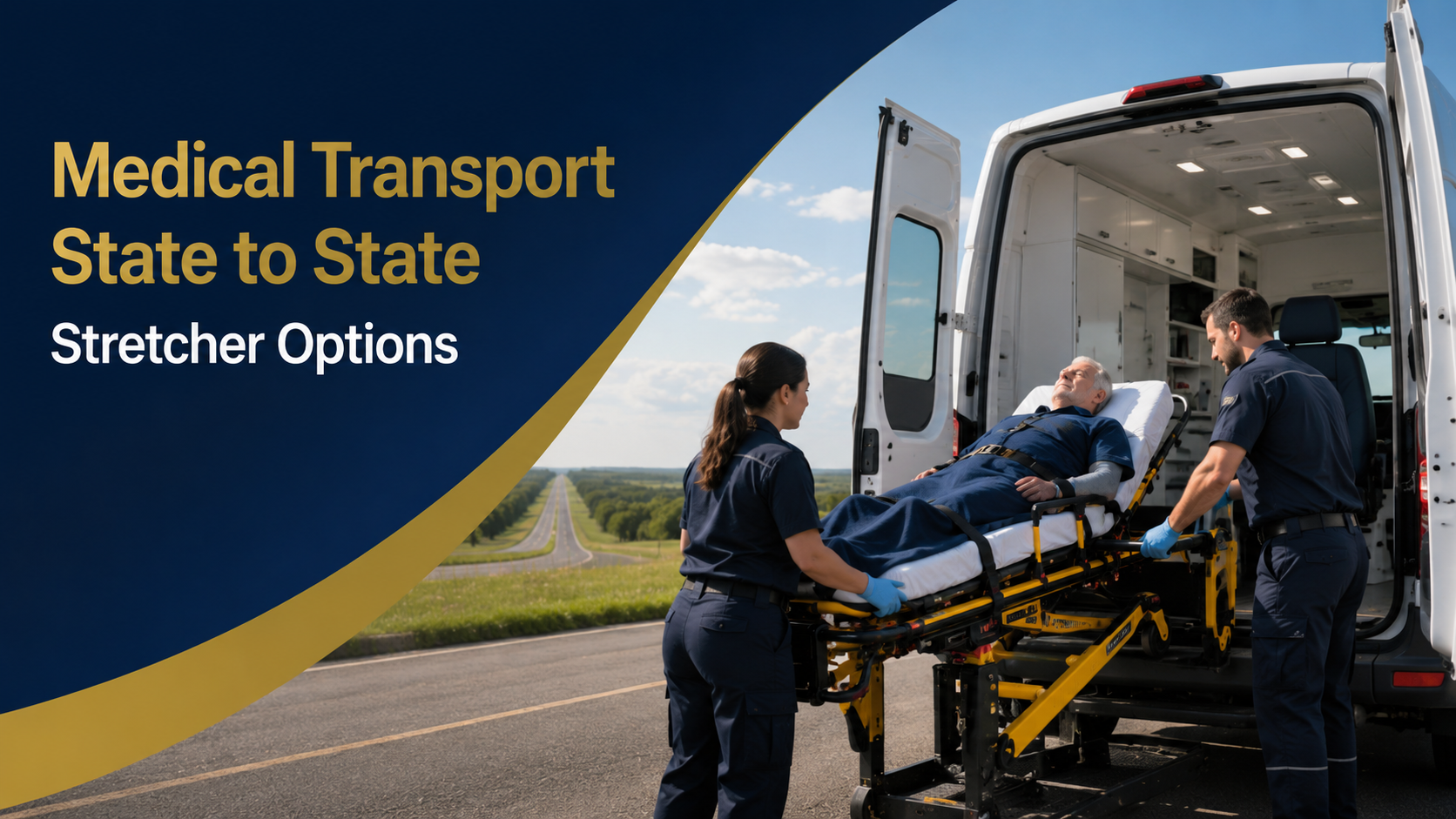
State-to-State Medical Transportation: Stretcher Travel Options
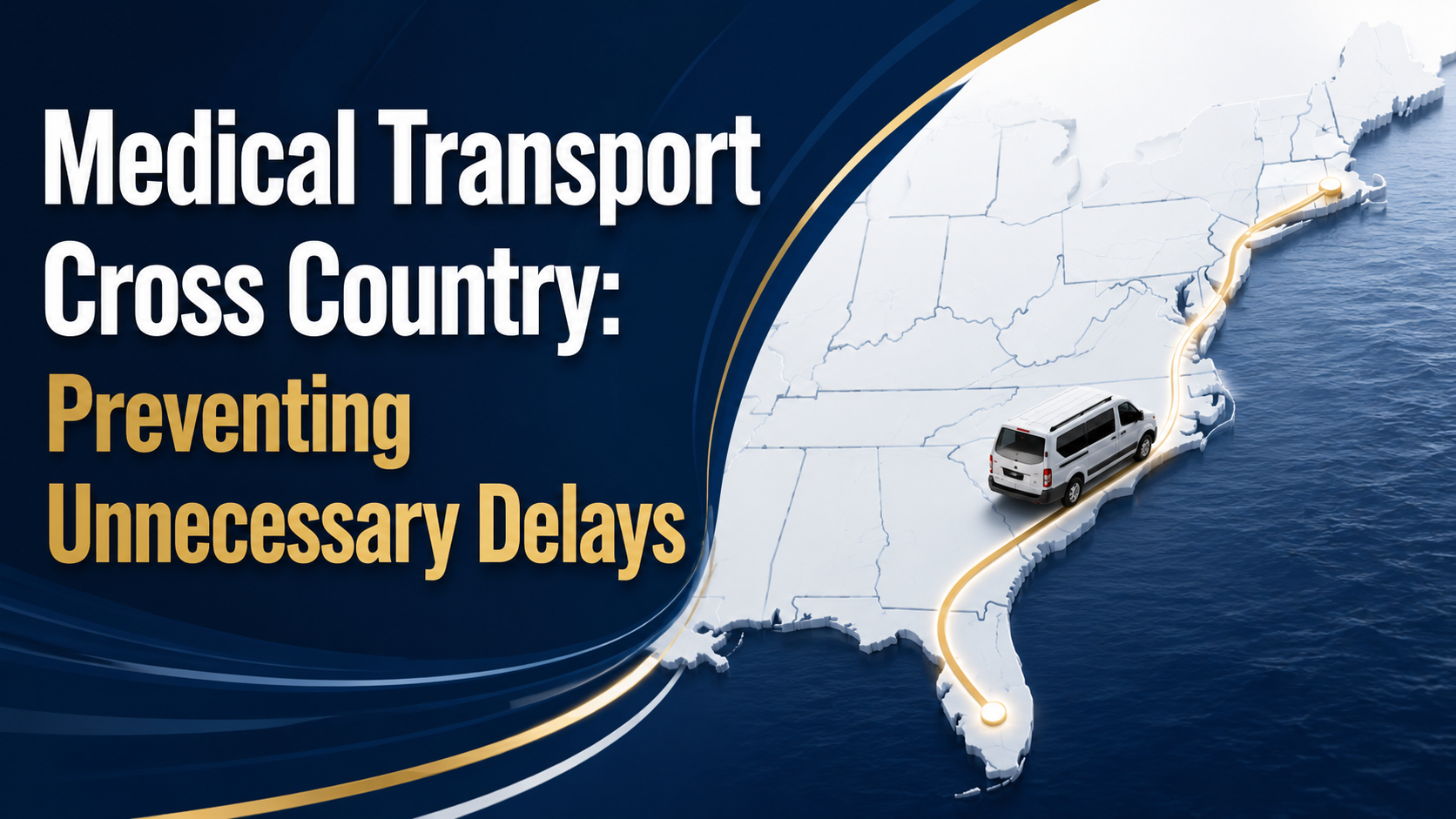
Traveling across state lines can be difficult for a person who cannot safely remain seated in a standard vehicle. Some medically stable passengers need stretcher transportation when relocating closer to family, transferring to a rehabilitation center, returning home after treatment, moving to assisted living, or traveling to a scheduled medical destination.
UniqueHands provides private-pay, prearranged non-emergency transportation for approved stretcher passengers. Every long-distance request must be reviewed carefully before the trip is confirmed.
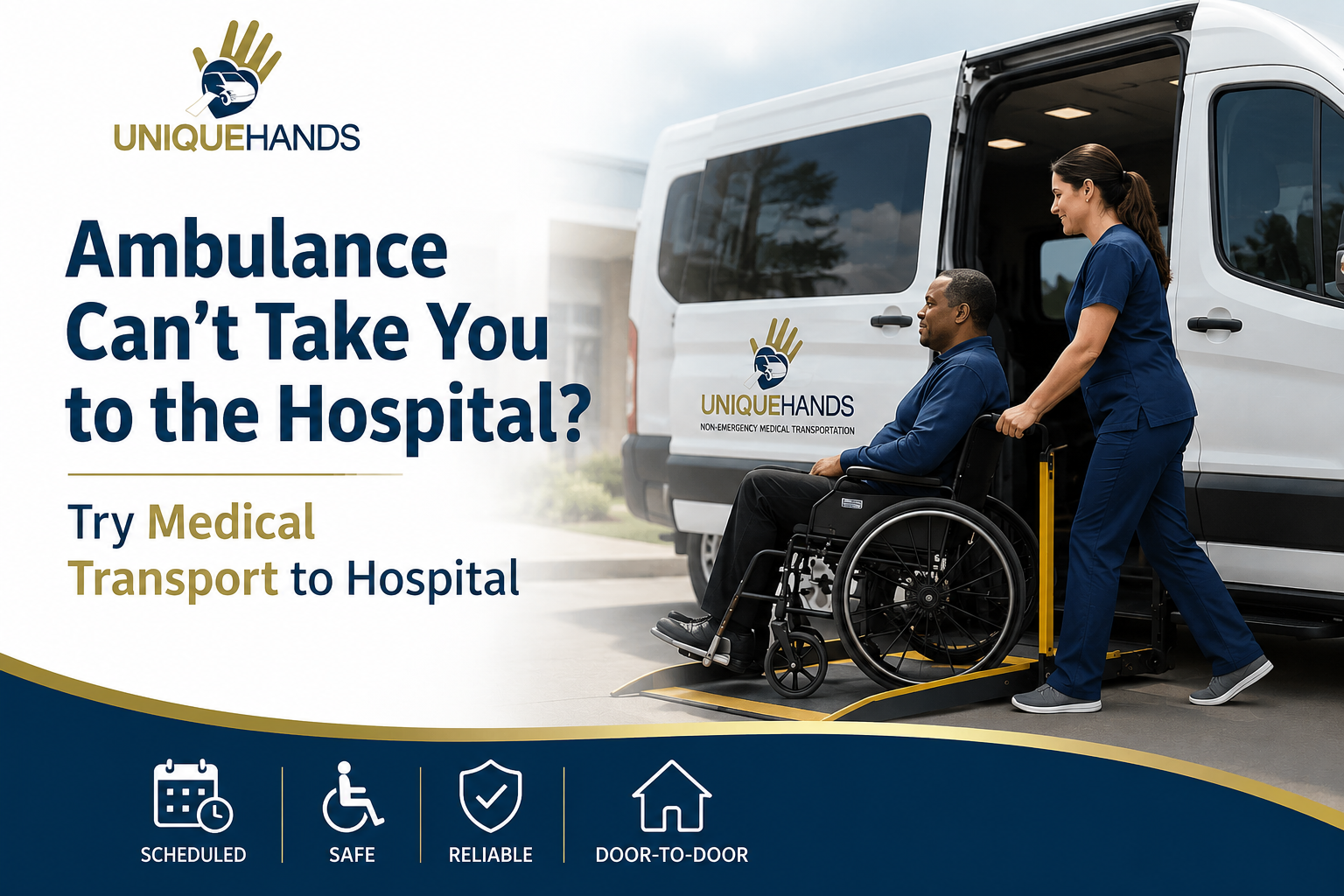
Call 911 during a medical emergency. UniqueHands is not an ambulance service. We do not provide emergency response, medical monitoring, medication administration, oxygen management, ventilator support, or medical treatment during transportation.
What Is State-to-State Stretcher Transportation?
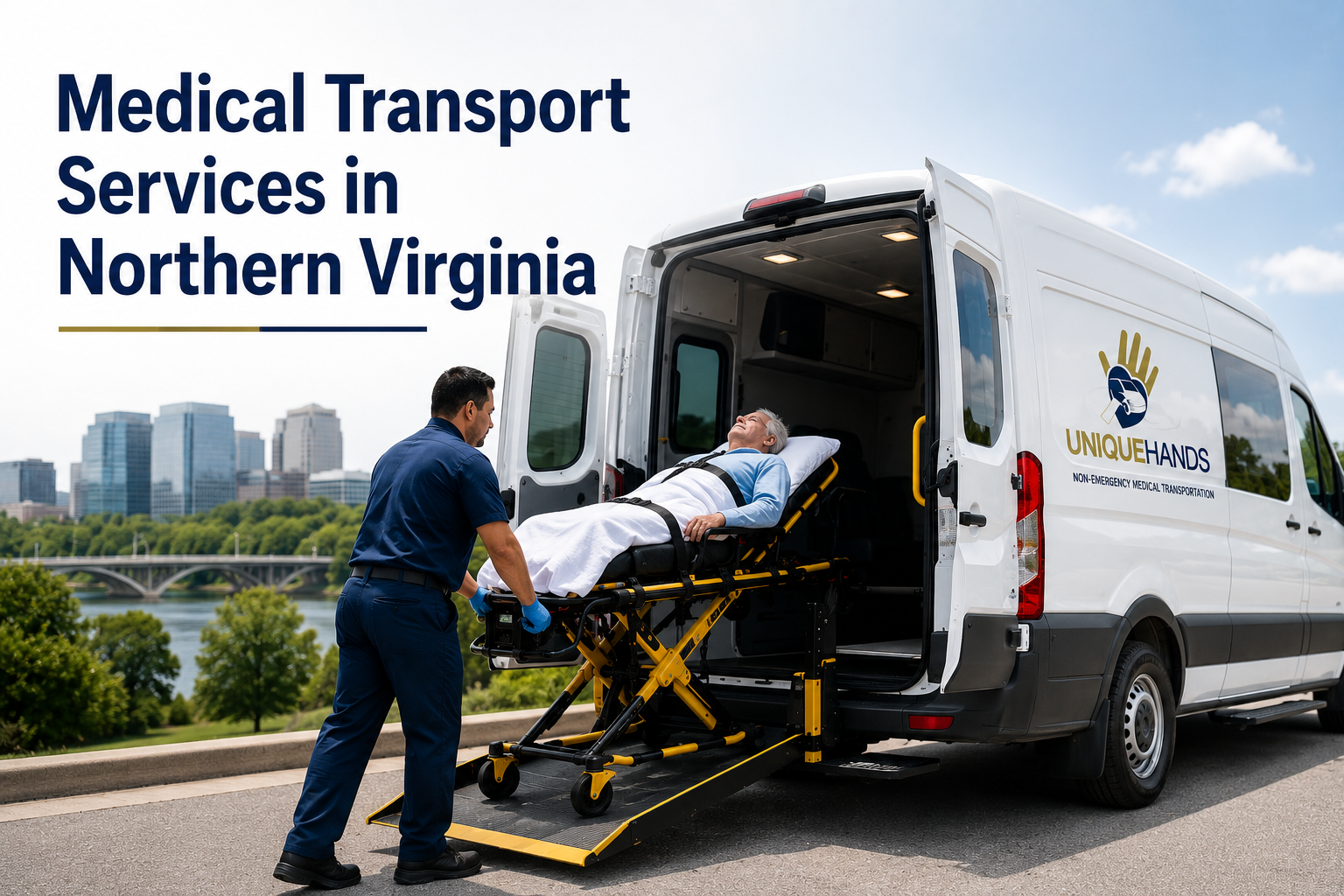
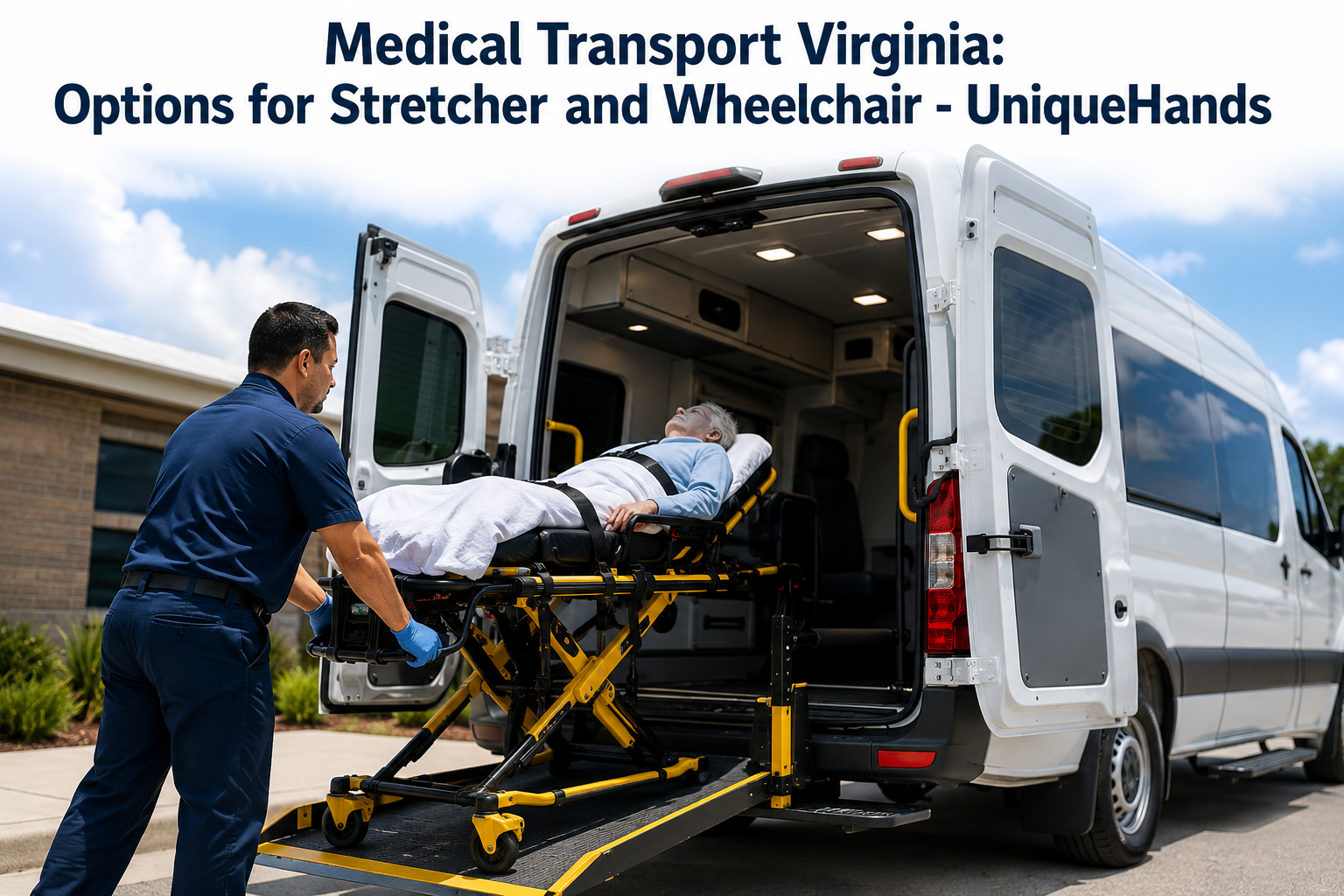
State-to-state stretcher transportation is a planned ground transportation service for a medically stable passenger who needs to travel in a lying or reclined position and whose trip does not require an ambulance.
The service may involve transportation between a residence, hospital, rehabilitation center, skilled nursing facility, assisted living community, long-term care facility, or another approved destination.
Because the journey may last several hours, the transportation provider must review the passenger’s mobility, ability to tolerate the trip, weight, pickup environment, destination access, travel distance, and required assistance.
Who May Need Stretcher Transportation?
Stretcher transportation may be appropriate for medically stable passengers who cannot safely sit upright for the duration of the trip.
- A passenger returning home after an approved hospital discharge
- A passenger relocating closer to family members
- A medically stable passenger transferring to rehabilitation
- A passenger moving to an assisted living or long-term care community
- A passenger traveling for a scheduled procedure or treatment
- A passenger who cannot safely use a wheelchair for an extended journey
- A passenger whose mobility limitations make regular transportation unsuitable
When Stretcher Transportation Is Not Appropriate
Non-emergency stretcher transportation is not appropriate for every passenger. An ambulance or another medically staffed transportation service may be required when the passenger needs clinical care during the trip.
- The passenger has an unstable medical condition
- Continuous medical monitoring is required
- Medication must be administered during transportation
- The passenger requires ventilator management
- The passenger may need emergency medical intervention
- The passenger cannot safely tolerate a long ground journey
Families should follow the instructions of the passenger’s healthcare provider or discharging facility when determining the appropriate level of transportation.
Important Factors for a State-to-State Trip
1. Medical Stability
The passenger must be medically stable and suitable for non-emergency ground transportation. UniqueHands cannot determine medical fitness for travel or provide medical clearance.
When a passenger is being discharged from a hospital or facility, the family should confirm that the passenger has been officially released and that the facility approves the planned transportation arrangement.
2. Trip Distance and Duration
The route, driving time, traffic conditions, weather, fuel stops, tolls, and necessary breaks should be considered before the trip is accepted.
A passenger who can tolerate a two-hour trip may not necessarily be able to tolerate an eight- or twelve-hour journey. Families should discuss long-distance travel with an appropriate healthcare professional when there are concerns about the passenger’s condition or endurance.
3. Passenger Weight and Size
Accurate passenger weight is essential when planning stretcher transportation. The stretcher, vehicle, loading system, and assistance requirements must be appropriate for the passenger.
Providing an inaccurate weight may result in a delayed or canceled trip if the assigned equipment cannot safely accommodate the passenger.
4. Pickup and Destination Accessibility
The provider needs to know whether the pickup or destination has stairs, narrow hallways, small elevators, steep ramps, uneven surfaces, or restricted vehicle access.
Details should be provided for both locations. A stretcher that can enter the pickup building may not fit through the doorway, hallway, or elevator at the destination.
5. Facility Coordination
Hospitals, rehabilitation centers, assisted living communities, and nursing facilities may have specific pickup or admission procedures.
Confirm the unit, room number, discharge entrance, receiving department, contact person, arrival time, and whether staff will be available to release or receive the passenger.
6. Companion or Caregiver Travel
A family member or caregiver may be able to accompany the passenger when vehicle seating and trip arrangements permit. This must be discussed before the reservation is confirmed.
Information Needed for a Transportation Quote
State-to-state transportation pricing depends on the distance, trip requirements, passenger needs, pickup conditions, destination, and scheduling.
- Pickup address
- Destination address
- Requested travel date and preferred time
- Passenger’s approximate weight
- Passenger’s mobility and transfer needs
- Number of steps at both locations
- Availability and dimensions of elevators
- Whether facility staff will assist at pickup and arrival
- Whether a family member or caregiver will travel
- Any luggage, mobility aids, or personal belongings
Preparing for the Day of Transportation
Confirm Discharge
Make sure the passenger has been officially cleared and released before the vehicle arrives.
Pack Essentials
Prepare identification, facility paperwork, medications, clothing, and personal items.
Confirm Arrival
Verify that the destination will be open and ready to receive the passenger.
Share Changes
Inform the provider immediately if the passenger’s condition, weight, destination, or travel time changes.
UniqueHands Long-Distance Transportation
UniqueHands provides approved long-distance ground transportation throughout Virginia and across state lines for medically stable ambulatory, wheelchair, and stretcher passengers.
Learn more about our long-distance medical transportation and stretcher transportation services.
Explore Related Transportation Services
Related Medical Transportation Articles
Request State-to-State Stretcher Transportation
Contact UniqueHands with the pickup and destination addresses, travel date, passenger weight, mobility needs, facility information, and accessibility details. We will review the request and explain whether the trip can be accommodated.
Frequently Asked Questions
Can UniqueHands provide stretcher transportation across state lines?
UniqueHands may provide approved state-to-state stretcher transportation for medically stable passengers when the distance, passenger needs, equipment, pickup environment, and destination can be safely accommodated.
Is stretcher transportation the same as an ambulance?
No. UniqueHands provides non-emergency transportation for medically stable passengers. We do not provide emergency medical care, clinical monitoring, medication administration, or treatment during transportation.
How much does state-to-state stretcher transportation cost?
Pricing depends on mileage, travel time, tolls, passenger needs, pickup and destination conditions, scheduling, and required assistance. A detailed quote can be provided after the trip information is reviewed.
How early should a long-distance trip be scheduled?
Schedule as early as possible. Long-distance stretcher trips require more planning than local transportation and may involve coordination with hospitals, rehabilitation centers, assisted living communities, or family members.
Does UniqueHands bill Medicaid, Medicare, or private insurance?
No. UniqueHands currently provides private-pay transportation and does not bill Medicaid, Medicare, or private insurance.
This article provides general transportation information and is not medical advice. Call 911 during an emergency. Transportation suitability and availability depend on the passenger’s condition, mobility, weight, trip distance, equipment, pickup environment, destination, and service requirements.