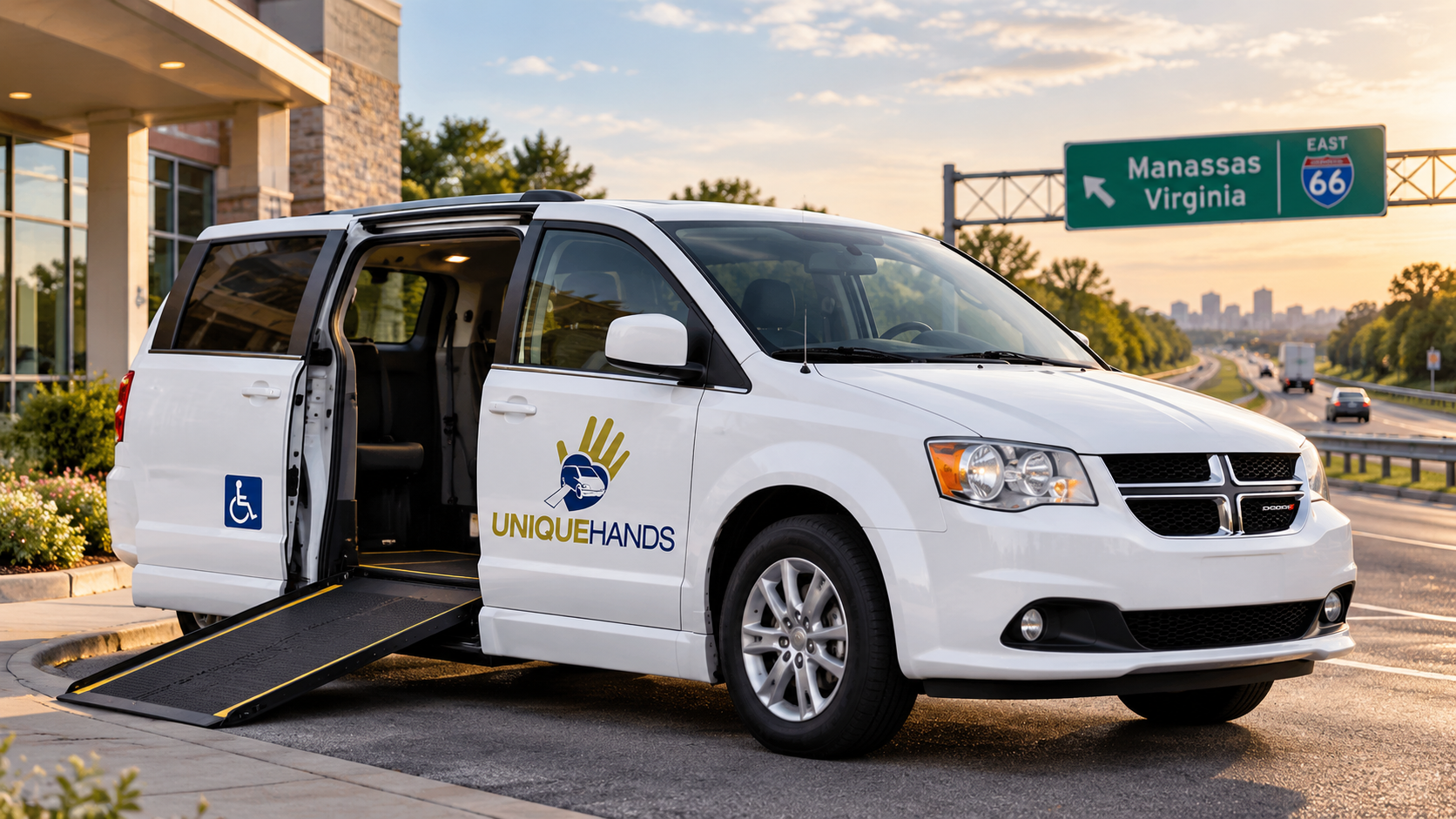
Wheelchair, Stretcher or Ambulatory Transportation in Manassas, VA: Which Do You Need?
Wheelchair, Stretcher or Ambulatory — Which Transportation Actually Fits the Passenger?
The destination may be the same, but the transportation should not automatically be the same for every patient.
A Manassas resident walking into a physician's office, a wheelchair passenger traveling to rehabilitation and a medically stable passenger who cannot remain seated have very different transportation needs.
This guide helps families understand the difference before requesting a trip.
A Simple Way to Think About the Options
Need Complete Manassas NEMT Information?
This guide specifically compares transportation types. For complete information about medical transportation throughout Manassas, hospital trips, senior transportation, recurring appointments and long-distance service, visit Non-Emergency Medical Transportation in Manassas, VA.
Start With How the Passenger Will Travel
The right transportation category is usually determined by the passenger's mobility rather than the type of medical appointment.
Ambulatory Transportation
Ambulatory transportation is for medically stable passengers who can walk independently or with limited assistance but need transportation to or from healthcare.
Wheelchair Transportation
Wheelchair transportation may be appropriate when the passenger uses a wheelchair and needs accessible boarding and transportation while remaining in the wheelchair.
Stretcher Transportation
Non-emergency stretcher transportation is intended for qualifying medically stable passengers who cannot safely or comfortably remain seated during transportation.
Do Not Choose Transportation Based Only on the Diagnosis
Two people receiving the same treatment may require completely different transportation.
One patient may walk independently to an appointment. Another may use a powered wheelchair. A third may be leaving a hospital and temporarily unable to tolerate seated travel.
For that reason, describe what the passenger can and cannot do rather than simply providing the medical condition.
Tell the Transportation Provider:
- Can the passenger walk?
- Does the passenger use a walker?
- Does the passenger use a wheelchair?
- Is the wheelchair manual or powered?
- Can the passenger transfer into a vehicle seat?
- Does the passenger need to remain lying down?
- Are there stairs at the pickup or destination?
- Will a caregiver or companion travel?
A Manassas Medical Trip May Be Local — or Cross Prince William County
Manassas residents may receive care around the Sudley Road and Route 234 medical corridor, including UVA Health Prince William Medical Center and nearby physician and outpatient destinations.
Other appointments may require travel toward Gainesville, Haymarket, Woodbridge, Centreville, Fairfax or another Northern Virginia healthcare destination.
The distance changes, but the first transportation question remains the same: how does the passenger need to travel?
Common Questions From Manassas Families
Transportation Needs Can Be Different at Discharge Than at Admission
A patient may have arrived at the hospital walking independently but leave using a wheelchair or with temporary restrictions that make a family vehicle difficult to use.
Before requesting discharge transportation, ask hospital staff about the passenger's current mobility and destination.
UniqueHands can review transportation requests from hospitals and care facilities for medically stable passengers going home, rehabilitation, senior living or another approved destination.
Medical Transportation Is Used for More Than Doctor Appointments
Transportation Can Change During a Treatment Plan
A passenger may begin rehabilitation walking with assistance and later use a wheelchair temporarily. Another patient may regain mobility as recovery progresses.
If mobility changes, tell the transportation provider before the next trip rather than assuming the original arrangement still fits.
The Medical Schedule Can Stay the Same While the Passenger Changes
A person may have therapy every Tuesday and Thursday for six weeks. The destination does not change, but mobility during week one may not be the same as mobility during week six.
That is why ongoing transportation should be reviewed when there is a meaningful change in the passenger's ability to walk, transfer or remain seated.
Give Us the Information That Actually Changes the Trip
UniqueHands Does Not Bill Medicare, Medicaid or Private Health Insurance
UniqueHands provides private-pay, pre-arranged non-emergency medical transportation for medically stable passengers.
Passengers, families, caregivers and facilities can contact us directly to discuss a transportation request.
Pricing depends on the actual trip, including transportation type, passenger mobility, pickup and destination, mileage, access conditions, waiting requirements and return arrangements.
Continue With the Guide That Fits Your Situation
The Right Transportation Type Still Matters When the Trip Crosses City Lines
Manassas passengers may receive care in another part of Prince William County or farther into Northern Virginia.
Main Manassas Local Page Non-Emergency Medical Transportation in Manassas, VA Start here for complete local Manassas NEMT information.When an Ambulance Is the Appropriate Option
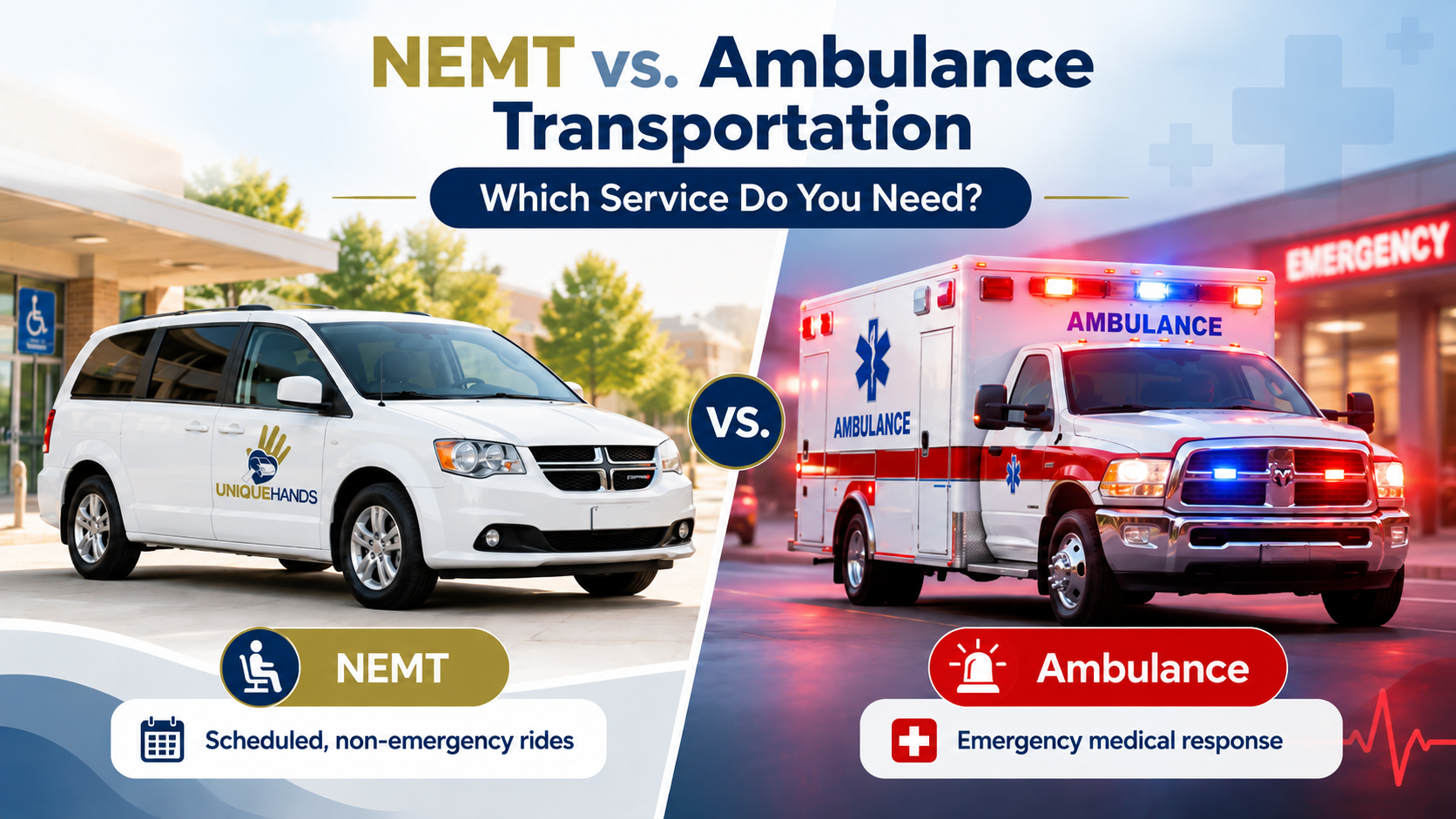
UniqueHands provides scheduled non-emergency transportation for medically stable passengers. We are not an emergency ambulance service and do not provide emergency treatment or ambulance-level clinical care. If someone is experiencing a medical emergency or potentially life-threatening symptoms, call 911.
Questions About Choosing the Right Transportation
What is the difference between ambulatory and wheelchair transportation?
Ambulatory transportation is generally for medically stable passengers who can walk independently or with limited assistance. Wheelchair transportation is designed for passengers who need wheelchair-accessible travel and may remain in the wheelchair during transportation.
When might stretcher transportation be appropriate?
Non-emergency stretcher transportation may be appropriate for a qualifying medically stable passenger who cannot safely or comfortably remain seated during the trip.
Can a patient use wheelchair transportation after surgery even if they normally walk?
Yes, when appropriate. Transportation should be based on the passenger's mobility at the time of the trip rather than their usual mobility before the procedure.
Can UniqueHands provide transportation from a Manassas hospital?
Hospital discharge transportation requests can be reviewed for medically stable passengers traveling home, to rehabilitation or to another approved destination.
Can you transport a wheelchair passenger from Manassas to Fairfax or Haymarket?
Transportation requests between Manassas and other Northern Virginia destinations may be reviewed based on passenger needs, route, scheduling and vehicle availability.
What if I do not know which transportation type to request?
Tell us whether the passenger can walk, transfer into a vehicle seat, uses a wheelchair or needs to remain lying down. Also provide relevant access conditions and the medical destination.
Does UniqueHands accept Medicaid, Medicare or health insurance?
No. UniqueHands provides private-pay medical transportation and does not bill Medicaid, Medicare or private health insurance.
Not Sure Whether You Need Wheelchair, Stretcher or Ambulatory Transportation?
Tell us about the passenger's mobility, wheelchair or transfer ability, pickup location, destination, appointment time, access conditions and return transportation. We can review the requested trip with you.
UniqueHands provides private-pay, pre-arranged non-emergency medical transportation. Transportation is subject to passenger needs, trip review, scheduling and availability. UniqueHands is not affiliated with hospitals, healthcare providers or municipalities referenced for local context. For a medical emergency, call 911.
UNIQUEHANDS RESOURCES
Medical Transportation Articles
Explore practical guides for families, caregivers, and facilities planning wheelchair, stretcher, ambulatory, hospital discharge, long-distance, and state-to-state non-emergency medical transportation.