Medical Ground Transportation Services for Patient Conditions
Understanding emergency, non-emergency, wheelchair, stretcher, and assisted ground transportation
Medical Ground Transportation Services for Patient Conditions
Reliable medical ground transportation helps patients reach hospitals, medical appointments, treatment centers, rehabilitation facilities, senior communities, and other healthcare destinations when ordinary transportation is not appropriate.
The correct transportation service depends on the passenger’s condition, the urgency of the trip, mobility limitations, travel distance, and whether medical treatment or clinical monitoring is required during transportation.
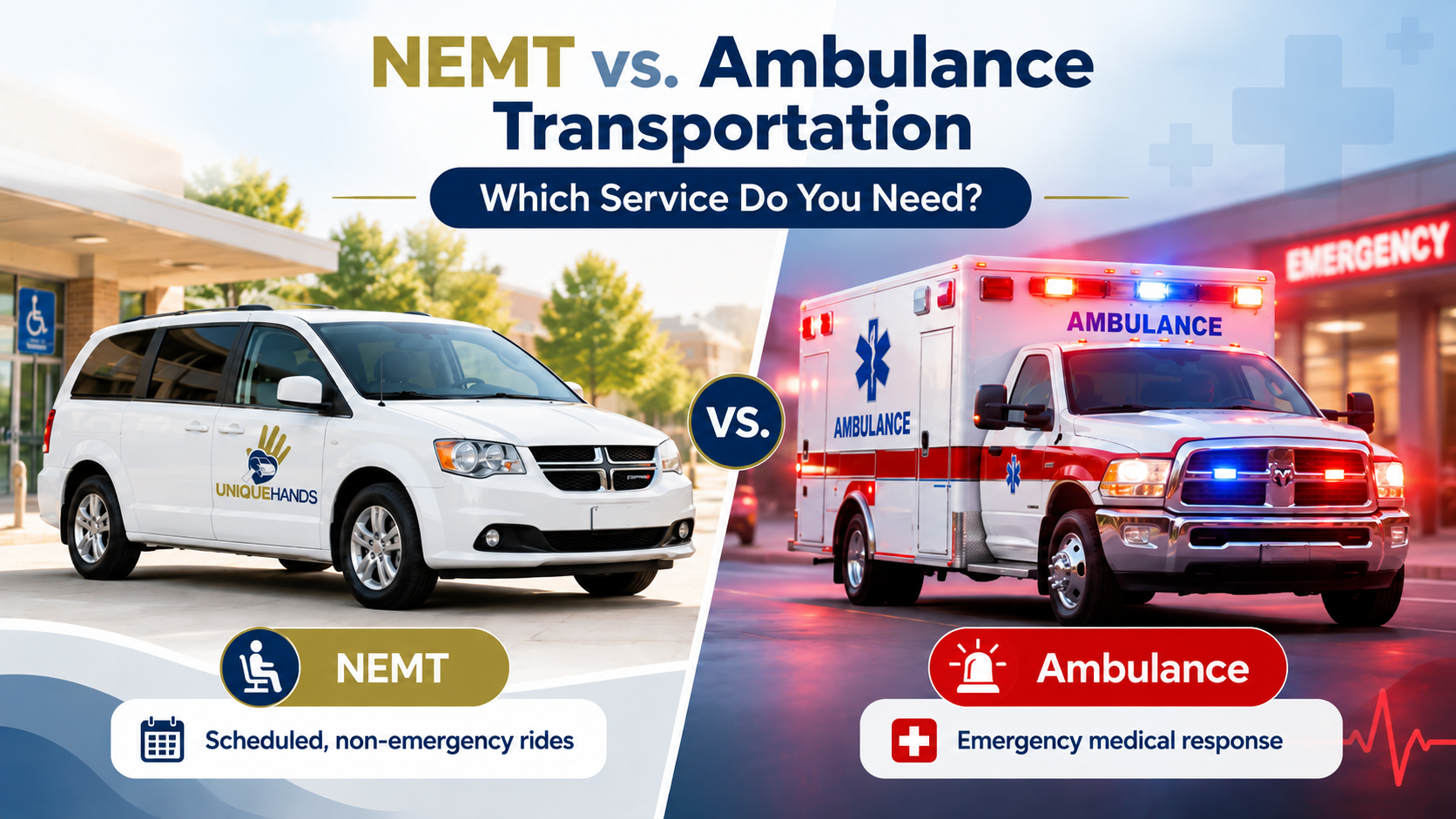
Medical ground transportation includes emergency ambulance services and scheduled non-emergency medical transportation. Although both involve ground travel, they serve very different passenger needs.
Importance of Medical Ground Transportation Services
Transportation barriers can prevent patients from receiving necessary care. Older adults, wheelchair passengers, individuals recovering from procedures, and people living with limited mobility may not be able to drive or use a taxi, rideshare, or public transportation.
Emergency Transportation
During an emergency, every second matters. Emergency ambulances are medically staffed and equipped to provide immediate assessment, treatment, and clinical monitoring while transporting the patient to an appropriate hospital.
Call 911 for a medical emergency
Call 911 for chest pain, difficulty breathing, signs of stroke, severe bleeding, loss of consciousness, a serious injury, active labor, or another sudden and rapidly worsening medical condition.
Transportation for Scheduled Healthcare
A medically stable passenger may need scheduled transportation for a doctor appointment, physical therapy, dialysis treatment, outpatient procedure, hospital discharge, rehabilitation visit, diagnostic test, or recurring treatment.
UniqueHands provides non-emergency medical transportation services for passengers who need more assistance or accessibility than an ordinary vehicle can provide.
Passenger Comfort and Mobility Support
Medical ground transportation should be coordinated around the passenger’s ability to walk, sit upright, use a wheelchair, enter the vehicle, and reach the destination entrance.
Pickup and destination conditions may also affect the trip. Stairs, elevators, narrow hallways, apartment entrances, facility check-in procedures, and long walkways should be discussed during scheduling.
Reliable ground transportation can help:
- Support access to scheduled medical care
- Reduce missed appointments and treatment delays
- Accommodate wheelchair and stretcher passengers
- Assist older adults and people with limited mobility
- Coordinate hospital discharges and facility transfers
- Reduce transportation responsibilities for family caregivers
Types of Medical Ground Transportation Services
1. Emergency Ambulance Services
Ambulances are designed for emergency situations and passengers who require medical care or clinical monitoring during transportation. Ambulance teams may include emergency medical technicians and paramedics.
Depending on the service level, an ambulance may carry cardiac monitors, defibrillators, airway equipment, oxygen systems, medications, trauma supplies, and other emergency medical equipment.
- The passenger needs immediate medical attention
- Symptoms are sudden, severe, or rapidly worsening
- Medical treatment is required during the trip
- Breathing, heart rate, or other vital signs require monitoring
- The passenger has a serious injury or emergency condition
2. Non-Emergency Medical Transportation
Non-emergency medical transportation, commonly called NEMT, is designed for medically stable passengers who do not require emergency treatment during travel but need accessible or assisted transportation.
NEMT may be used for scheduled appointments, routine checkups, rehabilitation, outpatient procedures, recurring treatments, hospital discharges, nursing-facility transfers, senior care, and longer-distance travel.
- The passenger is medically stable
- No emergency treatment is required during transportation
- The trip is for a scheduled appointment or procedure
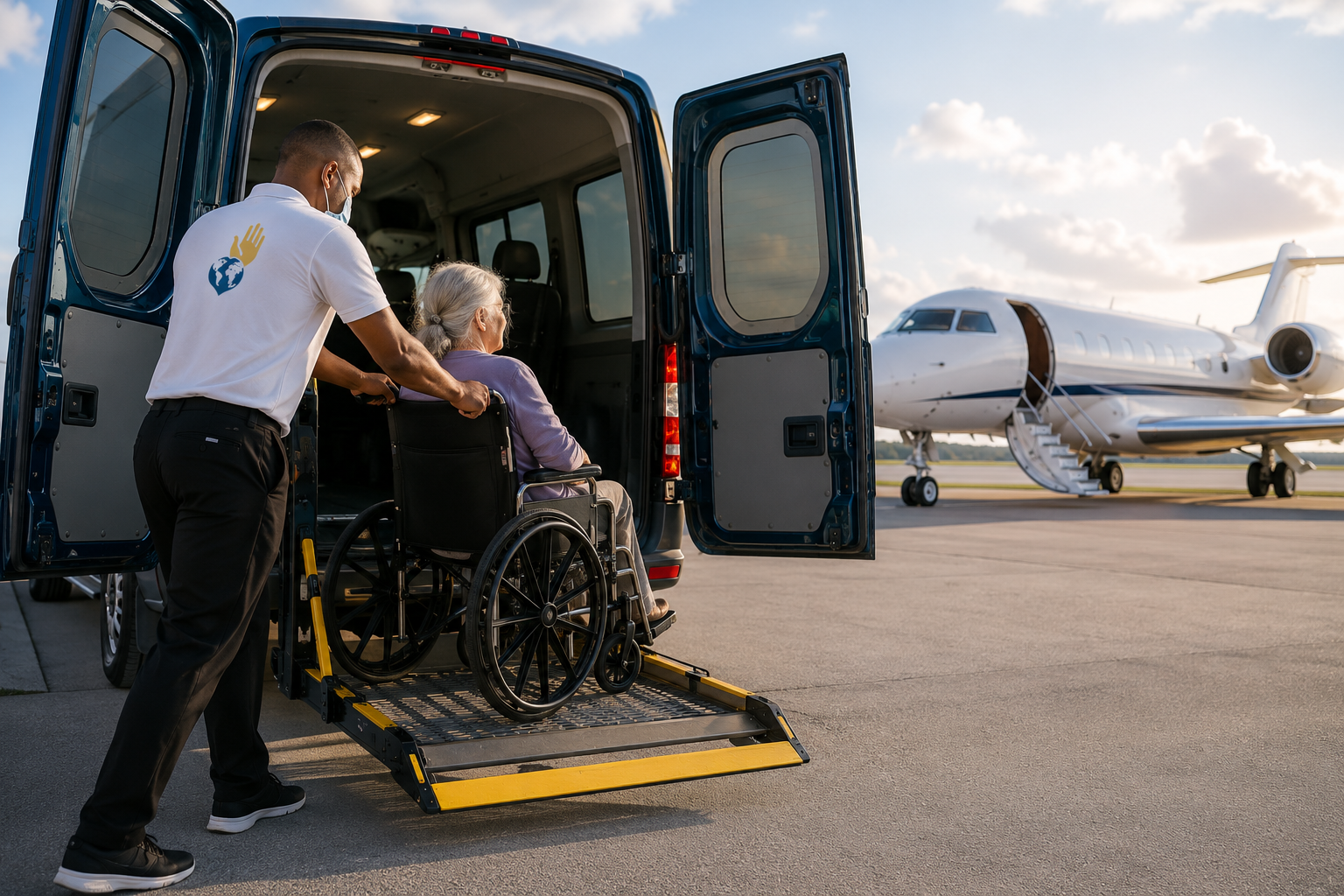
- The passenger uses a wheelchair or mobility device
- The passenger cannot sit upright and needs stretcher transportation
- A taxi, rideshare, or ordinary vehicle is not appropriate
3. Mobility-Based Transportation
Some passengers need transportation designed around a particular mobility or positioning requirement. This may include ambulatory assistance, wheelchair accessibility, stretcher transportation, or additional assistance from pickup through arrival.
Wheelchair Transportation
Accessible transportation for passengers who remain seated in their wheelchairs while traveling.
View wheelchair transportation → ServiceStretcher Transportation
Pre-arranged transportation for stable passengers who cannot remain seated upright safely.
View stretcher transportation → ServiceAmbulatory Transportation
Transportation for passengers who can walk independently or with limited assistance.
View ambulatory transportation → ServiceLong-Distance Transportation
Scheduled transportation within Virginia and to approved destinations across state lines.
View long-distance transportation →Benefits of Medical Ground Transportation
Timely Access to Care
A clear transportation plan can help passengers arrive for medical appointments, treatments, rehabilitation visits, and procedures at the required time.
Advance scheduling is especially important for recurring treatments, longer trips, wheelchair transportation, and stretcher transportation.
Reduced Stress for Patients and Families
Families may not have an accessible vehicle or the physical ability to assist a loved one. Professional transportation can reduce the stress of coordinating a trip involving mobility devices, difficult entrances, hospital discharge procedures, or long travel distances.
Transportation Based on Passenger Needs
The transportation provider should review the passenger’s mobility, pickup location, destination, wheelchair type, required positioning, access conditions, and requested level of assistance before confirming the trip.
Assistance From Pickup Through Arrival
Depending on the service arranged, assistance may include vehicle entry and exit, wheelchair securement, stretcher positioning, movement through an approved entrance, or coordination with a family member or facility contact.
Choosing the Appropriate Transportation Service
Choose Ambulance Transportation When:
- The passenger needs immediate treatment
- The condition is unstable or rapidly worsening
- Clinical monitoring is needed during travel
- Medical equipment or medication must be managed
- The passenger has an emergency injury or symptom
Choose Scheduled NEMT When:
- The passenger is medically stable
- The trip is scheduled in advance
- No clinical treatment is required during travel
- The passenger needs mobility assistance
- Wheelchair or stretcher transportation is needed
Information to Provide When Scheduling
- Passenger’s full name and telephone number
- Complete pickup and destination addresses
- Requested transportation date and pickup time
- Appointment, procedure, discharge, or arrival time
- Ambulatory, wheelchair, or stretcher requirement
- Wheelchair type and mobility-equipment details
- Passenger’s approximate height and weight when relevant
- Details about stairs, elevators, ramps, hallways, and entrances
- Pickup and destination contact information
- Whether a family member or caregiver will accompany the passenger
Conclusion
Medical ground transportation helps connect passengers with emergency care, scheduled appointments, treatments, hospital services, rehabilitation, senior care, and other healthcare destinations.
Emergency ambulances and scheduled NEMT serve different purposes. Ambulances are intended for emergency treatment and clinical monitoring. Non-emergency transportation is intended for medically stable passengers who need accessible, assisted, wheelchair, stretcher, ambulatory, or long-distance transportation.
UniqueHands provides private-pay non-emergency medical transportation throughout Northern Virginia and for approved longer-distance trips.
Frequently Asked Questions
Why are medical ground transportation services important?
These services help passengers reach emergency care, scheduled appointments, procedures, treatments, rehabilitation, and other healthcare destinations when ordinary transportation is not appropriate.
What equipment is available in an emergency ambulance?
Emergency ambulance equipment may include cardiac monitors, defibrillators, airway equipment, oxygen systems, medications, and trauma supplies. Equipment depends on the ambulance service level.
Does UniqueHands carry emergency medical equipment?
No. UniqueHands provides non-emergency transportation and does not provide ambulance-level equipment, emergency treatment, medication administration, or clinical monitoring.
What types of NEMT does UniqueHands provide?
UniqueHands provides scheduled wheelchair, stretcher, ambulatory, assisted, senior, hospital-related, outpatient procedure, and long-distance transportation.
Can wheelchair passengers remain in their wheelchairs?
Approved wheelchair passengers may remain seated in their wheelchairs while the wheelchair is positioned and secured inside the accessible vehicle.
Does UniqueHands accept Medicare, Medicaid, or insurance?
UniqueHands provides private-pay transportation and does not bill Medicare, Medicaid, or private insurance.
Request Medical Ground Transportation
Share the passenger’s pickup location, destination, preferred date, mobility needs, and whether ambulatory, wheelchair, stretcher, or long-distance transportation is required.
Transportation must be arranged in advance and remains subject to trip review, passenger needs, scheduling, staffing, and vehicle availability.UNIQUEHANDS RESOURCES
Medical Transportation Articles
Explore practical guides for families, caregivers, and facilities planning wheelchair, stretcher, ambulatory, hospital discharge, long-distance, and state-to-state non-emergency medical transportation.