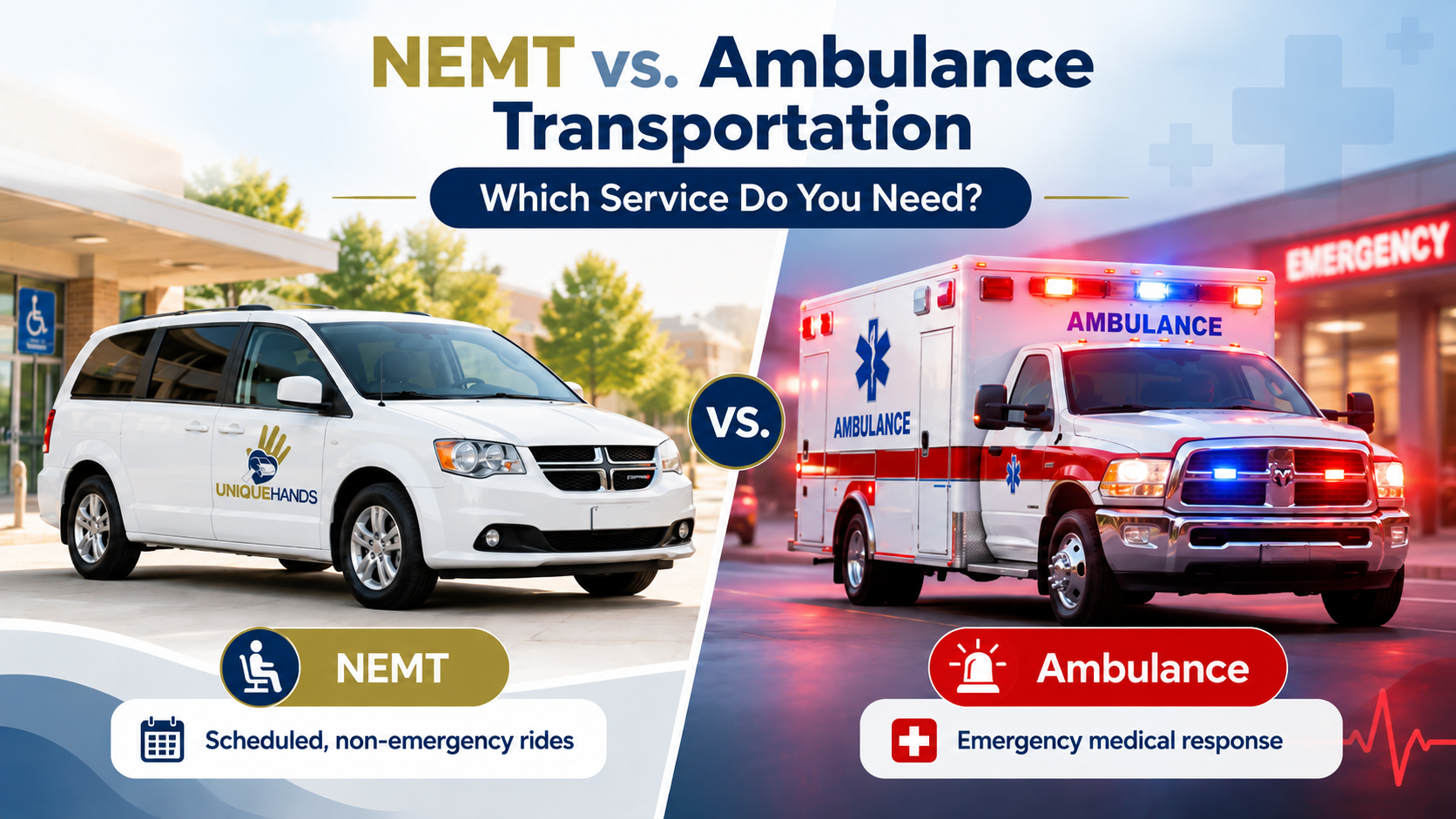
Conditions That May Require Medical Ground Transportation
Understanding when emergency ambulance care is required and when scheduled non-emergency transportation may be appropriate

Conditions That May Require Medical Ground Transportation
Medical ground transportation helps passengers reach hospitals, treatment centers, rehabilitation facilities, medical appointments, and other healthcare destinations when an ordinary car, taxi, public transportation, or rideshare is not appropriate.
The correct transportation option depends on whether the situation is an emergency, whether medical treatment or clinical monitoring is required during travel, the passenger’s mobility, and whether wheelchair, stretcher, ambulatory, or long-distance transportation is needed.
1. Medical Emergencies
A medical emergency requires an emergency ambulance rather than scheduled non-emergency transportation. Emergency medical professionals can evaluate the patient, provide treatment, monitor vital signs, and communicate with the receiving hospital during transportation.
Call 911 for emergency symptoms
Call 911 for chest pain, difficulty breathing, signs of stroke, severe bleeding, loss of consciousness, a serious injury, uncontrolled pain, premature labor, or another rapidly changing medical condition.
Heart Attack Symptoms
Chest pressure, pain spreading to the arm or jaw, severe shortness of breath, sweating, nausea, or sudden weakness may be signs of a heart attack. These symptoms require immediate emergency evaluation and ambulance transportation.
Stroke Symptoms
Sudden facial drooping, arm weakness, speech difficulty, confusion, vision changes, loss of balance, or a severe unexplained headache may indicate a stroke. Do not schedule ordinary or non-emergency transportation for active stroke symptoms.
Severe Injuries
Serious falls, vehicle accidents, head injuries, suspected spinal injuries, uncontrolled bleeding, or major fractures require emergency assessment. Moving an injured person without appropriate medical support may create additional risk.
2. Chronic Medical Conditions
People living with chronic conditions may need dependable transportation for recurring treatments, follow-up appointments, diagnostic testing, physical therapy, specialty care, and rehabilitation.
Scheduled NEMT may be appropriate when the passenger is medically stable and does not require clinical treatment or continuous medical monitoring during transportation.
Cancer Treatment
Cancer patients may need recurring transportation to chemotherapy, radiation therapy, imaging appointments, specialist visits, or follow-up care. Fatigue, weakness, treatment side effects, and mobility limitations may make driving or using ordinary transportation difficult.
Transportation should be coordinated according to the passenger’s mobility and whether ambulatory, wheelchair transportation, or stretcher transportation is required.
Kidney Disease and Dialysis
Dialysis patients often attend treatment several times each week. Recurring transportation can help patients maintain a consistent schedule when they cannot drive or safely use public transportation.
UniqueHands transports stable passengers to and from dialysis appointments but does not perform dialysis, monitor treatment, administer medication, or provide clinical care during transportation.
Chronic Respiratory Conditions
People living with chronic obstructive pulmonary disease, pulmonary fibrosis, cystic fibrosis, or another respiratory condition may need transportation to pulmonary specialists, rehabilitation, diagnostic testing, or routine treatment.
Neurological Disorders
Multiple sclerosis, Parkinson’s disease, cerebral palsy, complications from a previous stroke, and other neurological conditions can affect balance, strength, coordination, and mobility.
A wheelchair-accessible vehicle or additional assistance may help a stable passenger travel to neurology appointments, physical therapy, rehabilitation, imaging, and other scheduled care.
3. High-Risk Pregnancies
A medically stable expectant mother may need scheduled transportation to prenatal visits, specialist appointments, diagnostic testing, or maternal-fetal medicine appointments when driving is not appropriate.
The healthcare provider should confirm that non-emergency ground transportation is suitable. UniqueHands does not provide obstetric monitoring, fetal monitoring, medication, or clinical treatment during transportation.
Premature Labor or Active Complications
Contractions before the expected delivery date, heavy bleeding, severe abdominal pain, seizures, fainting, sudden swelling with severe headache, or another urgent pregnancy complication requires emergency medical attention.
Do not use scheduled NEMT for active labor
Call 911 or follow the emergency instructions provided by the patient’s obstetric healthcare team when premature labor, active labor, heavy bleeding, or an acute pregnancy complication is suspected.
4. Organ Transplant-Related Transportation
Organ transplant care involves strict timing, specialized healthcare teams, and detailed transportation instructions. The transportation required depends on whether the trip involves organ procurement, an urgent transplant call, hospital discharge, or scheduled follow-up care.
Organ Procurement Transportation
Organ procurement and organ delivery require specialized medical logistics, temperature-controlled systems, strict handling protocols, and coordination through transplant organizations. UniqueHands does not transport donor organs.
Transplant Recipient Transportation
A transplant recipient responding to an urgent transplant call should follow the instructions provided by the transplant team. Depending on the patient’s condition and the timing required, emergency or specially coordinated transportation may be necessary.
Scheduled NEMT may be considered for a medically stable passenger traveling to transplant evaluations, follow-up appointments, rehabilitation, routine testing, or a planned hospital discharge when the healthcare team approves ordinary ground transportation.
Choosing Between Ambulance and Non-Emergency Transportation
Use an Ambulance When:
- The passenger needs immediate medical attention
- Symptoms are sudden, severe, or rapidly worsening
- Medical treatment is required during transportation
- Vital signs or breathing require clinical monitoring
- The passenger has a serious injury
- Active labor or an urgent pregnancy complication is suspected
Scheduled NEMT May Be Appropriate When:
- The passenger is medically stable
- No emergency treatment is required during travel
- The trip is for a scheduled appointment or treatment
- The passenger uses a wheelchair or needs mobility assistance
- The passenger cannot sit upright and needs stretcher transport
- A standard car, taxi, or rideshare is not appropriate
UniqueHands Medical Ground Transportation Options
UniqueHands coordinates pre-arranged transportation according to the passenger’s mobility, pickup location, destination, trip distance, and access requirements.
Wheelchair Transportation
Accessible transportation for passengers who remain seated in their wheelchairs during the trip.
View wheelchair transportation → ServiceStretcher Transportation
Pre-arranged transportation for stable passengers who cannot sit upright safely.
View stretcher transportation → ServiceLong-Distance Transportation
Scheduled transportation within Virginia and to approved out-of-state destinations.
View long-distance transportation → ServicesAll UniqueHands Services
Explore ambulatory, wheelchair, stretcher, assisted, senior, and hospital-related transportation.
Explore transportation services →Information to Provide When Scheduling
- Passenger’s full name and telephone number
- Complete pickup and destination addresses
- Requested transportation date and pickup time
- Appointment, treatment, discharge, or arrival time
- Ambulatory, wheelchair, or stretcher requirement
- Wheelchair type and mobility-equipment information
- Passenger’s approximate height and weight when relevant
- Information about stairs, elevators, ramps, and entrances
- Pickup and destination contact information
- Whether a family member or caregiver plans to accompany the passenger
Conclusion
Medical ground transportation serves both emergency and scheduled healthcare needs, but the type of service must match the passenger’s condition.
Heart attack symptoms, stroke symptoms, severe injuries, breathing emergencies, active labor, and other urgent medical situations require 911 and emergency ambulance care. Medically stable passengers attending scheduled treatment, rehabilitation, recurring appointments, testing, or follow-up care may be eligible for non-emergency ground transportation.
UniqueHands provides private-pay wheelchair, stretcher, assisted, ambulatory, hospital-related, and long-distance transportation throughout Northern Virginia and for approved trips beyond the local area.
Frequently Asked Questions
What conditions require emergency ground transportation?
Heart attack symptoms, stroke symptoms, severe bleeding, breathing emergencies, loss of consciousness, serious injuries, active labor, and rapidly worsening conditions require emergency assessment. Call 911.
Can chronic medical conditions require NEMT?
Yes. Medically stable passengers may use scheduled NEMT for cancer treatment, dialysis appointments, pulmonary care, neurological appointments, rehabilitation, testing, and other recurring healthcare visits.
Can UniqueHands transport someone experiencing a medical emergency?
No. UniqueHands provides non-emergency transportation. Call 911 when immediate treatment, clinical monitoring, or emergency transportation is required.
Can a high-risk pregnancy patient use NEMT?
A medically stable passenger may use scheduled transportation to an approved prenatal appointment when the healthcare provider determines that NEMT is appropriate. Active labor or pregnancy complications require emergency care.
Does UniqueHands transport donor organs?
No. Organ procurement and donor-organ delivery require specialized transplant logistics. UniqueHands may review scheduled passenger transportation for stable transplant patients attending evaluations or follow-up care.
Does UniqueHands accept Medicare, Medicaid, or insurance?
UniqueHands provides private-pay transportation and does not bill Medicare, Medicaid, or private insurance.
Request Non-Emergency Ground Transportation
Share the passenger’s pickup location, destination, preferred date, mobility needs, and whether ambulatory, wheelchair, stretcher, or long-distance transportation is required.
Transportation must be arranged in advance and remains subject to trip review, passenger needs, scheduling, staffing, and vehicle availability.UNIQUEHANDS RESOURCES
Medical Transportation Articles
Explore practical guides for families, caregivers, and facilities planning wheelchair, stretcher, ambulatory, hospital discharge, long-distance, and state-to-state non-emergency medical transportation.