Medical Patient Transport Services: Emergency, Non-Emergency & Air Transport Options
A guide to emergency, non-emergency, and air medical transportation services
Medical Patient Transport Services: Emergency, Non-Emergency & Air Transport Options
Medical patient transport services help people travel to hospitals, medical appointments, rehabilitation centers, outpatient facilities, senior living communities, and other healthcare destinations when ordinary transportation is not appropriate.
The correct transportation option depends on the urgency of the situation, whether medical care is required during the trip, the passenger’s mobility, travel distance, positioning needs, and the type of vehicle or assistance required.
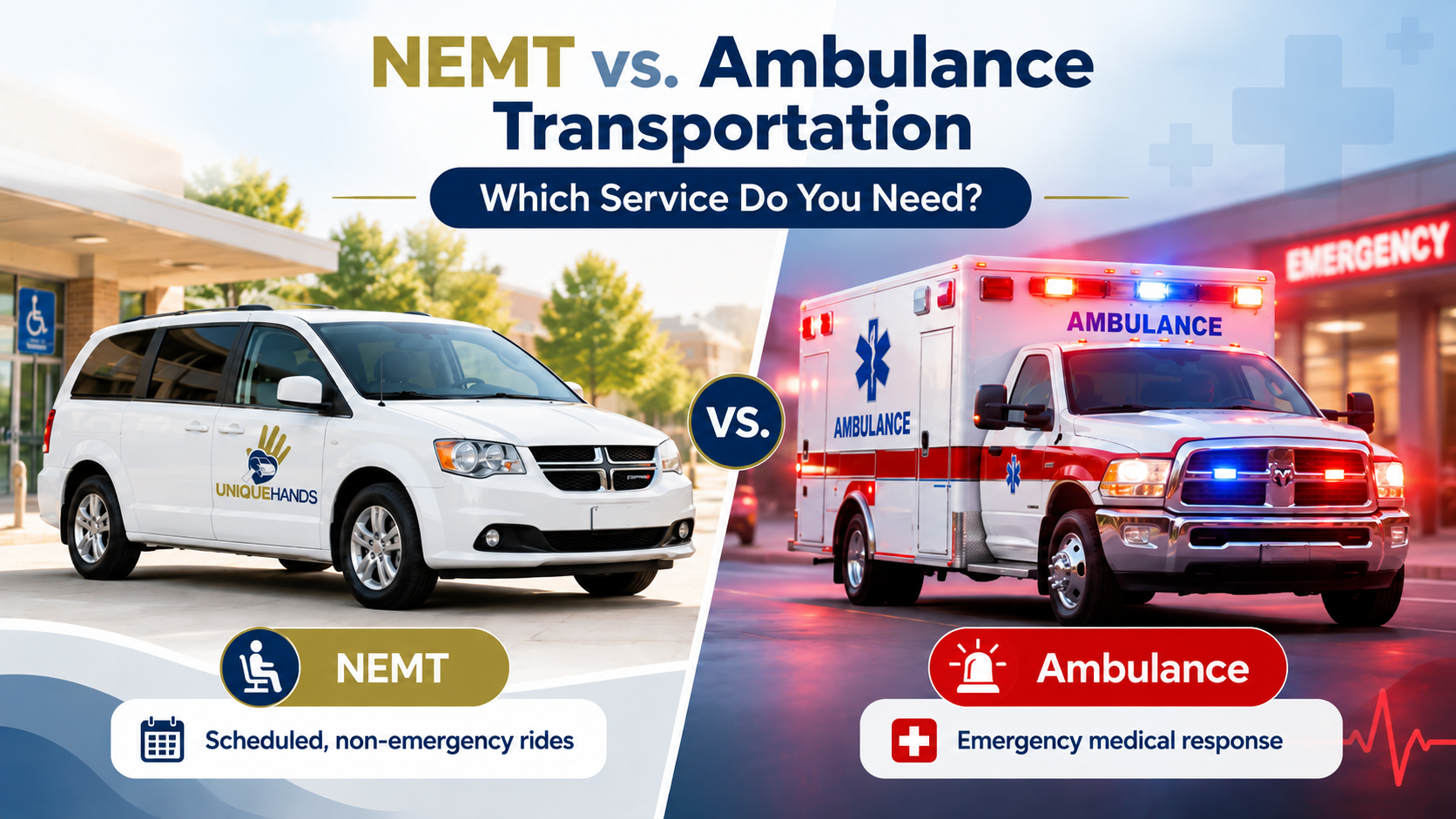
Medical patient transportation may include emergency medical services, scheduled non-emergency medical transportation, or air ambulance transportation. These services serve very different purposes and should not be treated as interchangeable.
Three Major Types of Medical Patient Transportation
The term medical patient transport services covers several very different forms of transportation. Understanding those differences helps families choose the appropriate level of service.
EMS / Ambulance
For emergencies, serious injuries, rapidly changing symptoms, or passengers needing immediate medical treatment or clinical monitoring.
NEMT
For medically stable passengers who need scheduled wheelchair, stretcher, ambulatory, senior, hospital-related, or long-distance transportation.
Air Ambulance
For patients who require rapid long-distance travel, specialized medical care during flight, or access to distant medical facilities.
The Importance of Medical Patient Transport Services
Transportation can become a major barrier for older adults, wheelchair passengers, individuals with limited mobility, patients recovering from medical procedures, and families coordinating care for loved ones.
A reliable transportation plan helps passengers reach scheduled healthcare services while reducing the physical and logistical challenges associated with entering an ordinary vehicle, navigating public transportation, or relying on an unprepared family member.
Supporting Timely Access to Healthcare
Missed appointments can delay evaluations, treatments, rehabilitation, follow-up care, and recurring medical services. Pre-arranged patient transportation helps families create a clear plan for reaching the healthcare destination at the scheduled time.
Read more about how unreliable medical transportation can contribute to missed appointments.
Providing Transportation Suited to Mobility Needs
A standard vehicle may not be appropriate for a passenger who remains seated in a wheelchair, cannot sit upright safely, uses a walker, or needs assistance entering and exiting the vehicle.
Medical transportation providers may offer different vehicles and services based on the passenger’s mobility, positioning needs, trip distance, pickup conditions, and destination requirements.
Reducing Transportation Stress for Families
Families may not have an accessible vehicle or the physical ability to assist a loved one safely. A scheduled transportation provider can coordinate the trip around the passenger’s mobility and the access conditions at both locations.
Reliable Patient Transport Can Help:
- Reduce missed medical appointments
- Accommodate wheelchair and stretcher passengers
- Support older adults and passengers with limited mobility
- Coordinate hospital discharges and facility transfers
- Provide an alternative to taxis, rideshares, and ordinary vehicles
- Reduce transportation responsibilities for family caregivers
Types of Medical Patient Transport Services
1. Emergency Medical Services
Emergency Medical Services, commonly called EMS, provide immediate medical assistance and emergency ambulance transportation. EMS teams may include paramedics and emergency medical technicians who can evaluate patients, provide emergency interventions, and monitor the patient while traveling to a hospital.
Emergency ambulances are intended for life-threatening conditions, serious injuries, rapidly changing medical symptoms, and situations where immediate treatment or clinical monitoring is required.
Call 911 for an Emergency
Call 911 when a person experiences chest pain, difficulty breathing, signs of stroke, severe bleeding, loss of consciousness, a serious fall or injury, or another rapidly changing medical condition.
2. Non-Emergency Medical Transportation
Non-emergency medical transportation, commonly called NEMT, is intended for medically stable passengers who do not need emergency treatment during transportation but require more assistance or accessibility than a standard vehicle can provide.
NEMT may be used for scheduled medical appointments, recurring treatments, hospital discharges, rehabilitation visits, outpatient procedures, senior care, family relocations, and approved long-distance transportation.
UniqueHands provides private-pay NEMT for qualifying scheduled trips. For the full range of commercial services, visit our non-emergency medical transportation services page or review our NEMT transportation services.
Looking for Non-Emergency Patient Transportation?
If the passenger is medically stable and needs scheduled ground transportation rather than emergency care, review UniqueHands wheelchair, stretcher, ambulatory, senior, hospital-related, and long-distance transportation services.
View Main NEMT Services Explore Transportation OptionsWheelchair Transportation
Accessible transportation for passengers who remain seated in their wheelchairs during travel.
View wheelchair transportation → SERVICEStretcher Transportation
Scheduled transportation for medically stable passengers who cannot remain seated upright safely.
View stretcher transportation → SERVICEAmbulatory Transportation
Transportation for passengers who walk independently or with limited mobility assistance.
View ambulatory transportation → SERVICESenior Transportation
Pre-arranged transportation for older adults traveling to healthcare appointments and facilities.
View senior transportation → SERVICELong-Distance Transportation
Scheduled ground transportation within Virginia and to approved destinations across state lines.
View long-distance transportation → MAIN SERVICE PAGENon-Emergency Medical Transportation Services
Review UniqueHands transportation for appointments, hospital discharges, rehabilitation, procedures, mobility needs, and other scheduled trips.
View all NEMT services →3. Air Ambulance Services
Air ambulance services use medically equipped helicopters or fixed-wing aircraft to transport patients who require rapid travel, clinical care during flight, or access to a distant specialized medical facility.
Air medical transportation may be appropriate when ground transportation would take too long, a patient is located in a remote area, or the patient requires specialized clinical monitoring and treatment during the journey.
UniqueHands does not provide air ambulance transportation. Families requiring air medical care should contact a licensed air ambulance provider or work with the patient’s healthcare team.
UniqueHands Non-Emergency Patient Transport Options
Wheelchair Patient Transport
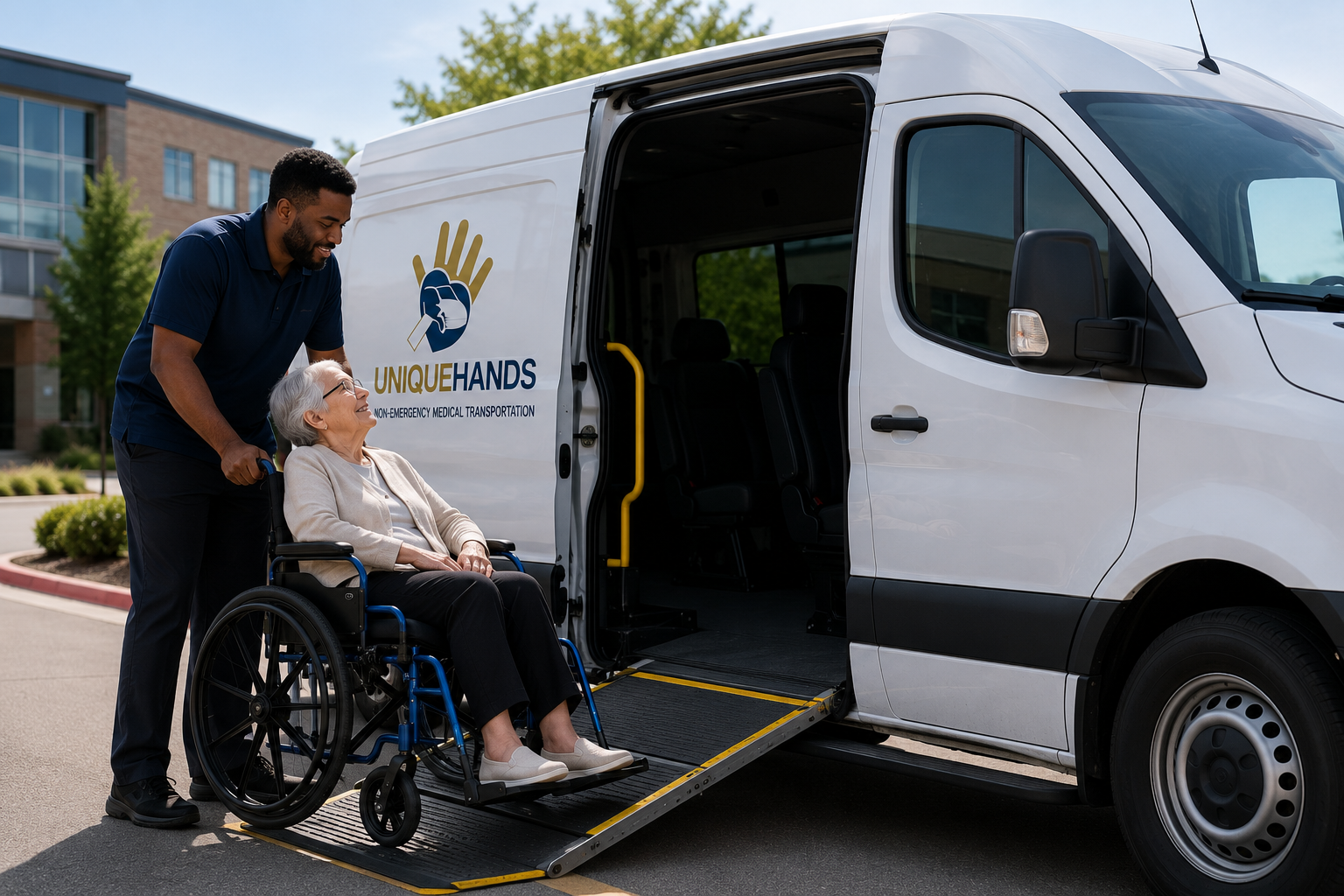
Wheelchair transportation is intended for passengers who need an accessible vehicle and remain seated in their wheelchairs during travel. Wheelchairs are positioned and secured inside the vehicle before departure.
Families should provide the wheelchair type, approximate dimensions, information about additional mobility equipment, and relevant access details when scheduling.
Stretcher Patient Transport
Stretcher transportation may be appropriate for a medically stable passenger who cannot sit upright safely but does not require emergency ambulance treatment or clinical monitoring.
Pickup and destination access must be reviewed carefully, including stairs, elevators, hallways, room locations, entrances, and whether someone will be available to receive the passenger.
Ambulatory Patient Transport
Ambulatory transportation is designed for passengers who can walk independently or with limited assistance but should not drive or use ordinary transportation.
This service may be used for medical appointments, outpatient procedures, diagnostic testing, treatments involving sedation, or return transportation after a procedure.
Senior Medical Transportation
Senior transportation may help older adults who no longer drive, use mobility devices, need additional time entering and exiting a vehicle, or require a more supportive transportation option than a taxi or rideshare.
Long-Distance Patient Transport
Long-distance NEMT may be used for stable passengers traveling within Virginia or to an approved destination in another state. Trips may involve hospitals, rehabilitation facilities, senior living communities, family homes, and other approved locations.
Learn how careful planning can improve long-distance medical transportation.
Key Considerations When Choosing Patient Transportation
Emergency Versus Non-Emergency Service
Determine whether the passenger is medically stable and whether emergency treatment or clinical monitoring is required during transportation. A passenger requiring immediate medical care should use EMS rather than NEMT.
Transportation Type
Confirm whether the passenger can walk, uses a wheelchair, cannot sit upright, or needs another transportation arrangement. Providing accurate mobility information helps the company evaluate the trip and select an appropriate vehicle.
Pickup and Destination Access
Explain whether either location has stairs, narrow hallways, elevators, ramps, gated entrances, apartment access, long walkways, or facility check-in procedures.
Scheduling and Availability
Non-emergency transportation should be requested in advance. Availability may depend on the date, time, route, vehicle type, passenger needs, pickup conditions, destination requirements, weather, and staffing.
Driver and Passenger Assistance
Ask what non-clinical passenger assistance is available, including vehicle entry and exit, wheelchair securement, stretcher positioning, escort support, facility check-in, or procedure wait service.
Medical Care During Transportation
Confirm whether the passenger needs medication administration, oxygen management, vital-sign monitoring, emergency intervention, or another clinical service. UniqueHands does not provide medical treatment or clinical monitoring during transportation.
Payment and Insurance
Ask how the service is priced and whether payment is private pay or insurance-based. UniqueHands provides private-pay transportation and does not bill Medicare, Medicaid, or private insurance.
Information to Provide When Requesting Transportation
- Passenger’s full name and contact information
- Complete pickup and destination addresses
- Requested transportation date and pickup time
- Appointment, discharge, or facility arrival time
- Ambulatory, wheelchair, or stretcher requirement
- Wheelchair type and mobility-equipment information
- Passenger’s approximate height and weight when relevant
- Details about stairs, elevators, hallways, ramps, and entrances
- Pickup and destination contact names and telephone numbers
- Whether a family member or caregiver will accompany the passenger
Choosing the Right Medical Patient Transportation
Medical patient transport services help connect passengers with hospitals, medical appointments, rehabilitation, procedures, treatments, and other necessary destinations.
Emergency ambulances, air ambulances, and non-emergency medical transportation serve different needs. The correct option depends on whether the passenger requires emergency care, clinical monitoring, wheelchair accessibility, stretcher positioning, ambulatory assistance, or long-distance ground transportation.
UniqueHands provides scheduled private-pay wheelchair, stretcher, ambulatory, senior, hospital-related, and long-distance transportation throughout Northern Virginia and for approved trips beyond the local service area.
Frequently Asked Questions
What are medical patient transport services?
Medical patient transport services help passengers travel to or from hospitals, medical appointments, treatments, rehabilitation facilities, senior communities, and other healthcare destinations. Services may include EMS, air ambulance transportation, and scheduled NEMT.
What is the difference between EMS and NEMT?
EMS is intended for emergencies and may provide medical treatment and clinical monitoring during transportation. NEMT is intended for medically stable passengers who do not need emergency treatment but require accessible or assisted transportation.
What types of NEMT does UniqueHands provide?
UniqueHands provides scheduled wheelchair, stretcher, ambulatory, senior, hospital-related, outpatient procedure, assisted, and long-distance medical transportation.
Does UniqueHands provide emergency ambulance services?
No. UniqueHands provides non-emergency medical transportation. Call 911 when immediate medical attention or emergency transportation is required.
Can UniqueHands transport a passenger in a wheelchair?
Yes. UniqueHands provides wheelchair-accessible transportation for qualifying passengers, allowing approved passengers to remain seated in their wheelchairs while the wheelchair is positioned and secured inside the vehicle.
Is stretcher transportation available?
Stretcher transportation may be available for a medically stable passenger who cannot sit upright safely. The trip must be reviewed in advance based on the passenger’s needs and access conditions.
Does UniqueHands accept Medicare, Medicaid, or insurance?
No. UniqueHands provides private-pay transportation and does not bill Medicare, Medicaid, or private insurance.
How early should transportation be requested?
Transportation should be requested as early as possible. Advance notice allows time to review the passenger’s mobility, route, transportation type, access requirements, vehicle availability, and pricing.
Related Medical Transportation Articles
Non-Emergency Patient Transport Services →
When Unreliable Transportation Causes Missed Medical Appointments →
Request Medical Patient Transportation
If the passenger is medically stable and needs non-emergency ground transportation, share the pickup location, destination, requested date, mobility needs, and whether ambulatory, wheelchair, stretcher, senior, or long-distance transportation is required.
Transportation must be arranged in advance and remains subject to trip review, passenger needs, scheduling, staffing, route, and vehicle availability.
UNIQUEHANDS RESOURCES
Medical Transportation Articles
Explore practical guides for families, caregivers, and facilities planning wheelchair, stretcher, ambulatory, hospital discharge, long-distance, and state-to-state non-emergency medical transportation.